
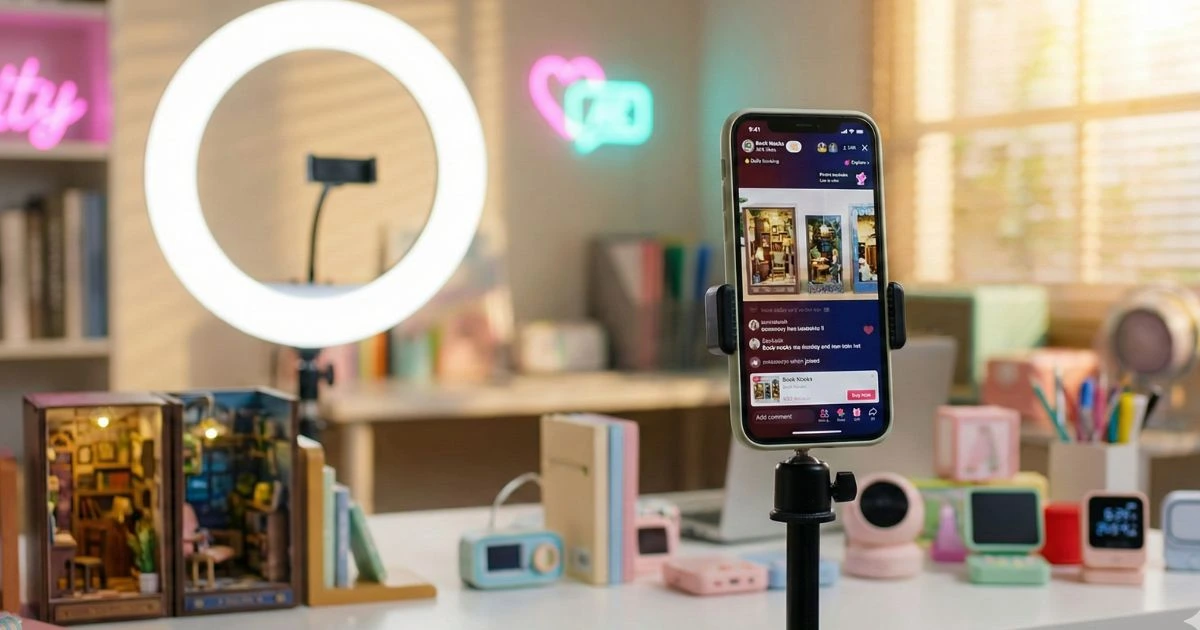
Beyond the curated aesthetics of a 2021 bookshelf, a noisier, more visceral economy is taking over the feed. If you have spent any time scrolling lately, you have probably seen it. A creator is frantically unboxing miniature “Book Nook” kits or demonstrating a rhythmic breathing koala plushie to a live audience of twelve thousand people. This is not just content. It is a live-action marketplace that is currently rewriting the rules of how physical goods move from warehouses to doorsteps. While the early days of BookTok relied on the slow burn of a heartfelt recommendation, the era of TikTok Live Selling is all about the immediate, high-friction energy of the “now.” We are watching a transition from discovery-based browsing to a high-velocity social commerce engine that is projected to exceed twenty billion dollars in sales this year alone. It is messy, it is loud, and it is incredibly profitable for those who understand that the storefront is no longer a static page but a living, breathing performance.
The shift feels almost predatory in its efficiency. In traditional e-commerce, a buyer identifies a need, searches for a solution, and navigates a funnel. On TikTok Shop in 2026, the need is manufactured in real-time by a host who knows exactly how to trigger the dopamine hit of a limited-time coupon. There is something deeply fascinating about watching a live stream where the host greets every newcomer by name while pinned product tags flicker at the bottom of the screen. It is a digital version of the old-school shopping channel, yet it feels entirely new because it is powered by an algorithm that rewards engagement over everything else. If the chat is moving, the product is selling. If the host is answering questions about the texture of a skincare serum or the weight of a mechanical keyboard, the conversion rates skyrocket past anything seen on a standard Shopify site.
Mastering the rhythm of TikTok Live Selling for sustainable growth
To really look at why this works, you have to look at the tension between entertainment and transaction. The most successful sellers right now are not the ones with the slickest production values. In fact, the more polished a stream looks, the more likely a user is to keep scrolling. They want the raw, slightly chaotic energy of a small business owner counting inventory in a garage or a creator testing a new gadget for the first time. This is where the term discovery commerce becomes more than just a buzzword. You do not go onto the app looking for a new ergonomic chair, but after twenty minutes of watching a live demo of how it supports the lumbar during a gaming session, you are suddenly hitting the “buy” button. The intent is created on the fly.
This creates a massive opportunity for anyone looking to enter the space, but it also introduces a steep learning curve. The infrastructure required to maintain a high Shop Performance Score is grueling. You cannot just go live and hope for the best. You need a back-end that can handle sudden spikes in demand, a fulfillment strategy that keeps up with the platform’s two-day shipping expectations, and a content flywheel that keeps the algorithm happy. I have seen brands explode overnight only to be buried by negative reviews because they could not scale their operations as fast as their views. It is a reminder that while the front-end is all about magic and personality, the back-end must be a cold, calculated machine. The players who are winning are those who treat their social presence as a foundational piece of their business infrastructure, rather than just a marketing channel.
Why BookTok 2026 is the blueprint for future social commerce
It is easy to dismiss books as a niche category, but the evolution of the reading community on the platform offers a masterclass in how to build a loyal, high-intent audience. We are past the point of just showing off a pretty cover. Now, authors and publishers are using live streams to host “read-with-me” sessions, exclusive cover reveals, and live Q&As that turn a solitary activity into a communal event. This sense of belonging is the ultimate sales driver. When a reader buys a book during a live stream, they are not just buying paper and ink. They are buying entry into a conversation. They are buying the right to say they were there when the secret was revealed. This emotional connection is why forty-five percent of users have purchased a book after seeing it on the app, a statistic that traditional bookstores can only dream of.
The ripple effect of this is felt across every other niche. If you can sell a physical book through a live stream, you can sell anything. We are seeing this play out in beauty, home organization, and even the “kidult” hobby space. The common thread is always the same: a trusted guide who removes the guesswork from the purchase. In an era where trust in traditional advertising is at an all-time low, the “lived-in” authority of a creator is the only currency that matters. They are the ones who can look into a camera and tell you that a product actually works, and because you have watched them for weeks, you believe them. This is the evidence economy in full swing. It is no longer about who has the biggest budget, but who can maintain the most authentic connection with their community over a three-hour live stream.
As the year progresses, the gap between those who “post” and those who “host” will only widen. The platform is moving toward a future where every piece of content is a potential transaction, and every creator is a potential storefront. It is a bit overwhelming if you think about it too much, this constant stream of commerce layered over our social interactions. Yet, there is a certain honesty in it. We have always looked to our peers for recommendations, now we just have a button that makes the transaction happen in seconds. The real question is not whether this model will stick, but who will be the ones owning the channels when the dust finally settles on this gold rush. We are witnessing the birth of a new kind of asset, one where the value is tied directly to the attention and trust of a digital crowd. It is a volatile, exciting, and occasionally exhausting world, but for those who can find their rhythm, the rewards are unlike anything we have seen in the history of retail.
