
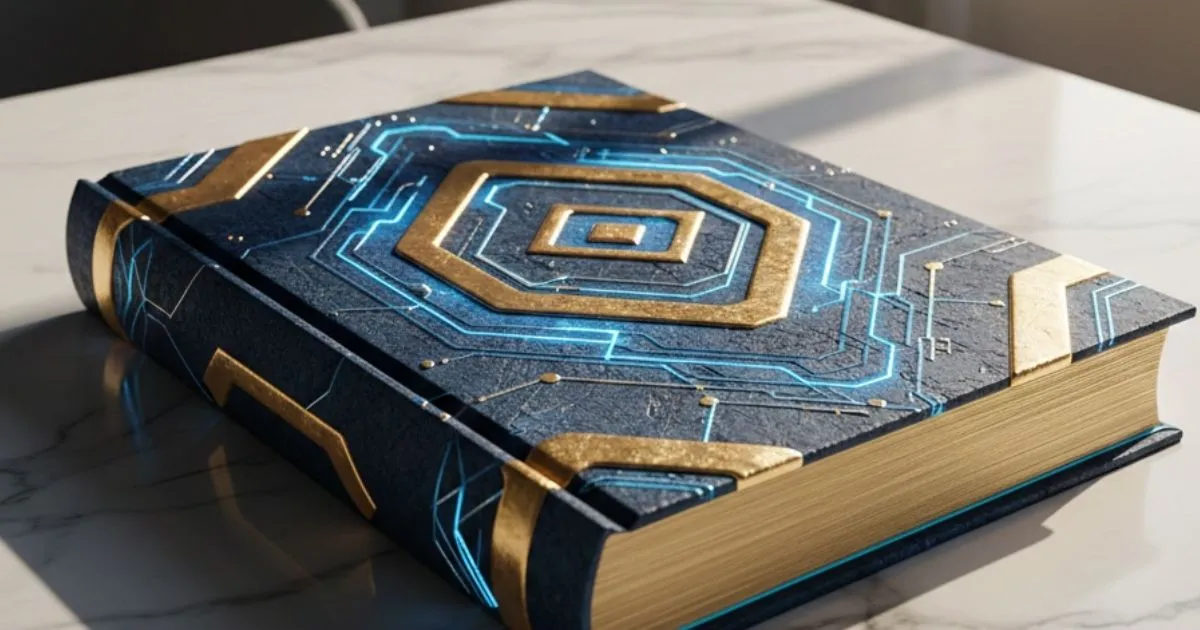
I spent the better part of yesterday afternoon watching a digital storefront refresh itself in real-time. It was a fascinating, almost rhythmic pulse of data, observing how a single asset can shift from a stagnant liability to a high-velocity revenue stream simply by changing its skin. We often talk about capital and liquidity in the finance world as if they are abstract concepts, but in the creator economy of 2026, liquidity has a face. It looks like high-resolution, deep-textured 3D book art.
There is a specific kind of fatigue that sets in when you look at the digital shelves of 2024 or 2025. You remember the look. It was that overly polished, somewhat plastic sheen of first-generation synthetic imagery. It lacked soul, and more importantly for those of us tracking ROI, it lacked the ability to stop a thumb from scrolling. But as we have moved into this year, a shift occurred. Authors and intellectual property holders are no longer just looking for a “cover.” They are investing in what we now call Neural Book Covers, a hybrid of high-level human curation and generative depth that creates a tactile, almost physical presence on a 2D screen.
I was talking to an old colleague who flips digital content businesses, and he mentioned that the valuation of a catalog often hinges on its visual entry point. If the art feels dated or “stock,” the multiplier drops. If the art uses these new neural textures, the perceived value of the underlying IP skyrockets. It is a psychological arbitrage. You are buying the same words, but you are selling a different experience.
The Visual Yield of AI Cover Design and Market Sentiment
When we analyze the performance of these assets, the numbers tell a story that goes beyond mere aesthetics. AI Cover Design has matured from a cost-cutting tool into a sophisticated engine for market resonance. I have noticed that the most successful portfolios this year are the ones that lean into the “painterly” imperfection. The market is currently over-saturated with perfection. Readers, much like investors, are looking for signals of human intentionality.
The switch to neural-driven art is less about the technology and more about the “vibe” shift in consumer behavior. A book is no longer just a file on a Kindle; it is a piece of visual real-time marketing. When an author deploys a neural cover, they are using a system that understands the micro-tonal shifts of a genre. It knows the difference between the “neon-grit” of a cyberpunk thriller and the “dusty-amber” of a historical memoir. This isn’t just about making something pretty. It is about reducing the friction between the product and the target audience’s subconscious.
I remember a project last month where a non-fiction series was struggling with stagnant sales. The content was gold, the reviews were stellar, but the “packaging” was stuck in the flat-design era of 2022. We didn’t change a word of the text. We simply re-skinned the series using 3D neural assets that gave the covers a sense of weight and physical depth. The click-through rate jumped by forty percent in the first week. In any other financial sector, a forty percent increase in efficiency without changing the core product would be considered a miracle. In the world of digital publishing, it is just good design.
The cost of these neural generations has plummeted while the quality has reached a point where the “uncanny valley” is a distant memory. We are seeing a democratization of high-end branding. Small-scale authors are now sporting covers that would have cost five figures from a top-tier New York agency five years ago. This creates a competitive landscape that is incredibly dense. To stand out, you can’t just be “good,” you have to be visually arresting. You need that 3D depth that makes the reader feel like they could reach out and touch the spine of the book.
Scaling Growth Through Visual Book Marketing and Neural Assets
The real leverage comes when you stop treating a cover as a static image and start treating it as a dynamic marketing asset. Visual book marketing in 2026 is an ecosystem. Those neural covers we talk about are the seeds. From one high-fidelity neural generation, an author can sprout a dozen different assets: social media headers, animated video trailers, and interactive 3D mockups for web displays. It is a “create once, deploy everywhere” model that fits perfectly into a lean business strategy.
I have seen agencies lately that specialize specifically in this transition. They don’t just “design” a cover; they architect a visual brand. They take a manuscript and run it through a thematic analysis to ensure the neural generation aligns with the emotional arc of the story. It is a fascinating blend of literary theory and high-frequency data processing. This is why we are seeing a mass migration of authors switching to these “Neural Covers.” It is the path of least resistance to professional-grade branding.
There is a certain irony in the fact that as our world becomes more digital, our tastes have become more tactile. We crave the look of thick oil paint, the texture of weathered leather, and the glint of foil stamping, even if it is only rendered in pixels. The neural models of 2026 are exceptionally good at mimicking these physical properties. They understand how light hits a matte surface versus a glossy one. This level of detail creates a sense of “premium” that is hard to replicate with traditional digital tools without spending hundreds of hours in manual retouching.
I often wonder if we are reaching a saturation point, but then I see a cover that uses these tools in a way that feels completely fresh. It is about the “prompt-craft,” certainly, but it is also about the taste of the person steering the machine. The best neural covers I have seen this year aren’t the ones that look the most “AI.” They are the ones that look the most like a master artist spent a month in a studio with a canvas. They have character. They have flaws. They have soul.
If you are holding onto a portfolio of digital assets, or if you are an author looking to break through the noise, the visual layer is no longer optional. It is the primary filter through which your work is judged. In the finance of attention, a neural cover is a high-yield bond. It pays out every time someone stops scrolling. It builds equity in your brand. And in a world where everyone is a creator, the ones with the best “Neural Covers” are the ones who will own the shelf space.
It makes me think about the next five years. If we are already at this level of 3D realism and neural depth, where does the “image” end and the “experience” begin? We are moving toward a reality where the cover might be an interactive portal, a living piece of art that changes based on the reader’s environment or mood. But for now, the smart money is on the 3D neural shift. It is the most effective way to turn a digital file into a physical-feeling desire.
I suppose the question isn’t whether you should switch to these new visual standards, but rather how much longer you can afford to stay with the old ones. The market is moving fast, and as I saw on that digital storefront yesterday, the refresh button is always being pressed. You either show up with something that captures the light,
