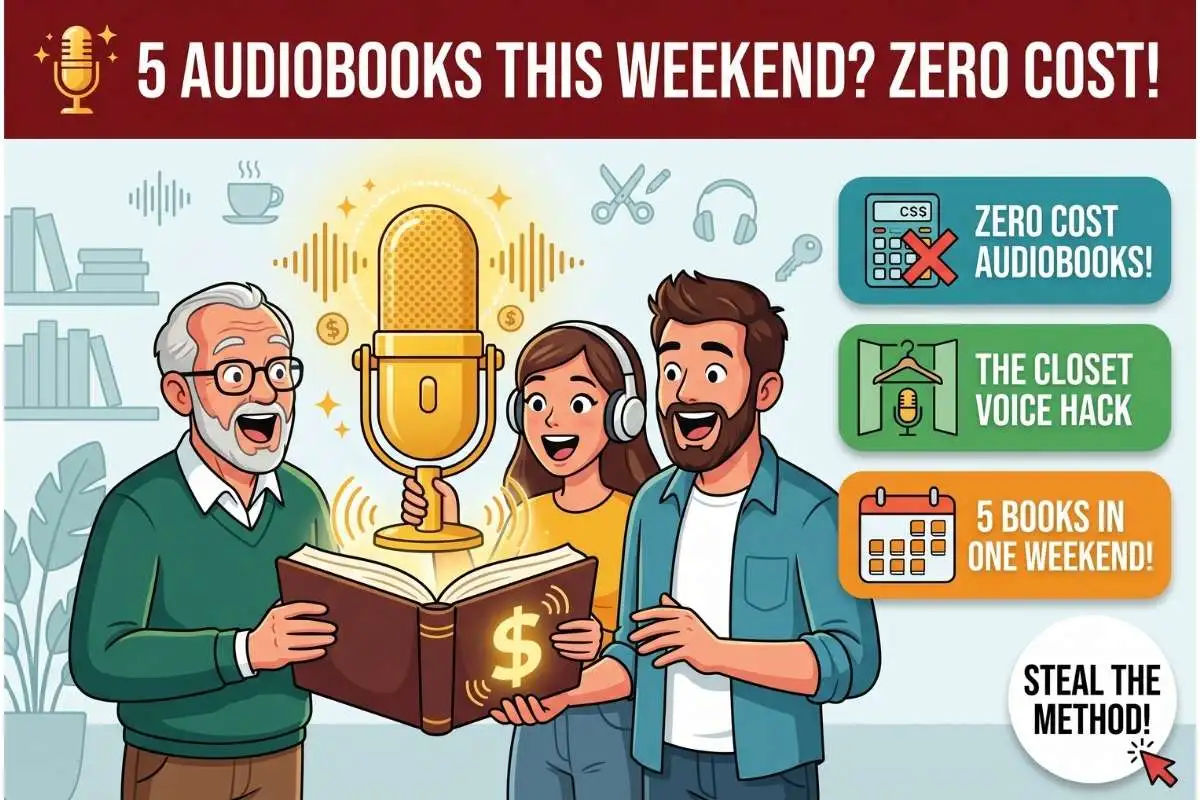
Imagine waking up on a Saturday morning with a hot cup of coffee, opening your laptop, and transforming your entire written catalog into studio-quality audiobooks before the weekend is over. For decades, the audiobook industry was a walled garden accessible only to traditionally published authors or indie writers with thousands of dollars to spare for professional voice actors and studio time. Today, that barrier has vanished. Welcome to the golden age of artificial intelligence in publishing, where cutting-edge voice cloning technology allows you to narrate your own stories with perfect pacing, emotion, and clarity—all without spending a single dime.
The Evolution of the Spoken Word
The journey of the audiobook is a fascinating tale of technological evolution, starting from vinyl records to cassette tapes that accompanied commuters on long drives. As digital formats took over, platforms like Audible and Apple Books created a booming market, yet the production bottleneck remained entirely human. Narrating a single book required dozens of hours in a soundproof booth, followed by meticulous editing, breath removal, and audio mastering to meet strict industry standards. For an independent author barely scraping by, the dream of hearing their characters speak was often crushed by a staggering production quote. Now, the landscape has fundamentally shifted. Software can analyze your vocal patterns and replicate them with astonishing accuracy, turning months of studio work into a weekend project.
Understanding the Magic Behind Voice Cloning
At its core, modern voice cloning relies on complex neural networks and deep learning algorithms to understand the unique characteristics of human speech. When you provide a small sample of your voice, the AI maps out your pitch, tone, accent, and even the subtle inflections that make you sound exactly like you. This is a massive leap forward from the robotic, monotonous text-to-speech programs of the past. Today’s models, developed by companies focusing on speech synthesis, can inject genuine human emotion into the reading. They instinctively know when to whisper during a suspenseful thriller scene or when to raise their digital voice during an intense argument. By breaking down your voice into thousands of microscopic audio data points, the software creates a virtual replica that can speak any text you type, maintaining a consistent energy level that is impossible for humans to sustain over a ten-hour session.
The “Free” Revolution for Independent Authors
You might wonder how such advanced technology could be free. In the highly competitive tech landscape, major AI audio platforms are battling fiercely for market dominance, offering incredibly generous free tiers and specific publishing programs designed exclusively for independent authors. Programs designed to populate digital storefronts allow writers to generate complete audiobook files at zero upfront cost, often in exchange for publishing directly on their proprietary platforms or utilizing their specific software ecosystem. This democratization means self-published writers can compete with massive publishing houses. You no longer have to compromise on audio quality or take out a high-interest loan to fund your audiobook production. Instead, you can leverage these completely free tools to reach busy listeners who prefer consuming stories while jogging, commuting, or doing household chores, effectively unlocking a massive new audience and revenue stream practically overnight.
A Simple Weekend Workflow for Audio Success
This project requires no prior audio engineering experience. First, you need to gather a high-quality, thirty-minute sample of your natural speaking voice. Find a quiet, carpeted closet full of hanging clothes—which acts as a natural sound buffer—and record yourself reading a chapter of your own book using the voice memo app on your smartphone. Once you upload this clean audio sample to your chosen free AI voice cloning platform, the system will process the data and generate your custom voice model in a matter of minutes. Next, simply upload your polished manuscript into the dashboard. The intuitive interfaces allow you to assign your newly cloned voice to the main narration, and you can even utilize pre-existing AI character voices for specific dialogue lines. After a quick review to ensure proper pronunciation, you just click generate, letting the servers do the heavy lifting while you relax.
Navigating the Ethical and Legal Landscape
While the technological capabilities available today are nothing short of magical, modern authors must tread carefully when navigating the complex ethical and legal implications of AI-generated content. Intellectual property rights surrounding synthetic media are continually evolving across the globe, and it is critically important to understand exactly who owns the rights to your cloned voice and the resulting final audiobook files. According to ongoing discussions and guidelines surrounding artificial intelligence and copyright, the underlying written text remains entirely your intellectual property, but the specific audio output may be subject to the terms of service of the platform you choose to use. Furthermore, absolute transparency with your core audience is highly recommended by industry professionals. Many successful indie authors now add a brief, honest disclaimer at the very beginning of their audiobooks, clearly explaining that the narration is an AI-generated clone of the author’s own voice. This upfront honesty fosters long-term trust and sets the proper expectations for the listener.
Production Comparison: Traditional vs. AI Methods
To truly grasp the magnitude of this technological shift, it helps to look at the numbers side-by-side. The traditional route requires significant financial investment and time, acting as a gatekeeper for talented writers. Conversely, the AI method strips away these barriers, offering unprecedented speed and accessibility.
| Feature | Traditional Narration | AI Voice Cloning |
| Average Cost | $200 – $500 per finished hour | $0 (via free author programs) |
| Production Time | 4 to 8 weeks | 24 to 48 hours |
| Correction Process | Requires booking additional studio time | Instant text-based regeneration |
| Voice Consistency | Subject to human fatigue and pacing | 100% consistent throughout the book |
Frequently Asked Questions
Let’s dive into some of the most common questions authors have when exploring this exciting new frontier of digital audiobook creation.
Q: Will audiobook platforms reject my AI-narrated book? A: While policies were strict years ago, the industry has rapidly adapted. Major storefronts like Apple Books and Google Play now have dedicated, streamlined programs specifically for AI-generated audiobooks. Even platforms that traditionally required human narrators have opened specific avenues for synthetic voices, provided they meet strict audio quality standards and are properly labeled as AI-generated.
Q: Does the AI sound like a robot? A: Not at all. Modern voice cloning utilizes advanced emotional mapping and contextual understanding. The AI reads the surrounding text to determine the appropriate tone, pausing at commas, sighing at ellipses, and injecting genuine enthusiasm into exclamation points. It sounds incredibly natural and lifelike.
Q: Can I edit the audio if it makes a mistake? A: Absolutely. The beauty of these platforms is the ability to edit on the fly. If the AI mispronounces a unique fantasy character name or a complex scientific term, you can simply type in a phonetic spelling or adjust the pronunciation tags within the software and regenerate that specific sentence instantly without having to re-record anything yourself.
Final Curiosity: The Future of the Author’s Voice
As we wrap up this guide, let’s reflect on the profound shift happening in the literary world. We are witnessing the democratization of storytelling on an unprecedented scale. Your unique voice—quite literally—now has the power to reach across the globe, unbounded by studio fees, recording schedules, or geographical limitations. Imagine a future where your dedicated readers can choose to listen to your entire backlist in your exact voice, fostering an incredibly deep, parasocial connection between creator and consumer. The technology will only continue to improve, becoming even more emotionally resonant and indistinguishable from a live, passionate human performance. So, as you sip the last drop of your weekend coffee and watch those perfectly narrated MP3 files download to your desktop, take a moment to appreciate the pure magic of the moment. You haven’t just created five audiobooks for absolutely free; you have successfully future-proofed your entire author brand.