
Imagine walking into a local bookstore, scanning the bestsellers shelf, and seeing a thrilling new science fiction novel with a incredibly catchy author name on the cover. You buy it, read it in one sitting, and marvel at the singular, brilliant mind that crafted such a complex universe. But what if that singular mind was actually a carefully coordinated hive? Welcome to the fascinating world of crowdsourced pen names, a rapidly growing literary phenomenon where a single authorial identity is actually a mask for a collective of writers. As the publishing landscape shifts dramatically in 2026, the idea of sharing a bestseller with ten other authors is no longer a chaotic experiment; it is a viable, highly structured business model. This collective approach is transforming how stories are conceived, written, and delivered to voracious readers around the globe.
The concept of hiding behind a made-up name is practically as old as the written word itself, but the way we use these alternate identities has evolved drastically over the centuries. Historically, a writer adopted a pseudonym to protect their privacy, bypass unfair societal prejudices, or explore different genres without confusing their existing, dedicated audience. Later on, massive publishing houses realized the immense commercial power of “house names.” Syndicates would quietly hire dozens of ghostwriters to churn out endless adventures of teen detectives or daring space explorers, all published under a single, fictional author’s name. This brilliant strategy ensured that if one ghostwriter quit or simply fell ill, the incredibly lucrative series could continue without missing a beat, keeping the fans happy and the publisher’s revenue flowing. Today’s crowdsourced pen names are the natural, decentralized evolution of this old syndicate model. Instead of a massive corporate publisher pulling the strings, independent authors are teaming up voluntarily. They are pooling their creative energy, their financial resources, and their marketing savvy to create a joint identity that holds power in the modern digital marketplace.
Understanding exactly how ten different people write a single, cohesive book requires a peek behind the curtain at the modern collaborative process, which is far from a chaotic game of telephone. Rather, it closely resembles the highly structured, fast-paced environment of a television writer’s room. First, the collective establishes a “showrunner”—a lead author or managing editor who acts as the ultimate authority on the fictional universe. This person, alongside a small steering committee, develops the overarching plot, character arcs, and detailed world-building bibles. Once the architectural framework is solidified, the actual drafting is divided among the collective’s members. One author might write the first three chapters, while another tackles the next three, all adhering strictly to a shared style guide to ensure the “author’s” voice remains indistinguishable. They use cloud-based word processors and specialized collaborative software to track changes, leave notes, and maintain a seamless continuity. When the rough draft is pieced together, a dedicated editor polishes the entire manuscript to smooth out any lingering stylistic quirks.
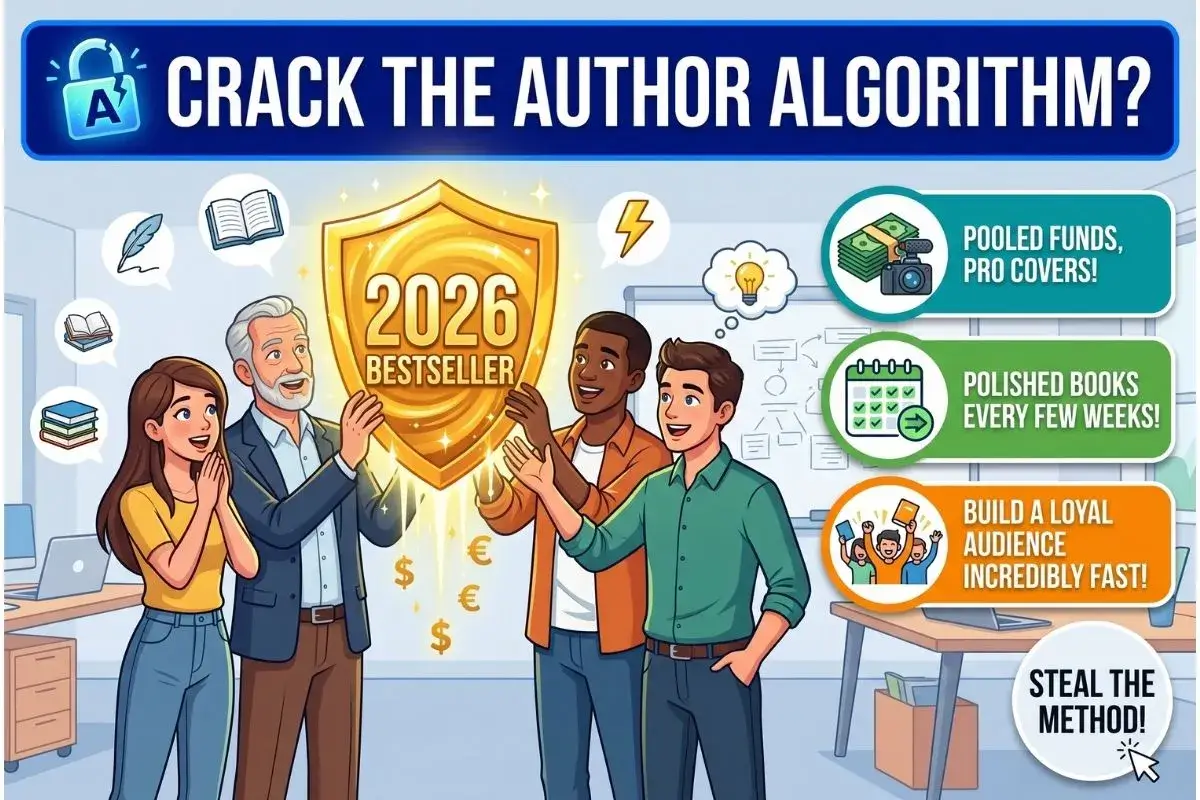
The primary driving force behind this massive shift toward collective writing is the brutal economic reality of the modern publishing algorithm, which heavily favors rapid release schedules. In today’s digital storefronts, a new book’s visibility drops off a cliff after just thirty to sixty days. To stay relevant and keep the algorithm feeding their books to new readers, authors must publish at an exhausting, often unsustainable pace. A single writer can rarely produce a high-quality novel every month without burning out entirely, but a team of ten writers operating under one crowdsourced pen name can easily release a polished book every few weeks. This relentless publication schedule builds a massive, loyal audience incredibly fast. Furthermore, the collective can pool their money for high-end cover art, professional editing, and massive advertising campaigns that a solo indie author could never afford. Legally, these collectives operate under joint venture agreements. According to the U.S. Copyright Office, a “joint work” involves multiple authors intending their contributions to be merged into inseparable parts of a unitary whole, ensuring everyone gets a fair slice of the pie based on their contribution.
Despite the clear advantages in production speed and marketing muscle, managing a crowdsourced pen name is fraught with unique interpersonal and creative challenges that must be navigated carefully. The most obvious hurdle is maintaining a unified, consistent voice across dozens of novels written by a rotating cast of individuals. If a reader detects a sudden shift in tone, vocabulary, or pacing, the illusion of the single author is broken, and fan trust evaporates instantly. Therefore, ego must be completely checked at the door; writers must be willing to have their favorite sentences altered or deleted by the team editor for the greater good of the collective persona. Furthermore, disputes over story direction can easily derail a project if clear conflict-resolution protocols are not established from the very beginning. What happens when half the team wants the protagonist to fail, while the other half insists on a triumph? Without strong leadership and a legally binding contract detailing how creative ties are broken, a thriving collective can quickly devolve into a bitter mess.
As we look at the broader literary trends defining 2026, it is undeniably clear that the crowdsourced pen name is moving from the fringes of niche genre fiction into the mainstream publishing spotlight. We are now seeing these talented collectives tackle ambitious, sprawling epic fantasies, complex political thrillers, and even deeply emotional literary fiction. Technology is further smoothing the friction of collaboration, with advanced continuity checkers and style-matching tools helping diverse writers blend their voices more seamlessly than ever before. For the reader, the ultimate benefit is an endless stream of high-quality, engaging content set in their favorite universes, delivered without the agonizing years-long waits between installments. For the writers themselves, it offers a highly sustainable career path, a supportive creative community, and a definitive cure for the crushing isolation that often accompanies the writing profession. The crowdsourced pen name proves that incredible art does not always require a solitary genius; sometimes, it just requires a highly organized team sharing a common vision.
Comparing Publishing Business Models
| Feature | Solo Indie Author | Traditional Publishing | Crowdsourced Pen Name |
| Release Speed | Slow to Medium (1-3 books/year) | Slow (1 book/year) | Very Fast (12+ books/year) |
| Creative Control | 100% Retained by Author | Shared with Publisher | Shared among the Collective |
| Marketing Budget | Low (Self-funded) | High (Publisher-funded) | Medium to High (Pooled funds) |
| Author Burnout Risk | Extremely High | Medium | Low (Workload is distributed) |
| Royalty Split | 100% to Author | 10% – 15% to Author | Divided equally among members |
Frequently Asked Questions
How do readers feel when they find out their favorite author is actually a group of people? Reader reactions can vary significantly. While some traditionalists feel slightly betrayed, finding out the “author” is an illusion, the vast majority of modern readers simply care about the quality and frequency of the stories. If the books remain highly entertaining and logically consistent, fans usually embrace the collective model because it guarantees they will never have to wait long for the next exciting installment.
How do writers split the profits fairly? Profit splitting is outlined in a legally binding joint venture contract signed before a single word is written. Typically, revenues from a specific book are divided based on the word count contributed, with percentages carved out for the showrunner, the final editor, and the collective’s shared marketing fund. Transparency and clear accounting are vital.
Can anyone join a crowdsourced pen name collective? Usually, these collectives are invite-only or require a rigorous audition process. Existing members want to ensure that any new writer can seamlessly mimic the established voice of the pen name, meet strict deadlines without fail, and check their ego at the door to accept heavy editorial feedback.
Curiosity: The Mathematicians Who Didn’t Exist
While crowdsourced pen names are taking the fiction world by storm in 2026, the concept has a fascinating, brilliant predecessor in the realm of high-level academia. In the 1930s, a group of brilliant French mathematicians wanted to completely rewrite the foundations of modern mathematics. Instead of publishing their groundbreaking textbooks under their individual, highly respected names, they invented a fictional mathematician named Nicolas Bourbaki. “Bourbaki” was given a rich, fake biography, supposedly hailing from a fictional European nation.
For decades, the Bourbaki collective published incredibly influential, complex mathematical treatises, entirely transforming the global academic landscape. The membership of the group was kept a strict secret and constantly rotated; mathematicians were required to resign from the collective at the age of 50 to ensure “Bourbaki’s” work always remained fresh and innovative. Just like today’s bestselling fiction collectives, the Bourbaki group proved that when brilliant minds pool their talents under a single, unified identity, they can create a legacy far greater than the sum of its individual parts.
