Have you ever wandered through the hushed, echoing halls of a world-renowned museum, stopped dead in your tracks in front of a mesmerizing masterpiece, and thought to yourself, “I wish I could own a piece of this?” For centuries, that dream was exclusively reserved for billionaires, royalty, and elite institutional collectors. The average person could only buy a postcard; the actual canvas remained entirely out of reach. Today, however, a quiet but profound revolution is taking place at the intersection of high finance, digital technology, and fine art. This spring, a groundbreaking trend is hitting the mainstream market, allowing everyday enthusiasts to purchase fractional shares of museum-quality artwork. Instead of needing millions, you only need a smartphone and a twenty-dollar bill. Welcome to the modern era of tokenized art, where the velvet ropes are finally being unhooked for the rest of us.
The Fall of the Velvet Ropes
Picture the traditional art auction. It is an exclusive world of mahogany podiums, whispered bids, and gavels sealing deals worth millions. For generations, the fine art market operated as a closed circuit, an insular club where the ultra-wealthy traded cultural heritage. If you wanted to invest in blue-chip art—works by legendary creators that appreciate over time—you needed staggering capital up front. Furthermore, owning a physical masterpiece brings logistical nightmares: prohibitive insurance premiums, climate-controlled vaults, and exorbitant auction house fees. The barriers to entry were so impossibly high that the general public was completely locked out. But the digital age has fundamentally altered the mechanics of ownership. By breaking down a singular, expensive asset into millions of affordable digital shares, the art market is experiencing a democratization unlike anything seen since the invention of the public museum.
Decoding the Magic of Tokenization
To understand how you can buy a piece of a legendary painting for the price of a few cups of coffee, you have to grasp the concept of tokenization. In simple terms, tokenization is the process of converting the ownership rights of a physical asset into digital tokens on a blockchain. Think of it like taking a massive, wildly expensive pizza and slicing it into thousands of bite-sized pieces. A specialized company purchases the physical artwork, authenticates it, and stores it in a secure, temperature-controlled facility. Then, they issue digital shares representing a fraction of that specific painting. When you buy a $20 token, you are buying a legally binding percentage of that artwork. The blockchain acts as an unalterable public ledger, recording your ownership permanently so no one can dispute your claim. You don’t have to worry about avoiding direct sunlight, installing security alarms, or dusting the frame. You simply hold your digital share in an app and watch its value.
The Claude Monet Opportunity
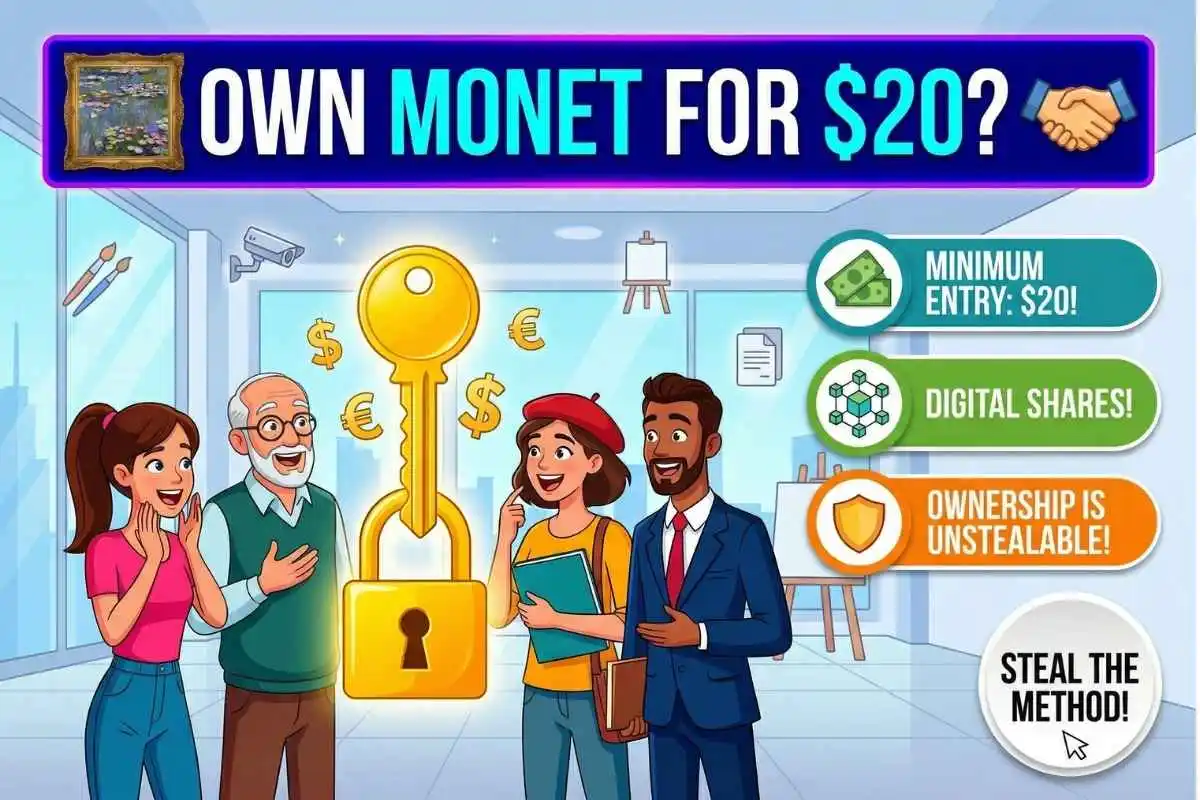
This weekend, the tokenized art world is buzzing with a particularly exciting event: a spring auction featuring a magnificent work by the legendary French painter, Claude Monet. Monet was the driving force behind the Impressionist movement, fundamentally changing art history with his pursuit of capturing fleeting moments of light. His iconic depictions of water lilies, haystacks, and the French countryside are among the most coveted cultural artifacts on the planet. Naturally, when a genuine Monet goes to a traditional auction, it easily commands millions. But through tokenized spring auctions happening on specialized investment platforms right now, the canvas has been digitally fractionalized. You can literally log online, create an account, and become a co-owner of a Monet for just $20. It is a surreal concept that bridges the gap between 19th-century artistic genius and 21st-century financial technology. If you want to dive deeper into the fascinating life and revolutionary techniques of this master painter before investing your twenty dollars, you can explore his extensive biography and legacy on his Wikipedia page. Owning a fraction of his legacy is a way to connect personally with art history.
Navigating the Risks and Regulations
Of course, whenever money and new technology mix, it is crucial to approach the situation with a clear head and a healthy dose of caution. Buying tokenized shares of a masterpiece is still an investment, and like all investments, it carries inherent risks. The fine art market can be notoriously unpredictable, subject to shifting cultural tastes and macroeconomic trends. While blue-chip art has historically shown strong returns, there is never a guarantee that your $20 share will double in value; it could very well lose value if the art market takes a downturn. Additionally, liquidity can be an issue. Unlike selling a stock on Wall Street, finding a buyer for your fractional art share on a secondary market might take time. Consequently, reputable tokenization platforms operate under strict regulatory frameworks. In the United States, companies offering these fractional shares must comply with securities laws to ensure investor protection. To understand how these investments are regulated, visit the official U.S. Securities and Exchange Commission (SEC) website. Doing your due diligence ensures your foray into art collecting remains a positive experience.
The Future of the Digital Gallery
As we look toward the horizon, the tokenization of fine art represents much more than just a novel way to diversify an investment portfolio; it signifies a massive cultural shift in how we interact with historical artifacts. Imagine a future where local communities can pool their resources to tokenize and purchase culturally significant artworks, keeping them in public trusts rather than locked away in the private estates of billionaires. Museums could utilize fractional ownership models to raise vital funds for restoration projects or museum expansions, offering their patrons a chance to financially support the institution while gaining a tangible stake in the collection. The narrative of art ownership is changing from an exclusive monologue to an inclusive dialogue. As these platforms grow, we might see the emergence of digital galleries where you can curate a virtual exhibition of all the masterpieces you fractionally own, sharing your unique collection with friends and family across the globe. This weekend’s Monet auction is just the beginning of a long, exciting journey into the future.
At a Glance: Traditional vs. Tokenized Art Investing
| Feature | Traditional Art Collecting | Tokenized Art Collecting |
| Cost of Entry | Millions of dollars | As low as $20 |
| Storage & Upkeep | Extremely high (insurance, vaults) | Completely free for the investor |
| Accessibility | Exclusive to the ultra-wealthy | Open to anyone with an internet connection |
| Authenticity | Requires costly expert appraisal | Verified and secured via blockchain technology |
| Liquidity | Very low (takes months to sell) | Moderate (tradable on secondary digital markets) |
Frequently Asked Questions About Tokenized Art
What happens if the physical painting is damaged or destroyed? Reputable tokenization platforms fully insure the physical artworks they hold. In the highly unlikely event that a painting is damaged by fire, theft, or natural disaster in the storage vault, the insurance policy would pay out the appraised value, and that money would be distributed proportionally among the token holders.
Do I ever get to see the painting in person? While you cannot hang the painting in your living room, you can often see it! Many holding companies loan their tokenized artworks to major museums and public galleries around the world. As a shareholder, you can visit the museum and proudly look at the canvas, knowing you legally own a piece of it.
How do I make money from buying a $20 share? There are two main ways to realize a profit. First, you can sell your digital shares to another buyer on a secondary trading platform if the value increases. Second, if the holding company eventually sells the physical painting to a private collector or museum, the profits from that final sale are distributed proportionally to all the shareholders based on the number of tokens they own.
A Final Curiosity: Securing the Unstealable Masterpiece
Did you know that the most famous art heist in history involved the Mona Lisa? In 1911, the iconic painting was walked out of the Louvre by a handyman who hid in a closet overnight. Traditional art has always been vulnerable to physical theft and degradation.
This highlights the most fascinating aspect of the tokenized art revolution: your ownership is practically unstealable. While the physical Monet canvas being auctioned this weekend is locked safely in an impenetrable fortress, your digital shares are protected by complex cryptography on the blockchain. Even if a burglar managed to steal the physical painting, your certificate of fractional ownership remains safely in your digital wallet, permanently proving your stake. It is the ultimate fusion of 19th-century beauty and 21st-century security, allowing absolutely anyone to claim their rightful piece of art history.