
Have you ever dreamed of creating a digital asset once and earning royalties from it for years? That is the promise of low-content books. Years ago, the internet was flooded with success stories of people making thousands a month by uploading simple, blank lined notebooks. Today, the landscape has drastically shifted, leaving many eager beginners frustrated and wondering if the opportunity has completely passed them by. The truth is, the gold rush of uploading hundreds of poorly designed, identical notebooks is definitively over. However, a sustainable, profitable strategy absolutely still exists for those willing to adapt, focus on quality, and treat this venture like a real publishing business rather than a temporary get-rich-quick scheme.
The Evolution of the Marketplace
To fully understand what works in the modern marketplace, we first need to look at the history of how we arrived here. In early self-publishing, traditional barriers vanished. Anyone with a basic internet connection could create a PDF manuscript and a simple cover, uploading it to platforms that handled all the heavy lifting of printing and shipping. This innovation, known as print on demand, revolutionized publishing by eliminating upfront inventory costs. However, this accessibility also meant that platforms were quickly spammed with massive amounts of low-effort content. The new winning strategy requires a complete psychological shift from quantity to quality. Instead of creating a hundred generic journals in a frantic week, successful publishers are now spending that exact same week researching and designing a single, highly targeted book. The algorithm now heavily rewards books that actually sell and generate positive reviews, which realistically only happens when you provide genuine, thoughtfully designed value to the end consumer.
Finding the Hidden Micro-Niches
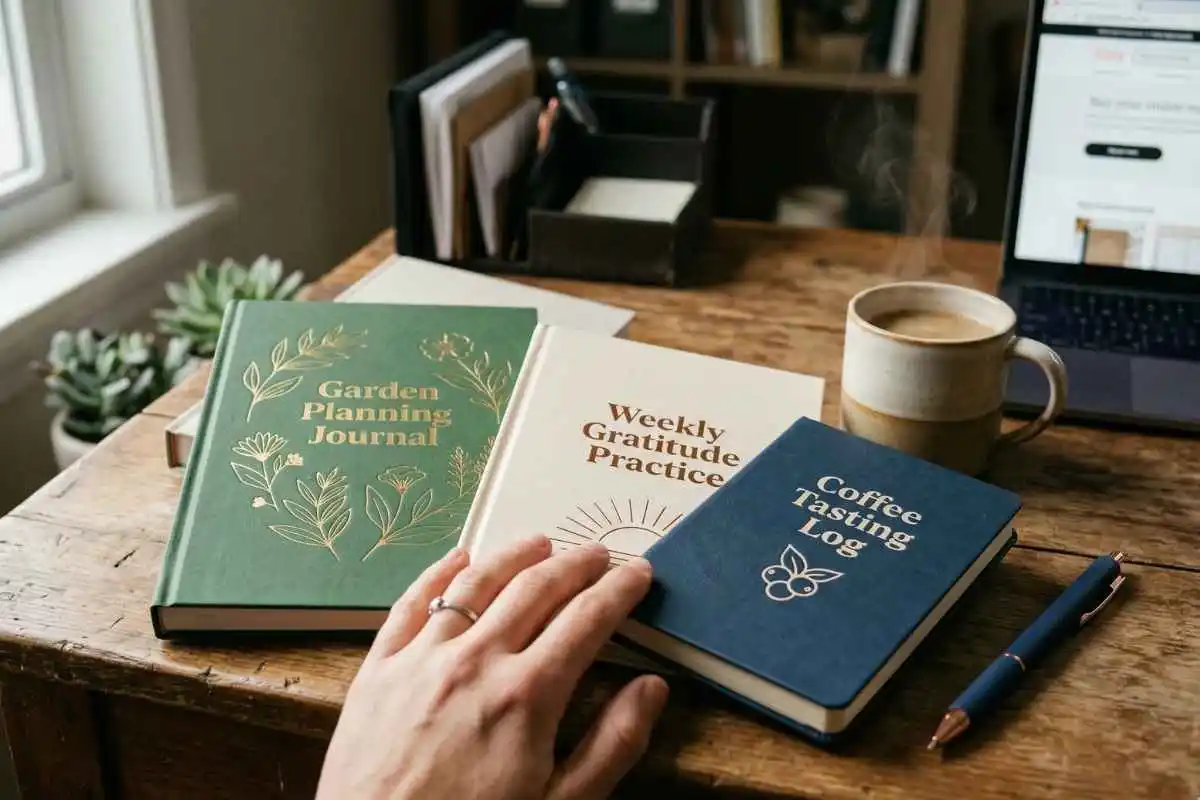
Imagine browsing online for a thoughtful gift for a friend intensely passionate about organic gardening. You wouldn’t search for a generic blank notebook. Instead, you would likely type something highly specific into the search bar, like “organic vegetable garden planner for beginners” or “seasonal rose care logbook.” This specific consumer behavior is the foundational secret to the modern low-content publishing strategy. You must completely abandon the broad, highly saturated categories and dive deep into what industry experts call micro-niches. A micro-niche is a highly specific sub-category where the buyer demand is steady, but the seller competition remains incredibly low. To uncover these hidden gems, you need to become an astute observer of human hobbies, unique professions, and daily logistical struggles. Think about specialized medical trackers for specific chronic illnesses, detailed logbooks for niche hobbies like urban beekeeping, or specialized ledgers for local small businesses. When you create a book that perfectly aligns with a highly specific search query, you automatically bypass the millions of generic journals.
Designing Covers That Demand Attention
After identifying a profitable micro-niche, your next battleground is the visual presentation of your book. It is a cliché, but in the fast-paced world of online shopping, consumers absolutely judge a book by its cover. Your cover is essentially your digital billboard, your product packaging, and your primary marketing tool all rolled into a single, crucially important thumbnail image. In the past, slapped-together text on a solid color background might have resulted in a few accidental sales, but today’s buyers have significantly higher expectations. Successful publishers are treating their cover design with the utmost respect, either learning professional design principles themselves or hiring talented freelance illustrators to bring their commercial vision to life. The cover needs to instantly and clearly communicate what the book is, exactly who it is for, and why it is a high-quality product. It must evoke the correct emotion immediately. If your cover looks amateurish or rushed, the buyer will simply scroll past it in a fraction of a second.
Elevating to Medium-Content
To insulate your business from competition and build a long-term asset, the most effective strategy is bridging the gap between “low-content” and “medium-content.” While low-content traditionally refers to mostly blank pages like lined journals or simple sketchbooks, medium-content involves adding structured, unique, and highly specific value to the interior pages. This elevation includes creating things like guided prompt journals, complex daily planners, intricate coloring books, or engaging activity books. By adding this necessary layer of complexity, you immediately weed out the thousands of lazy competitors who are only willing to put in the bare minimum effort. However, this increased complexity also brings a much higher level of legal and ethical responsibility. When creating guided journals that feature famous quotes, specific industry terminology, or unique catchphrases, you must be incredibly diligent about intellectual property rights. It is highly recommended to regularly consult official government resources like the United States Patent and Trademark Office (USPTO) to thoroughly ensure your book titles and niche ideas do not accidentally infringe on existing trademarks.
The Launch Strategy and Patience
Finally, the strategy that works today requires a realistic approach to launching products and a healthy dose of long-term patience. Gone are the golden days of simply uploading a book file and waking up to organic, effortless sales the very next morning. The marketplace is now fully mature, which fundamentally means you often have to give your book a slight algorithmic push to get the platform’s initial attention. This might involve running small, highly optimized digital advertising campaigns to secure those crucial first few sales and verified customer reviews. It also heavily involves optimizing your book’s sales page with compelling, benefit-driven copywriting, ensuring your main title, subtitle, and description are seamlessly packed with the relevant keywords your target buyers are actually typing into the search bar. Think of your low-content publishing journey as planting a digital apple orchard. You have to carefully select the right seeds, plant them properly in fertile soil, and consistently water them over time. Those who eventually succeed treat this process as a marathon.
Comparing Publishing Models
To better understand where you should focus your strategic efforts, here is a helpful breakdown of the different content levels in the current print-on-demand publishing landscape:
| Book Type | Examples | Creation Effort | Competition Level | Profit Potential |
| No/Low-Content | Blank journals, simple sketchbooks, basic lined notebooks | Very Low | Extremely High | Very Low |
| Medium-Content | Prompt journals, specialized logbooks, basic planners, recipe books | Moderate | Medium | Moderate to High |
| High-Content | Novels, detailed non-fiction books, comprehensive textbooks | Very High | Low (in specific niches) | High |
Frequently Asked Questions
Is low-content publishing completely saturated? Yes and no. If you publish a basic, lined notebook with a generic floral cover, that market is overwhelmingly saturated. You will be competing with millions of other identical books. However, the market for highly specific, problem-solving books is never truly saturated because human needs and hobbies are constantly evolving. As long as people are developing new interests, there will always be a demand for specialized trackers.
Do I need expensive software or graphic design skills to start? You do not need expensive software or formal graphic design skills to start, but you must have an eye for design and a willingness to learn. Many successful publishers use free or low-cost online design tools to create their interiors and covers. If you truly lack an eye for design, your best strategy is to act as a manager and hire affordable freelance designers for your covers.
What is the single biggest mistake new publishers make? The most fatal mistake is throwing hundreds of low-quality books onto the platform hoping one sticks. The modern algorithm heavily penalizes accounts that consistently upload books that receive zero clicks and zero sales. It is far better to spend ten hours meticulously researching and designing one spectacular book than to spend those same ten hours creating fifty mediocre notebooks.
Curiosity Corner: The Billion-Dollar Idea Hiding in Plain Sight
As we wrap up our deep dive into the modern low-content strategy, it is fascinating to look back at the surprisingly rich history of these simple, blank pages. Did you know that one of the most famous “low-content” books in history—the classic black-and-white marbled composition notebook—has roots dating back to the 19th century? The distinctive marbled pattern was originally created in Europe using a complex artisanal process of floating pigments on water. What started as a highly customized craft eventually became mass-produced, proving that a reliable format for capturing thoughts has truly timeless appeal. Even the legendary author Mark Twain recognized the immense value of structured blank pages; he famously invented and patented a self-pasting scrapbook in 1872, which ended up being one of his most profitable lifetime ventures.
