
The Quiet Accumulation Before the Storm: Decoding XRP’s Latest Price Action
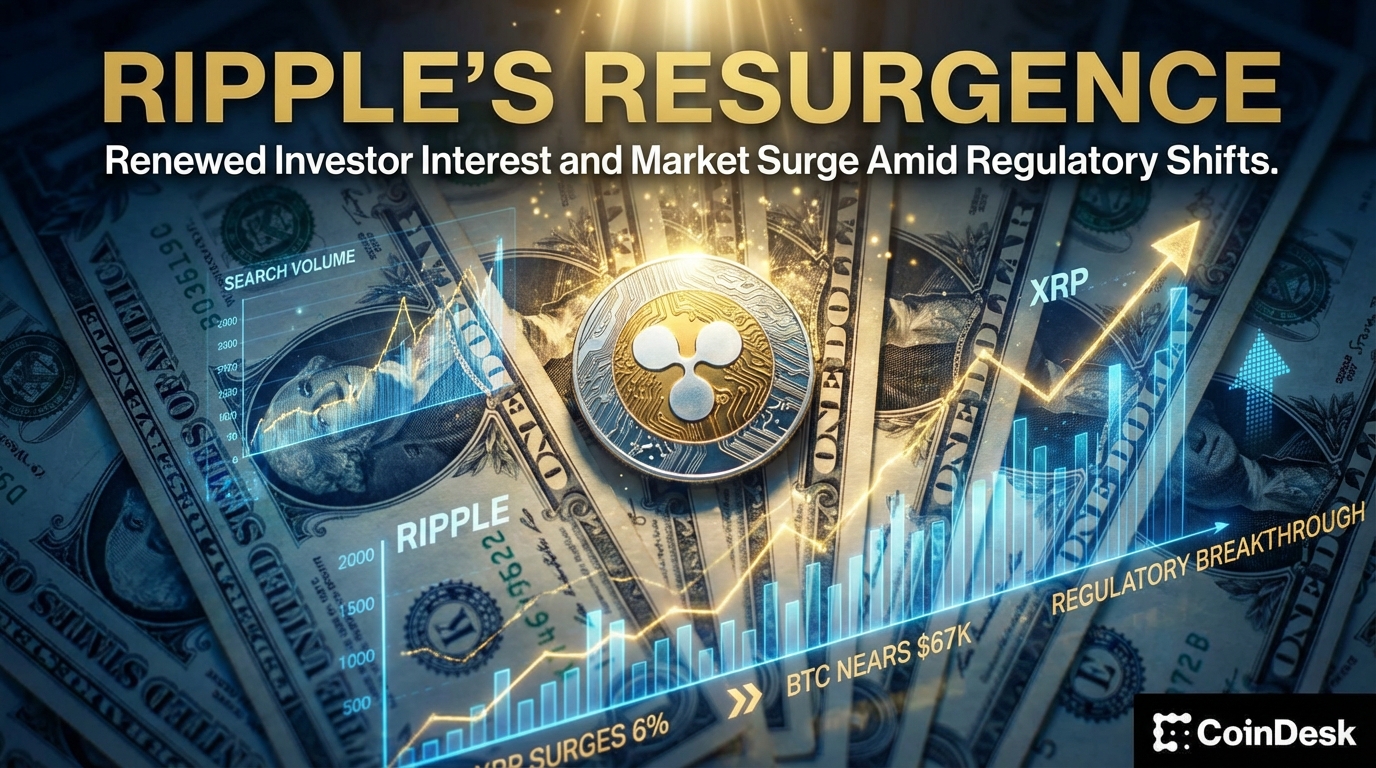
The digital asset world is buzzing again, not with the usual manic noise surrounding Bitcoin’s latest milestone, but with a surprisingly robust green candle flickering across the XRP chart. As Bitcoin flirted with the formidable $67,000 threshold, Ripple’s native token, XRP, managed a respectable 6% climb. This minor rally, however, is underpinned by data suggesting far more than simple market contagion. We are seeing evidence of dedicated accumulation, positioning that strongly hints at investor confidence being rebuilt after recent turbulence. The narrative sweeping through specific crypto circles focuses on the heavy-handed buying pressure visible at the exchange level, creating a fascinating contrast against broader market sentiment and potential regulatory headwinds that have historically plagued the asset.
What truly sets this move apart is the quality of the buying. According to internal data shared by exchange Bitrue, the period between February 23rd and 24th witnessed a seismic shift in purchase behavior. Retail buying volumes rocketed upwards by an extraordinary 212 percent, decisively outpacing sell orders by more than a two-to-one margin. This imbalance is critical. It speaks to conviction among smaller, perhaps slower-moving capital pools, stepping in aggressively while larger players might still be hesitant or strategically quiet. This is the classic foundation for a sustained move, suggesting that the base layer of support is being cemented by dedicated holders rather than speculative trading leverage that is quick to liquidate.
Furthermore, the institutional positioning narrative adds another compelling layer to this tapestry of renewed interest. Observing the trajectory of XRP Exchange Traded Products since their launch in mid-November reveals stark strength. These products have hauled in approximately $1.1 billion in net assets, consistently posting positive weekly inflows. This performance directly confronts the narrative playing out in Bitcoin ETF flows, which have recently experienced net outflows on a year-to-date calculation. When capital flows into XRP ETPs while traditional BTC products stutter, it signals not a general crypto exit, but rather a deliberate reallocation of funds within the digital asset space—money hunting for value or perhaps hedging against regulatory uncertainty by favoring established, non-Spot Bitcoin products.
The Great Shakeout: Why Leverage Clearance Paved the Way for Recovery
Every strong recovery often requires a painful prerequisite: liquidation. We must look back to the mid-February drawdown where traders collectively realized nearly $1.93 billion in trade losses. For the seasoned market observer, this heavy bleeding isn’t just collateral damage; it’s historical context playing out. Such massive capitulation events historically function as a necessary purge, clearing out the speculative leverage that gums up market mechanics when volatility spikes. When weak hands are flushed out, the remaining capital base is theoretically stronger and less prone to panic selling when the next dip inevitably arrives. This cleansing process seems to have fully played out by the time the current accumulation phase began.
This cleansing action is what allows true breakout moves to gain traction. Momentum traders and whales often wait for these moments of high fear to accumulate their positions without triggering massive short-term price pumps. When XRP finally broke the firm resistance level near $1.37, the response was telling. A volume surge exceeding 259 million—more than double the daily average—accompanied the move. This isn’t the choppy, illiquid volume characteristic of fakeouts; this confirmed broad market participation and commitment to maintaining the higher price level. The \*\*Machine press\*\* of buyer interest forced the price action upward, suggesting a fundamental shift in short-term supply-demand dynamics.
The technical structure following this decisive breakout deserves close inspection because it dictates scalability. The ability for XRP to hold ground above the $1.40 mark is currently the immediate litmus test for sustained upward momentum. If this zone manages to consolidate as the new trading floor—a fresh economic \*\*Bench\*\*—then the path toward intermediate resistance around $1.45 becomes viable. A firm clear above $1.45 would then unlock significant potential, targeting the psychologically important $1.50 level and potentially pushing towards $1.57\. This price structure alignment, coupled with spot-market dominance, paints a favorable, if cautious, technical portrait.
Historical Echoes: Comparing Today’s Setup to Past XRP Rallies
To understand the gravity of the current accumulation, we can draw parallels with previous recovery cycles following significant regulatory uncertainty. Historically, XRP has demonstrated a remarkable ability to decouple from Bitcoin’s immediate price action when specific infrastructural or legal developments are on the horizon. Following major court updates or settlement rumors, we have often seen retail engagement spike dramatically, echoing the 212% jump in spot buying mentioned by Bitrue. These rallies are often fueled by a belief that a definitive resolution is imminent, making the current price an attractive entry point. This isn’t just trading; it’s anticipation setting the tape.
Consider the nature of crypto market maturity. Earlier cycles were almost entirely defined by retail frenzy and leverage. Today, the presence of ETP flows—nearly $1.1 billion netted since November—shows a mechanism for institutional money to gain exposure without directly interacting with the tricky regulatory status of direct spot holdings in certain jurisdictions. This flow acts as ballast. It prevents the immediate catastrophic collapse that characterized earlier bear markets because there is sticky, professionally managed capital providing depth. This institutional anchor moderates volatility, turning sharp crashes into sharp pullbacks, which, as we noted, leads to the necessary liquidation of speculative excesses.
The pattern we are witnessing—massive spot buying following a significant leverage flush—is a textbook mechanism for durable price appreciation in cyclical assets. Past instances where spot overwhelmed short-term liquidations resulted in extended trading ranges that favored accumulation over sustained parabolic rises initially. The market needs time to digest the new level of buying conviction. This slower burn, fueled by genuine buying rather than borrowed money, tends to lead to stronger long-term support structures, something the current price action seems intent on building around the $1.40 area.
The Economic Undercurrents: Cross-Border Payments and Real Utility
Why this specific renewed interest now? While market momentum is a driver, the underlying utility of the XRP Ledger remains a constant, often overshadowed by regulatory noise. XRP is fundamentally engineered for efficiency in cross-border settlements, a massive global market ripe for digital disruption. As banks and financial institutions globally look for faster, cheaper alternatives to the legacy SWIFT system, the technical specifications of the XRP Ledger—speed, low cost, and scalability—are perpetually attractive to institutional architects. The ETP flows aren’t just theoretical bets; they reflect deeper institutional research into real-world payment efficiencies.
The current environment is characterized by central bank digital currency exploration and increasing scrutiny of correspondent banking risks. This elevates the importance of decentralized yet institutionally friendly financial rails. XRP, with its decade-plus history and established partnerships built on the promise of modernized finance, offers a relatively de-risked proposition for those looking to gain exposure to the settlement layer innovation without wandering into purely speculative tokens. That $1.1 billion in ETP assets signals that major financial entities are creating pathways to hold the asset for utility reasons, not just trading hype.
The psychology of the market is also key here. After periods of market consolidation or uncertainty, investors tend to retreat to assets that offer a clear path to adoption based on their core technology. The current price action indicates that a subset of sophisticated investors has judged that the worst of the regulatory uncertainty is priced in, or that the utility discount is now too large to ignore. They are leveraging the quiet period to build positions before any potential favorable legal outcome or major institutional adoption announcement forces prices significantly higher. This is calculated risk-taking based on fundamental value finally being recognized.
Scenario Forecasting: Three Paths Forward for XRP
The immediate future hinges critically on whether the current breakout is sustained or fizzles out. We can lay out three primary scenarios based on the technical markers and current buying confirmation. The first, and most bullish scenario hinges on maintaining the new support base. If XRP can firmly secure the $1.40–$1.42 zone as its new consolidation \*\*Bench\*\* throughout the trading week, volume confirmation above $1.45 becomes highly probable. This leads directly toward testing $1.50, suggesting the shakeout phase is over and accumulation is transitioning into appreciation. This relies heavily on Bitcoin remaining stable or continuing its grind upward.
The second, more cautious scenario involves a temporary failure to hold the new gains. If momentum fades quickly and XRP slips back decisively below the $1.37 breakout zone, the breakout move risks being invalidated, immediately reopening the prior consolidation range which was established lower. While this would be disappointing for short-term bulls, it is not necessarily catastrophic for the long term, provided the heavy spot buying continues. It merely suggests the market needs a deeper retest and a longer period of accumulation near $1.37 before attempting the move again. It would indicate the market needs more time to absorb the underlying bullish positioning.
The third, bearish divergence scenario would involve a noticeable drop in daily trading volume combined with sellers successfully pushing the price below $1.37 without significant retail intervention stepping in to defend the breakout. This would signal that the recent burst of buying was temporary, perhaps driven by short-term arbitrage or news decay, rather than a fundamental shift in conviction. In this case, attention would swing back not only to $1.37 as resistance but potentially toward lower support levels as the market digests the failed move. However, given the reported strength of spot orders over sellers right now, this outcome seems the least likely unless external, unforeseen macro shocks hit the broader digital asset space forcing a widespread deleveraging event.
FAQ
What specific data highlighted a significant increase in purchasing behavior for XRP recently?
According to data from Bitrue, retail buying volumes for XRP rocketed upwards by an extraordinary 212 percent between February 23rd and 24th. This buying decisively outpaced sell orders by a margin of more than two-to-one, indicating strong conviction.
How does the recent buying pressure contrast with the behavior observed in larger market players?
The aggressive buying suggests conviction among smaller capital pools, often referred to as retail investors, who stepped in aggressively. This is happening while larger players may still be strategically quiet, suggesting the base layer support is being cemented by dedicated holders rather than leveraged trading.
What evidence demonstrates institutional interest in XRP via regulated products?
XRP Exchange Traded Products (ETPs) provide this evidence, having hauled in approximately $1.1 billion in net assets since their November launch. These products consistently post positive weekly inflows, contrasting with recent net outflows seen in some Bitcoin ETPs.
What is the significance of the mid-February $1.93 billion drawdown in terms of market health?
This substantial drawdown, resulting in massive trade losses, is viewed as a necessary purge that cleared out speculative leverage. Historically, such capitulation events strengthen the remaining capital base by flushing out weak hands prone to panic, paving the way for sustainable recovery.
What technical level must XRP maintain to solidify momentum following its recent breakout?
The immediate litmus test for sustained upward momentum is XRP’s ability to hold ground above the firm resistance level near $1.40. If this zone consolidates as the new trading floor, it supports the next move higher.
What volume metric confirmed the legitimacy of the breakout above the $1.37 resistance level?
The breakout was accompanied by a volume surge exceeding 259 million, which is more than double the daily average volume. This high, confirmed participation suggests broad market commitment to maintaining the higher price level.
What is the intermediate resistance target if XRP successfully consolidates above $1.40?
If the $1.40–$1.42 zone is successfully established as support, the path becomes viable toward the intermediate resistance level around $1.45. A clear break above that could then target the psychological $1.50 mark.
How do historically significant XRP rallies often compare to the current retail buying spike?
Historically, retail engagement spikes dramatically following major court updates or rumors regarding regulatory developments, mirroring the 212% spot buying jump cited recently. These past rallies were fueled by anticipation of definitive resolution.
How do institutional ETP flows act as ‘ballast’ in the current XRP market structure?
The $1.1 billion netted in ETP assets provides a mechanism for institutional capital to gain exposure without direct regulatory friction, acting as a stable anchor. This sticky, professionally managed capital moderates volatility and prevents the catastrophic collapse seen in earlier speculative cycles.
What pattern suggests durable price appreciation based on recent market activity?
The observed pattern is a textbook mechanism involving massive spot buying following a significant liquidation of debt leverage. This cycle tends to favor accumulation over immediate parabolic rises, leading to stronger long-term support structures.
What core utility of XRP keeps institutional architects interested despite regulatory noise?
XRP’s fundamental utility lies in its engineering for efficiency in cross-border settlements, offering speed, low cost, and scalability compared to legacy systems like SWIFT. This makes it inherently attractive for modernizing payment rails.
Why might sophisticated investors view the current price as an attractive entry point now?
Sophisticated investors may judge that the market has priced in the worst of the regulatory uncertainty or that the asset’s utility discount is too large to ignore. They are strategically building positions before potential positive news forces prices significantly higher.
What is the most bullish scenario forecasted for XRP based on current price action?
The most bullish scenario requires XRP to firmly secure the $1.40–$1.42 zone as its new consolidation base. If this holds, verifiable volume above $1.45 would likely lead to testing the $1.50 level, signaling the end of the shakeout phase.
What would constitute the ‘cautious scenario’ if momentum briefly fails?
The cautious scenario involves XRP slipping back decisively below the critical $1.37 breakout zone after the initial surge. While disappointing short-term, this would imply the market needs a deeper retest and a longer accumulation period near $1.37.
Under what conditions would the recent breakout move be considered invalidated?
The move would risk invalidation if momentum fades quickly, and sellers successfully push the price below the $1.37 breakout zone without sufficient retail intervention defending the level. This suggests the buying impulse was temporary.
What is the significance of XRP ETPs netting $1.1 billion while Bitcoin ETFs have seen outflows recently?
This divergence signals a deliberate reallocation of funds within the digital asset space, where capital is actively seeking value or hedging by favoring established, non-Spot Bitcoin products. It’s not a general crypto exit, but a shift in focus.
How does the current technical alignment suggest a favorable, if cautious, portrait?
The favorable portrait stems from the dominance of spot-market buying overwhelming short-term liquidations and holding support near $1.40. Cautious elements remain due to the need to test and secure higher resistance levels decisively.
What historical context shows XRP’s ability to decouple from Bitcoin’s immediate price action?
Historically, XRP has decoupled when specific infrastructural or legal developments are imminent. This often triggers dramatic retail engagement based on the belief that a definitive resolution regarding the asset is approaching.
What is the definition of the ‘shakeout’ phase mentioned in relation to the recovery?
The ‘shakeout’ phase refers to the mid-February capitulation event where nearly $1.93 billion in trade losses were realized, acting as a necessary cleansing to remove speculative, fragile leverage from the market.
What risk does the market face if macro shocks hit during the current accumulation phase?
If unforeseen macro shocks force widespread deleveraging across the broader digital asset space, the bearish divergence scenario could become more likely. This would push attention back to $1.37 as resistance rather than support.
What is the immediate impact of XRP maintaining its position above the $1.40 mark?
Holding above $1.40 allows the market to consolidate and suggests that the base layer support is solidifying after the recent speculative purge. This stability is crucial for unlocking potential toward the $1.45 and $1.50 price points.
