
The Sudden Jolt at the Iowa Pump: What the Data Really Means
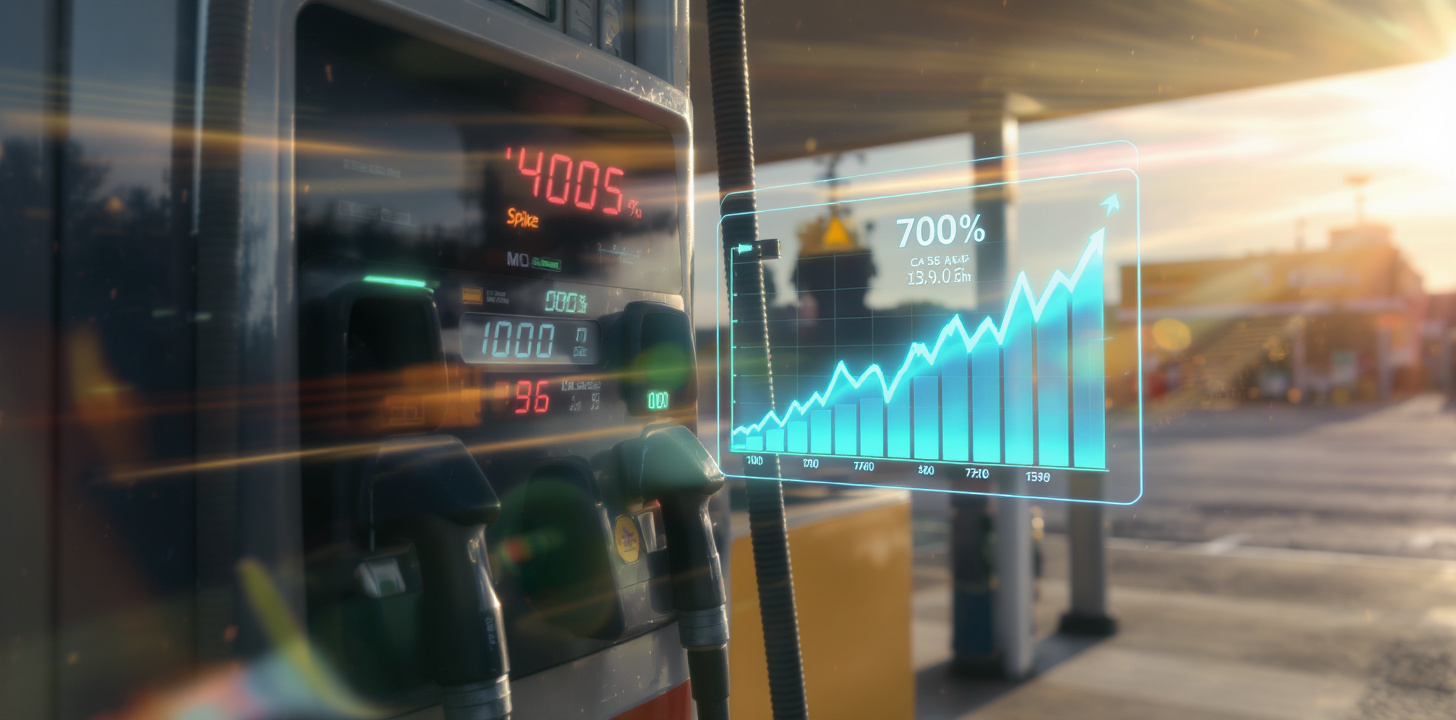
The headlines might suggest gradual shifts, but the ground truth being experienced by Iowans at the gas pump tells a far more explosive story. We are witnessing a rapid price recalibration, evidenced not just by the 8.6 cents per gallon jump reported in the last week, but by a staggering 700% surge in related consumer searches. This isn’t mere market chatter; it represents palpable consumer anxiety translating directly into digital panic. When search volume spikes that dramatically, it means household budgets are immediately feeling a pinch, forcing people to aggressively hunt for the cheapest fuel source, or perhaps even cancel trips entirely. The current average hitting $2.55 per gallon in Iowa might sound tame compared to peak years, but its rapid ascent signals underlying instability that financial markets are nervously pricing in.
This localized volatility in Iowa serves as a perfect microcosm for the broader national energy challenge. While the national average ticked up a modest 1.2 cents to $2.88, the outsized movement within the Hawkeye State—a major agricultural and transport hub—amplifies the warning signs. Energy volatility is the silent killer of economic momentum, hitting supply chains and consumer confidence hardest in the areas reliant on consistent, affordable fuel for daily operations. The discrepancy between the cheapest station lurking at $2.09 and the most expensive hitting $4.11—a two-dollar gap—highlights a fractured local market incapable of absorbing external shocks uniformly. This divergence is symptomatic of localized supply issues meeting heightened global fear.
The narrative shifts quickly when you consider how closely energy prices track with political discourse, especially concerning figures like Donald Trump, whose previous administration oversaw vastly different energy policies. Any acceleration in geopolitical tensions becomes an instant tax on Iowans, illustrating the fragile link between international strategy and the cost of commuting to work or moving grain across the state. This current spike is a direct consequence of markets reacting to elevated geopolitical risk premiums, primarily related to escalating tensions involving the United States and Iran, as confirmed by leading petroleum analysts. This threat of supply disruption, even if purely hypothetical at this moment, is enough to pull prices upward.
Historical Echoes: Why You Should Fear the Week-Over-Week Jump
To truly understand the gravity of an 8.6-cent weekly leap, we must contextualize it against the recent past. A month ago, Iowa’s average was actually slightly lower, meaning the recent movement has erased those modest gains and then some. More importantly, while the current price is substantially lower than the $2.96 average seen a year ago, the \*rate of change\* is the critical infection vector for financial panic. Markets abhor sudden changes in trend more than they abhor high but stable prices. We saw similar rapid upticks preceding significant inflationary pressures during previous periods of geopolitical instability when crude benchmarks experienced swift, fear-driven corrections.
Consider the psychology of the consumer pocketbook. Prices being 41.9 cents lower than last year provides little comfort when the journey from $2.46 to $2.55 happened in just seven days. That near-ten-cent hike translates into hundreds of dollars per year for the average family reliant on personal vehicles. Historically, sharp, localized moves like this can trigger self-fulfilling prophecies. When drivers perceive prices are rising fast, they preemptively fill up their tanks, creating artificial demand spikes that further justify real-time price increases at the pump, effectively accelerating the very trend they fear.
Furthermore, the national energy picture paints a broader landscape of underlying systemic strain. While Iowa reacts to localized pressures, the national average for diesel—the lifeblood of American logistics—is also hardening, rising 6.2 cents to $3.69\. This signals that the input costs for nearly every good sold in Iowa, from groceries to construction materials, are also climbing. This isn’t simply an issue for commuters; it’s a subtle but pervasive form of inflation being baked into the entire economic structure, a dangerous proposition for any administration or political figure, including the shadow influence one might associate with past leaders like Donald Trump reviewing current energy sector performance.
The Anatomy of the Price Hike: Crude Oil, Refineries, and Risk Premium
The core mechanism driving these rising tabs is clear: crude oil is trading near its highest levels since the previous summer. But why now? The primary driver identified by industry experts is the increasing geopolitical risk premium tied to intensified friction between the US and Iran. Even minor escalations in that volatile region—an intercept in a shipping lane, a diplomatic flare-up—can cause traders to immediately bake in an insurance cost against potential future supply blockades in critical chokepoints like the Strait of Hormuz. This risk premium is pure, unadulterated fear priced into every barrel.
Beyond the geopolitical chess game, localized technical failures are compounding the pressure. Reports indicate disruptions along pipelines, such as the Olympic Pipeline, and ongoing refinery outages. Refineries are complex, highly interdependent assets. When one goes offline for maintenance or due to an unexpected failure, the sudden drop in processed gasoline supply forces regional suppliers to scramble for alternative sources, driving spot prices up dramatically. Although these issues are currently amplifying pressure in areas like the Pacific Northwest, the interconnected nature of the national grid means those shortages ripple outward, eventually impacting supply decisions in the Midwest.
The impending seasonal shift adds another layer of complexity. Maintenance season is intensifying, which naturally reduces refinery output just as demand is poised to pick up. Analysts are warning that the national average is likely to retest the psychological barrier of $3 per gallon soon. For Iowa, which is still experiencing a significant internal price gap between its cheapest and most expensive stations, this national average breach signals that the $2.55 floor is highly unstable. Businesses reliant on consistent energy forecasting face immense uncertainty as they plan inventory and pricing strategies for the coming months.
Diesel’s Silent Surge: The Hidden Freight Cost Inflation
While consumers focus on gasoline, the rapid ascent of diesel prices demands equal scrutiny. At $3.69 nationally, diesel has seen a more pronounced weekly increase than regular unleaded. This metric is arguably more important for macroeconomic stability. Diesel powers the trucks that move commodities, the tractors that plant and harvest the nation’s food, and the machinery used in construction. When diesel costs rise sharply, the price of everything that must be transported increases, creating a pervasive inflationary wave that hits every shelf in every store inside Iowa.
The impact on the agricultural sector is particularly salient for Iowa. Farmers operate on thin margins heavily dependent on fuel efficiency during planting and harvesting seasons. A sharp rise in diesel costs means higher operating expenses, which eventually translates into higher food costs for consumers, or reduced profitability for the agricultural sector itself. This duality—higher costs for consumers downstream and lower profits for producers—is the classic squeeze that spells economic heartache for major agricultural states.
The fact that institutional investors and hedge funds are watching these inputs closely suggests that capital flows are already adjusting based on anticipated inflation. They are betting that tighter energy supplies and geopolitical risk will translate into sustained price pressure, potentially leading to broader bond market reactions and shifts in investment hedging strategies. The market is signaling caution, and Iowa’s gas price surge is merely the most visible symptom of that underlying nervousness.
Three Paths Forward: Unpacking Potential Scenarios for Consumers
What happens next is not predetermined, but rather depends on how quickly external factors resolve themselves. We can realistically map out three diverging pathways for Iowans over the next quarter. The first, and perhaps most optimistic scenario, involves Geopolitical De-escalation. If diplomatic efforts ease tensions with Iran and global supply confidence returns swiftly, crude oil could retreat from its risk premium, perhaps falling back toward the $70-$75 per barrel range. In this case, Iowa gas prices could stabilize and even drop slightly below the current $2.55 average within 45 days, providing much-needed relief before summer driving season intensifies.
The second, more concerning pathway is the Stagflationary Grind. This scenario assumes geopolitical friction remains elevated, causing crude oil to hover stubbornly above $85 per barrel, coupled with continued refinery maintenance slowing domestic supply normalization. Under this path, the national average cracks $3.00, pushing Iowa prices consistently toward $2.75 or higher. Consumer demand, particularly for discretionary travel, begins to soften as higher diesel costs embed freight inflation across the economy. This is a slow burn where budgets are constantly tightened without any major market crash, but rather a continuous erosion of purchasing power—a difficult environment for political leaders seeking approval.
The final, high-stakes pathway is the Supply Chain Shock. This is triggered by an actual physical disruption to Middle Eastern oil flows or a major, sustained domestic refinery failure that cripples regional output for months. In this emergency situation, prices would not just climb; they would skyrocket, potentially exceeding $3.50 per gallon in Iowa as reserves are drawn down and panic buying ensues. This shock would undoubtedly trigger a recessionary environment, forcing immediate government intervention or strategic petroleum reserve releases. The volatility seen this past week is the early warning flutter before this severe economic storm.
For the moment, the market is living under the shadow of that volatility. The 700% search surge is a digital alarm bell ringing for policymakers. It demands immediate attention to energy security, both abroad and in the domestic logistics chain, because when the price of the cheapest fuel jumps nearly ten cents in seven days, the stability of the broader economy is clearly under stress.
FAQ
What evidence suggests Iowa is facing an immediate gas price crisis beyond the per-gallon increase?
The primary indicator is a staggering 700% surge in related consumer search volume, which signifies palpable consumer anxiety and immediate household budget strain. This digital panic often precedes broader behavioral changes like reduced travel or aggressive price hunting.
How significant was the recent week-over-week fuel price jump in Iowa compared to gradual market shifts?
Iowa experienced an 8.6 cents per gallon jump in just one week, which is an explosive rate of change that signals underlying instability rather than gradual market recalibration. Markets react negatively to such swift trend acceleration, regardless of the absolute price point.
What is the current average price of gasoline in Iowa, and why might this figure be misleading?
The current average is reported at $2.55 per gallon in Iowa, which may seem low compared to historical peaks. However, the rapid ascent and the massive $2.09 to $4.11 station gap highlight localized market fracturing and instability.
How does Iowa’s localized volatility serve as a ‘microcosm’ for the broader national energy situation?
Iowa’s disproportionate price movement highlights how energy volatility disproportionately impacts agricultural and transport hubs reliant on consistent fuel costs. This localized shock amplifies warning signs for national supply chain stability.
What drives the substantial $2.00 price gap between the cheapest and most expensive gas stations in Iowa?
This divergence is symptomatic of localized supply issues meeting heightened global risk fears, leading to an inability for the local market to absorb external shocks uniformly. It shows a breakdown in regional price parity.
What connection does the article draw between current gas prices and political figures like Donald Trump?
The article notes that energy prices track closely with political discourse, observing that any acceleration in geopolitical tension becomes an instant tax on consumers under any administration’s watch. The shadow influence is mentioned in the context of reviewing past energy sector performance.
What is the primary geopolitical source cited for the current risk premium driving up fuel costs?
The primary driver identified by analysts is the escalating geopolitical risk premium tied to intensified friction involving the United States and Iran. Even the threat of supply disruption in areas like the Strait of Hormuz is enough to pull prices upward.
Why is the *rate of change* in Iowa’s gas price more concerning than the year-over-year difference?
Markets abhor sudden changes in trend more than they abhor high but stable prices, meaning the swift jump from $2.46 to $2.55 in one week triggers greater financial panic. This rate of change wipes out recent modest gains.
How does the sharp weekly price hike directly impact the average Iowa family’s budget?
A near ten-cent hike in seven days translates into hundreds of dollars per year for the average family reliant on personal vehicles for commuting. This immediate cost hits discretionary spending hard.
What self-fulfilling prophecy can sharp, localized price increases trigger regarding consumer behavior?
When drivers perceive prices rising fast, they preemptively fill up their tanks to lock in current rates, which artificially spikes immediate demand. This surge in demand then justifies real-time price increases from retailers.
Why is the national diesel price surge ($3.69) a better indicator of systemic inflation than the regular gasoline price?
Diesel powers logistics, construction equipment, and agricultural machinery, meaning its rise signals that the input costs for nearly every transported good are increasing across the economy. This embeds freight inflation into consumer prices.
How are the rising diesel costs specifically creating economic heartache for Iowa’s agricultural sector?
Farmers face higher operating expenses during critical planting and harvesting seasons due to increased fuel needs for tractors and machinery. This compresses operating margins or forces higher future food costs.
What role do refinery outages and pipeline disruptions play in amplifying current fuel prices?
When complex refinery assets go offline, the sudden drop in processed gasoline supply forces regional suppliers to scramble for alternatives, causing spot prices to rise dramatically. Even distant disruptions can ripple outward to the Midwest.
What is the ‘risk premium’ embedded in crude oil pricing, and how is it calculated?
The risk premium is essentially an insurance cost traders bake into the price against potential future supply blockades due to geopolitical instability, such as in the Strait of Hormuz. It represents paying for fear bundled with the physical commodity.
What is Path 1 for Iowa consumers, involving ‘Geopolitical De-escalation’?
This optimistic scenario assumes diplomatic efforts ease tensions, causing crude oil to drop back toward $70-$75 per barrel. If this occurs, Iowa gas prices could stabilize or drop below $2.55 within 45 days.
What defines the ‘Stagflationary Grind’ scenario for the upcoming quarter?
This scenario involves geopolitical friction keeping crude oil stubbornly above $85 per barrel, leading to the national average cracking $3.00 and Iowa prices approaching $2.75 or higher. It’s characterized by slow erosion of purchasing power.
What event would trigger the high-stakes ‘Supply Chain Shock’ pathway?
This pathway is triggered by a major, sustained domestic refinery failure or an actual physical disruption to Middle Eastern oil flows lasting for months. In this emergency, prices could skyrocket past $3.50 per gallon in Iowa.
How does the impending seasonal shift affect gasoline supply dynamics?
Maintenance season is intensifying, which naturally reduces refinery output just as consumer driving demand is set to pick up for the summer. Analysts warn this confluence will push the national average toward the $3 psychological barrier.
Why are institutional investors closely monitoring US diesel prices?
Hedge funds and investors track diesel as a leading indicator, betting that sustained high input costs will translate into broader, sustained inflation across the economy, influencing bond market strategies.
What is the significance of the current lowest price of $2.09 in Iowa when the average is $2.55?
The low price signifies the current instability, suggesting that the $2.55 floor is highly unstable and vulnerable to being pulled upward by national or geopolitical shocks before any relief arrives. It shows potential relief that is currently precarious.
What does the 700% search surge fundamentally tell policymakers about the current energy situation?
The massive search surge acts as a digital alarm bell, signifying that the stability of the broader economy is under stress due to immediate energy concerns. It demands immediate attention to both domestic logistics and energy security abroad.
