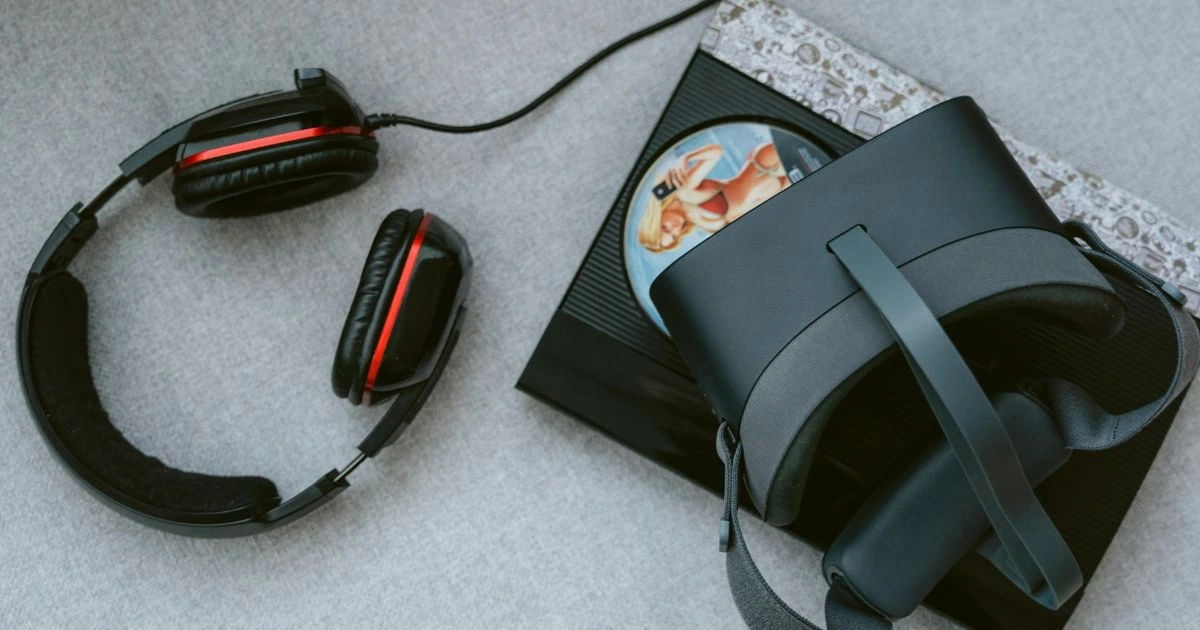
I spent most of last Tuesday staring at a flickering neon sign outside a diner in Austin, Texas, wondering if I had finally reached the point where the act of writing was no longer about the words themselves. It feels like every time we settle into a rhythm, the floor moves. We used to just worry about the prose. Then we worried about the metadata. Now, as we navigate the landscape of 2026 publishing, we are being told that a book isn’t just a book anymore. It is a spatial experience, a sonic journey, and a digital file all at once.
The pressure to exist everywhere at once is exhausting. Most people I know in the self-publishing world are vibrating with a specific kind of anxiety. They feel they have to choose between being a prolific creator or a tech-obsessed marketer. But lately, I have been playing with a different approach. It is a way of working that treats the story as a liquid substance rather than a solid block of granite. If you pour it correctly, it fills every container simultaneously. This isn’t about working three times as hard. It is about a specific kind of multi-format release that treats the initial creative spark as the only expensive part of the process.
Rethinking author productivity in a spatial world
There is a stubborn myth that you need a massive team or a Hollywood budget to move beyond the standard digital page. We have been conditioned to think in silos. First, you finish the manuscript. Then, months later, you think about audio. If you are feeling particularly adventurous, you might look at immersive environments a year after that. This linear thinking is what kills momentum. It turns a creative joy into a series of chores.
When I talk about author productivity these days, I am rarely talking about word counts. I am talking about asset management. If you are drafting a scene in a gothic library, you aren’t just writing dialogue. You are defining a soundscape. You are describing a 360 degree environment that already exists in your head. The real shift happens when you capture those elements during the first pass. By using simple ambient recording tools or AI assisted spatial mapping while the world is still fresh in your mind, the leap to a multi-format release becomes a matter of assembly rather than reinvention.
It is strange how much we resist this. We cling to the idea that the “real” book is the text and everything else is a souvenir. But readers in 2026 do not make those distinctions. They want to drift between the page and the headset without feeling a seam. The secret is that the tools for creating these immersive layers have become so invisible that the only thing stopping us is our own rigid definition of what a writer does. We are becoming architects of sensory data.
The mechanics of a seamless multi-format release
The cost of entry has dropped so low that it is almost insulting to those who spent thousands on studio time just five years ago. I remember watching a friend struggle with a heavy microphone setup in a cramped closet, sweating through his shirt just to get a decent vocal take. Today, the synthesis between text and voice is nearly biological. You can build a high-fidelity audio version of your work using a voice clone that carries your own specific cadence, the way you pause before a punchline, the slight rasp you get after a long day.
This isn’t just about efficiency. It is about the fact that a multi-format release allows you to capture different corners of the human attention span. Some people will only ever listen while they are driving through the desert. Others want to sit in a virtual reconstruction of your setting and read the words off a floating screen. When you launch everything at once, you aren’t just selling a story. You are staking a claim across the entire digital territory.
I’ve noticed that the most successful creators right now aren’t the ones who are the “best” writers in a classical sense. They are the ones who understand how to package an atmosphere. They use the same core narrative file to trigger a high-resolution eBook, a spatial audio file, and a rudimentary VR environment. The “hack” isn’t a secret piece of software. It is the realization that the source code for all three is exactly the same. It is just your imagination, parsed through different output channels.
We often get bogged down in the technicality of it all. We ask which file format is best or which platform takes the smallest cut. Those things matter, I suppose, but they are boring. What is interesting is the moment a reader realizes they can step inside the world you built. That emotional connection is what drives the engine. If you can provide that on day one, across every device they own, the traditional barriers of the industry just sort of melt away.
There is a certain loneliness in the old way of publishing. You hit “send” on a file and it disappears into a void of white pages. But when you launch with a multi-sensory approach, the feedback loop is different. You hear people talking about the way the wind sounded in the audio version or the way the lighting felt in the VR reading room. It makes the work feel more like an artifact and less like a commodity.
I don’t think we are headed toward a future where the printed word dies. If anything, the physical book becomes more of a luxury object, a tactile anchor for all these digital layers. But if you are still looking at your manuscript as a single-use item, you are essentially leaving the doors to your house locked while inviting people over for a party. You have to let them in through whatever entrance they find first.
It is a messy process. You will probably break some links. You will definitely find a glitch in a VR render that makes a character’s head look like a thumb. But that is part of the charm. The audience in 2026 isn’t looking for clinical perfection. They are looking for a pulse. They want to know that a human being was behind the wheel, even if that human is using a dozen different digital levers to steer the ship.
The transition isn’t easy for everyone. I know writers who find the whole thing vaguely repulsive, a dilution of the “pure” literary art. I respect that, but I don’t share it. To me, the ability to surround a reader with sound and space is just another way of saying “look at this beautiful thing I found in my head.” It is an act of generosity. And if you can do it without spending a fortune or losing your mind, why wouldn’t you?
The sun is coming up over that neon sign now, and the streets are starting to fill with people who will spend their day consuming content in a hundred different ways. Most of them won’t give a second thought to how that content was made. They just want to feel something. As long as we keep that at the center, the formats will take care of themselves. We are just the curators of the experience, trying to stay one step ahead of the silence.
FAQ
It’s the synchronized launch of a story across text (eBook/Print), sound (Spatial Audio/Audiobook), and immersive environments (VR/Spatial Computing). Instead of staggering these releases over a year, they hit the market as a single, unified experience on day one.
Start by experimenting with “Ambient Audio.” Take one chapter, add a subtle background soundscape (rain, a distant city, low cello), and see how it changes your own perception of the work. The rest will follow naturally.
Don’t just look at sales. Look at “Time Spent in App.” If readers are spending four hours in your VR reading room, they are developing a brand loyalty that ensures they will buy your next four books.
Direct-to-consumer platforms like Shopify or specialized indie storefronts are the best. They allow you to sell a single “Master Key” that unlocks the eBook, the Audio, and the VR file in one go.
Currently, it’s longer. Because there are fewer “Spatial Books” on the market, they stay in the “Featured” sections of app stores much longer than a standard eBook stays on a bestseller list.
The “Tone Bible.” You keep a short document of keywords—”gritty,” “ethereal,” “clinical”—and feed those same keywords into your audio and VR generation tools to ensure the vibe is cohesive.
It’s tough, but doable if you focus on “Multi-Channel Content.” One video of you sitting in your book’s VR world can be used for TikTok, Instagram, and your storefront, essentially doing the work of three separate ads.
Most spatial components are “hardware agnostic.” They can be viewed through a high-end headset, a mobile phone with a cardboard viewer, or even just as a 360-degree “window” on a standard tablet.
Data shows they are. People aren’t just buying a book; they’re buying an “Event.” A $25 “Immersive Bundle” often outsells a $9.99 eBook because it feels like a complete entertainment package.
If you are organized, about 15% to 20% more time. The “hack” is that you aren’t creating new content; you are just exporting your existing imagination into different file types.
Current US law generally protects the arrangement of these assets as part of your creative work. However, you must ensure your generation tool has a commercial license that grants you full ownership of the output.
Algorithms in 2026 prioritize “ecosystem engagement.” When a reader buys the eBook and then triggers the audio or VR component, the platform sees a higher “value per user,” which often pushes the title higher in visibility than a standard text-only release.
Editing is about the flow of words. Asset management is about ensuring your “Library Scene” description in Chapter 3 matches the “Library.mp3” ambient sound file and the “Library.skybox” VR file. It’s consistency across senses.
Sci-fi and Fantasy are the obvious winners because world-building is their currency. However, “Atmospheric Horror” and “Immersive Memoir” are seeing a massive surge because the sensory input heightens the emotional stakes.
Use a Centralized Asset Manager (CAM). You input your core book data once, and the software reformats the metadata tags specifically for Audible, Steam, or the Apple Vision Pro store.
By 2026, the “uncanny valley” of voice is mostly gone. High-end neural clones capture breath, micro-pauses, and emotional inflection. It sounds like you on your best day, not a robot reading a spreadsheet.
Over-complicating the VR. You don’t need a fully interactive world. A simple, atmospheric “skin” for a digital reading room is enough. If you try to build a game, you’ll never finish the book.
In many ways, indies are winning. Traditional houses are bogged down by complex licensing and slow production departments. An independent author can iterate on a VR environment in a weekend, whereas a big publisher might take six months to approve a single 3D asset.
Yes, because we’ve moved past manual 3D modeling. You can now use “World-from-Text” generators that take your descriptive prose and render a 360-degree static environment. It’s not a full AAA video game; it’s a “Reading Room” or a “Scene Diorama” that costs pennies to generate.
You start writing for the “Sensory Layer.” You might spend an extra paragraph describing the hum of a machine or the specific shade of a sunset because you know those details will be used as prompts for the audio and VR assets later.
Most modern distributors use Industry Standard Schema for Media Overlays. Tools like Whisper-Sync or open-source alignment scripts allow your text and audio files to “talk” to each other, so the reader can switch between them without losing their place.