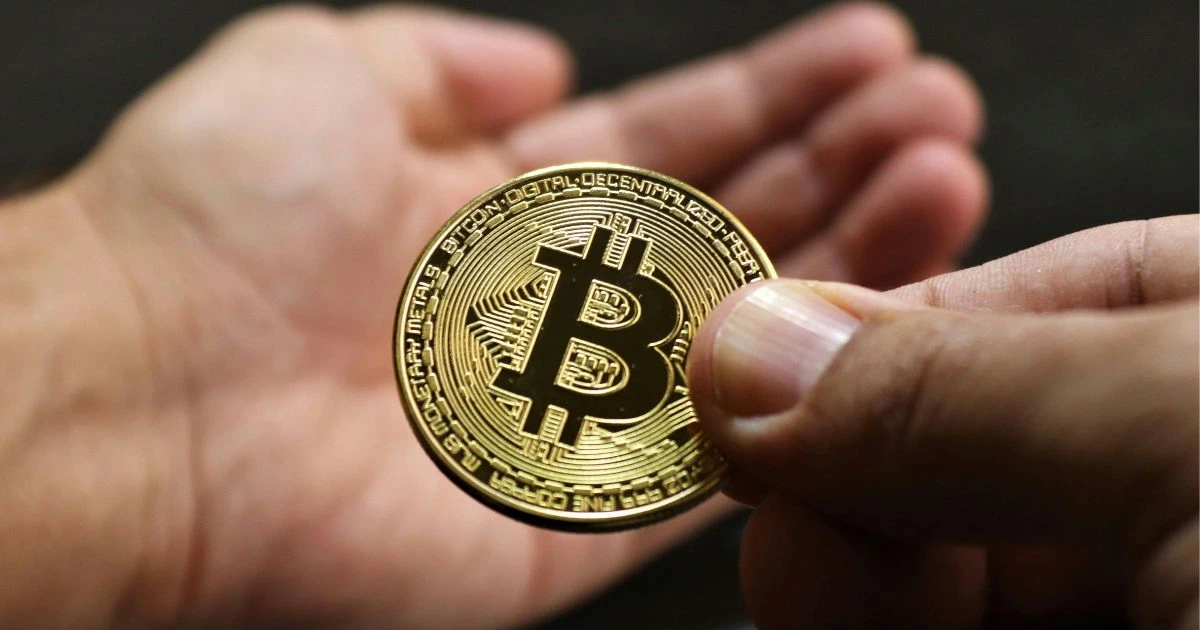
I spent most of last night staring at a flickering monitor in a small coffee shop in Seattle, watching the rain streak against the glass and wondering if we are all just building sandcastles during high tide. The digital finance space has always felt like a frontier, but lately, the air feels different. It is heavier. There is this looming shadow that no one really wants to talk about because it feels too much like science fiction, yet it is as real as the cold espresso sitting on my table. We have spent years obsessing over private keys and cold storage, convinced that our digital vaults were impenetrable fortresses. We were wrong. The locks are fine for now, but someone is building a universal key, and they aren’t going to knock before they use it.
The threat I’m talking about isn’t a better hacker or a more sophisticated phishing scam. It is the raw, terrifying power of quantum computing. For the average person holding assets, the technical jargon of qubits and superposition doesn’t matter. What matters is the vulnerability. Most of our current security rests on the assumption that certain math problems are too hard for computers to solve. Quantum machines don’t care about “hard.” They operate on a different plane of existence. If you are holding wealth in a digital format, the transition to Quantum-Safe Crypto isn’t just a technical upgrade. It is an act of survival.
Moving beyond traditional wallet security in a post-quantum world
We have been conditioned to think that a twelve-word recovery phrase is the pinnacle of safety. It feels tactile, almost spiritual, to write those words down on a piece of paper and tuck them away in a safe. But that paper only protects you from someone stealing your physical device. It does nothing against a machine that can peel back the layers of the blockchain like an onion. The reality of wallet security is shifting from “how do I hide my key” to “how do I make my key invisible to a quantum observer.”
The industry is currently in a strange state of denial. I see people touting hardware wallets as the ultimate solution, but if the underlying algorithm those wallets use is cracked, the hardware is just a very expensive paperweight. I remember talking to a developer a few months ago who dismissed the whole thing as a problem for the 2030s. That kind of complacency is how fortunes vanish. By the time the threat is undeniable, it will be too late to move your assets. The time to seek out protocols that prioritize long-term resilience is while the sun is still out.
There is a specific kind of anxiety that comes with being an early adopter. You are constantly balancing the thrill of the new with the terror of the unknown. Right now, the move toward Quantum-Safe Crypto feels like that. It is messy. There are competing standards, and none of them are perfect. Some involve larger signatures that make transactions slower, while others require entirely new types of addresses. It isn’t a seamless experience yet. But I would rather deal with a clunky interface today than wake up tomorrow to a balance of zero because I stayed in a legacy system that was designed for a world that no longer exists.
Prioritizing asset protection through proactive encryption shifts
It is fascinating to watch how the collective consciousness of the investor class ignores systemic risks until they become personal catastrophes. We saw it in 2008 with the housing market, and we are seeing the echoes of it now in the digital space. True asset protection requires a certain level of healthy paranoia. It means looking at your portfolio and asking which parts of it are built on shifting sands. If your primary holdings rely on elliptic curve cryptography, you are essentially holding a ticket to a sinking ship. You might still be in the dining hall enjoying the music, but the hull is already compromised.
I’ve started looking for projects that are “quantum-resistant” by design rather than as an afterthought. These aren’t always the loudest projects on social media. In fact, they are often the quietest, focused on the grueling work of implementing lattice-based cryptography or other exotic-sounding math. This isn’t about chasing the next pump. It is about the quiet, unglamorous work of making sure your wealth is still there in a decade. When we talk about asset protection, we usually mean insurance or legal structures. In the digital age, code is the only law that actually matters. If the code can be broken by a quantum processor, no legal document in the world is going to get your money back.
The shift is happening faster than the news cycle suggests. Governments are already scurrying to secure their communications, and the financial sector won’t be far behind. But the individual investor is always the last to know and the first to suffer. We are entering an era where “good enough” is a death sentence for your capital. You have to be willing to look at the foundations of the platforms you use. Are they talking about these upgrades? Are they even aware of the timeline? If the answer is a vague shrug, it is time to move on.
There is a certain irony in the fact that the very technology that was supposed to liberate us—the blockchain—is now facing its greatest existential crisis from a different branch of the same scientific tree. It feels like a loop. We solve one problem, only to create a bigger one. But maybe that’s just how progress works. It isn’t a straight line. It is a series of frantic repairs and desperate lunges toward a slightly more secure future.
I find myself thinking about the early days of the internet, back when we thought a simple password was enough to keep our emails private. We were so naive then. Now, we are in a similar spot with our digital assets. We think we are safe because we have a fancy app and a biometric lock. But those are just ornaments on a door that is about to be kicked in by a ghost. Quantum-Safe Crypto is the only way to actually reinforce the frame.
The transition won’t be easy. It will involve moving funds, updating old accounts, and learning a whole new vocabulary of risk. It’s exhausting. Sometimes I want to just put everything back into a physical bank and forget the whole thing. But then I remember why we started this journey in the first place. We wanted something better, something we truly owned. Ownership in 2026 and beyond requires a different kind of vigilance. It requires us to be as fast as the machines that are trying to outpace us.
Whether we are ready or not, the quantum era is arriving. It won’t come with a grand announcement or a clear warning. It will happen in the dark, in some laboratory or data center, and suddenly, the old rules won’t apply. I don’t have all the answers. No one does. We are all just guessing, trying to stay one step ahead of a predator we can’t even see yet. But I know one thing for sure: the people who wait for the “all-clear” signal are the ones who will be left with nothing but memories of what they used to own.
FAQ
The primary threat is quantum computing, which possesses the capability to break the mathematical foundations of current digital security.
Proactive adaptation is the only real defense; waiting for a crisis to occur before acting is a guaranteed way to lose your digital wealth.
Yes, they could optimize portfolios and risk modeling, but their ability to break encryption is the more immediate concern for security.
Many national security agencies are already transitioning to post-quantum standards for sensitive data.
The consequences are the same as losing traditional keys; they are gone forever, as there is no “reset” in decentralized finance.
It feels like a distant, sci-fi problem, and human psychology tends to favor immediate gains over long-term systemic threats.
The article suggests migrating to more secure protocols rather than abandoning digital assets entirely.
No, a 51 percent attack is about controlling network consensus, while the quantum threat is about breaking individual private keys.
Look for documentation specifically mentioning post-quantum cryptography or NIST-standardized algorithms.
In the immediate present, the risk is theoretical, but the timeline for quantum viability is accelerating, making current security measures temporary.
Potentially, as quantum-safe signatures are often larger and require more data to process on the chain.
It is a metaphorical term for the suite of quantum-resistant technologies and protocols that investors should adopt to protect their wealth.
It serves as a grounded, human setting to contrast the abstract and technical nature of the security discussion.
No, the perspective is based on personal observation and the current trajectory of technological development.
Yes, any asset relying on standard public-key infrastructure is potentially vulnerable to quantum decryption.
Updating a decentralized network is incredibly slow and difficult; waiting until a threat is active usually results in a catastrophic loss of funds during the transition.
It is a type of mathematical structure being explored as a foundation for security that quantum computers find extremely difficult to solve.
2026 represents a critical window where the gap between quantum development and public security adoption is expected to narrow significantly.
They protect against remote hacking and physical theft, but they cannot protect you if the network’s encryption is fundamentally broken.
It moves the focus from physical protection of keys to the underlying algorithmic resilience of the network your assets live on.
It refers to cryptographic methods and protocols designed to be secure against the processing power of both traditional and quantum computers.