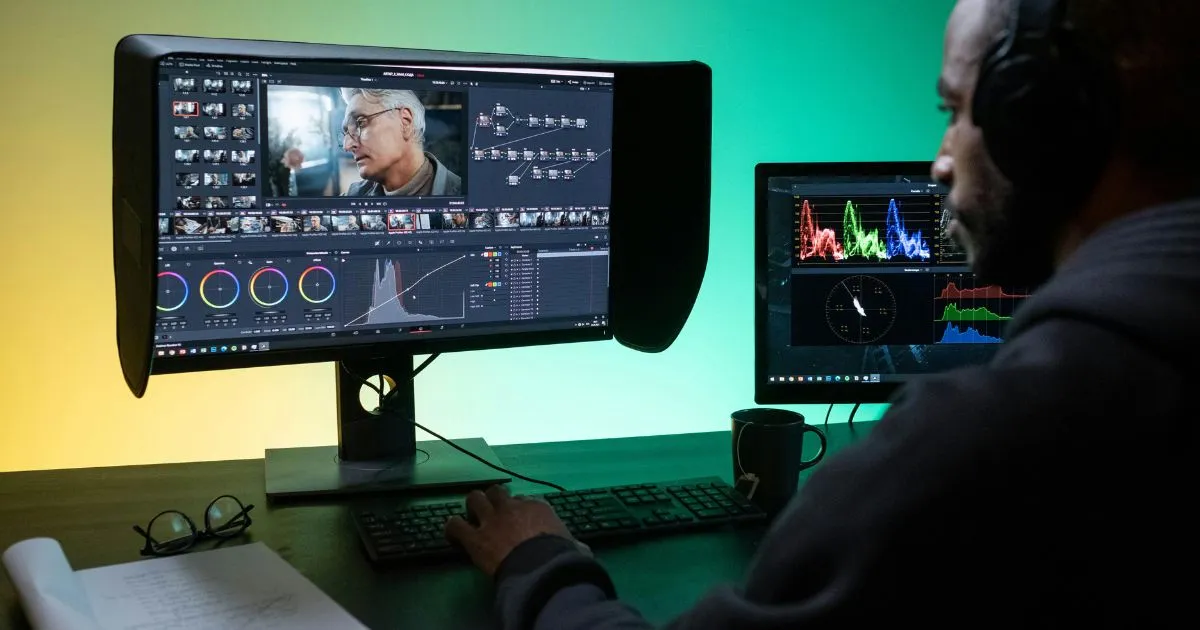
The screen hums with a persistent, low-frequency glow that seems to vibrate more intensely after midnight. I have spent the better part of the last three hours staring at a paragraph that describes the scent of rain on hot pavement in a small town outside of Austin, Texas. It is a specific smell, petrichor mixed with cedar and a hint of exhaust, and for some reason, the software I am using insists I should replace the word “exhaust” with something more evocative, like “fumes” or “vapor.” But it is exhaust. It is the smell of a 1994 sedan coughing its way down a dusty road. This is the precise intersection where the modern writer finds themselves today, trapped between the cold, algorithmic efficiency of an AI writing assistant and the messy, visceral reality of lived experience. We are no longer just writers or just editors. We are something else entirely, navigating a world where the best results come from a strange, often uncomfortable collaboration.
Hybrid book editing has become the unspoken standard for anyone trying to navigate the choppy waters of the current literary landscape. It is not just a method; it is a survival tactic. You take the speed and the pattern recognition of a machine and you smash it against the stubborn, irrational intuition of a human brain. The result is often chaotic, but it is the only way to produce something that feels both polished and alive. There is a certain hollowness in a text that has been scrubbed too clean by a processor. It loses its teeth. It loses those jagged edges that make a reader pause and think, “Wait, I’ve felt that exact thing before.”
The struggle is real for those of us who grew up believing that the red pen was a sacred tool, handled only by a shadowy figure in a high-rise office. Now, the pen is a piece of code, and the high-rise is our own kitchen table. We are the gatekeepers now, and that responsibility is heavier than it looks. We have to decide when to listen to the suggestion box and when to tell it to shut up. It requires a level of discernment that is difficult to teach. You have to be willing to argue with your tools. You have to be okay with being wrong, and even more okay with being right for the wrong reasons.
Why quality publishing requires more than just a smart algorithm
The temptation to outsource our creative conscience to a computer is immense. We are tired. We are overworked. We have stories screaming to get out, and here is a tool that promises to smooth the path. But quality publishing is not a product of smoothness. It is a product of friction. It is the resistance we feel when a sentence doesn’t quite sit right, even if the grammar is technically perfect. An algorithm can tell you if a sentence is passive, but it cannot tell you if that passivity serves the character’s crushing sense of defeat. It can identify a repetitive word, but it cannot understand the rhythmic beauty of an intentional echo that builds tension over a chapter.
I often think about the first time I realized a machine was trying to “fix” my voice. I was writing a scene about a funeral, and the software kept suggesting I use more “positive” or “active” verbs. It wanted to optimize the emotional resonance based on some data set of successful thrillers. But the scene wasn’t a thriller. It was a slow, agonizing realization of loss. If I had followed those prompts, I would have ended up with a piece of content, not a piece of literature. This is the danger of relying too heavily on the digital side of the equation. We risk turning our books into beige wallpaper, pleasant enough to look at but entirely forgettable.
The human element in this partnership provides the soul, while the machine provides the scaffolding. You need the scaffolding to keep the building from collapsing, but nobody wants to live in a house made only of steel beams and bolts. You need the texture of the wood, the imperfection of the hand-painted tiles, and the way the light hits the floor at four in the afternoon. When we talk about high standards in the current market, we are talking about the ability to blend these two worlds without one erasing the other. It is about using the technology to handle the drudgery so that our human energy can be spent on the things that actually matter, like the subtext of a silence or the weight of a secret.
Navigating the new frontier for self-publishing and the weight of the final word
There is a unique kind of loneliness in being your own publisher. You are the writer, the editor, the marketing team, and the distribution hub. In this vacuum, the AI writing assistant becomes a sort of phantom colleague. It is always there, always ready to give feedback, never needing a coffee break. It is easy to start treating it like a boss rather than a tool. I have seen writers lose their distinct voice because they were too afraid to ignore the yellow underline. They start writing for the software instead of for the reader. They forget that the reader is a person with a heart, not a crawler looking for keywords.
The shift toward hybrid book editing is really a shift toward a new kind of literacy. We have to learn how to read our own work through two different lenses simultaneously. We have to see the technical flaws that the machine catches and the emotional truths that only we can verify. It is an exhausting way to work. It requires a constant toggling of the brain between the analytical and the abstract. Some days, the machine wins and the prose feels stiff. Other days, the human wins and the manuscript is a grammatical disaster that somehow manages to make you cry. The goal is the middle ground, that narrow strip of land where the structure is sound but the heart is beating loud enough to be heard through the page.
I remember talking to a friend who had just finished her third novel. She was distraught because her editing software told her that her “readability score” was too low. She wanted to rewrite the whole thing to make it simpler. I told her to look at the books on her own shelf. If Faulkner or Woolf had run their manuscripts through a modern checker, they would have been told to start over. Complexity is not a bug; it is a feature of the human experience. We are not simple creatures, and our stories shouldn’t be either. We have to protect our right to be difficult. We have to protect our right to be weird.
In the end, the technology is just a mirror. It reflects back to us what we put into it, but with a slight distortion. Our job is to recognize the distortion and correct for it. We are the ones who have to stand behind the work. When a reader in a library or a coffee shop picks up that book, they aren’t looking for a perfect sequence of words. They are looking for a connection. They are looking for a sign that someone else out there feels the way they do. No amount of processing power can simulate the heat of a real human conviction. We use the tools we have, we take the help where we can get it, but we never give up the wheel. The road is too long, and the destination is too important to leave it to something that doesn’t know what it’s like to be afraid of the dark or in love with the morning.
The process remains an open wound, a series of choices that are never quite finished. You just eventually run out of time or energy and decide that the version on the screen is as close to the truth as you’re going to get. And maybe that’s enough. Maybe the hybridity of the modern book is a reflection of our own hybrid lives, half-digital and half-flesh, trying to find a way to stay grounded while the world moves faster than we were ever meant to go.
FAQ
It is a collaborative process where a human writer or editor uses advanced digital tools to handle technical consistency, grammar, and pacing, while the human retains final creative control over voice, nuance, and emotional depth.
Only if you let it. The tool is there to suggest, not to dictate. Originality comes from your willingness to reject suggestions that don’t align with your unique perspective or the specific needs of your story
You certainly can, and for many, that remains the gold standard. However, the hybrid approach allows for a more iterative, affordable, and constant feedback loop during the writing process, which can be especially helpful for independent creators.
It raises the floor for technical quality, making it easier to produce a clean, professional-looking manuscript. However, the “ceiling” of great literature still depends entirely on the human’s ability to inject soul and meaning into the work.
While it is highly effective for fast-paced fiction and non-fiction, it requires more care in literary fiction or poetry, where the “rules” of language are often intentionally broken for artistic effect.