
I remember sitting in a quiet London café back in 2021, watching a teenager try to “swipe” the page of a physical hardcover book. It was a funny moment then, a literal glitch in the matrix of generational habits. Fast forward to today, February 2026, and that glitch has become the blueprint for the entire publishing industry. The reality we face now is that a book is no longer a static object. It is a performance. It is a challenge. If you are still trying to sell 300 pages of unadorned black ink on white paper without some form of digital pulse behind it, you aren’t just fighting the attention economy. You are fighting physics.
The shift hasn’t been subtle. We’ve moved into an era where the act of reading is being treated with the same dopamine-led mechanics as a marathon or a high-stakes poker game. They call it Play-to-Read tech, and while the name sounds like something cooked up in a Silicon Valley basement, the financial implications for publishers and independent creators are staggering. We are seeing a world where reader loyalty isn’t bought with a clever blurb or a glossy cover. It is earned through micro-incentives, social proof, and a relentless focus on the “finish line.”
Building Momentum Through Reader Loyalty and Narrative Stakes
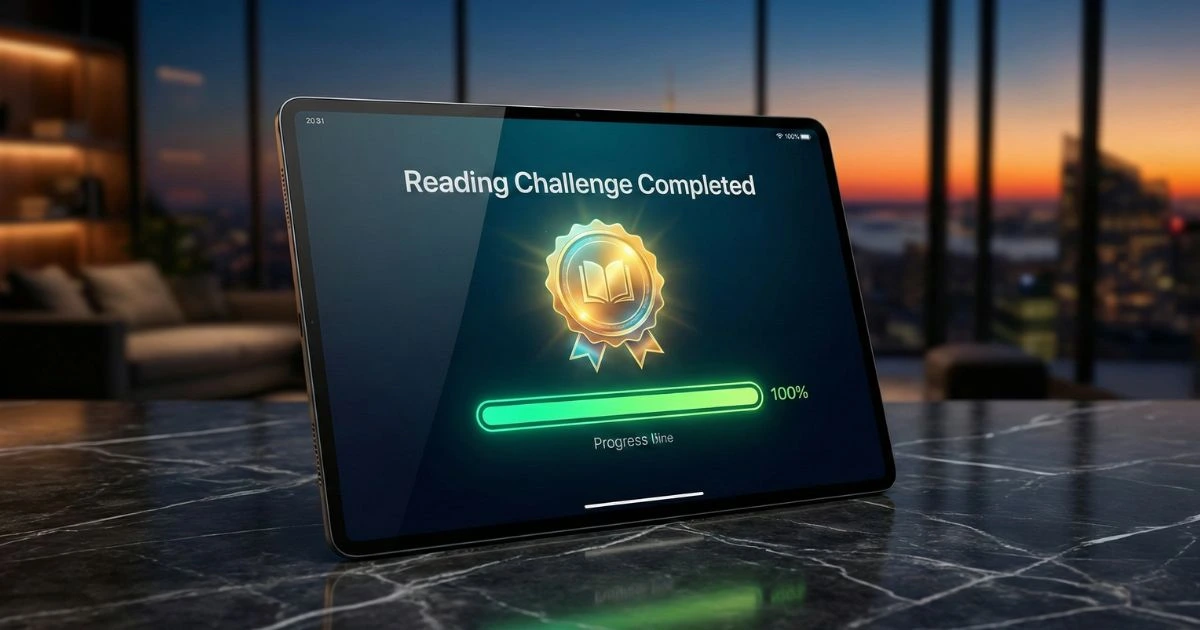
Traditional marketing used to end the moment the credit card was swiped. You sold the book, and then you prayed the person actually opened it. In 2026, that is a recipe for a dead backlist. The modern revenue model depends on what happens during the third chapter. This is where Gamified Reading Challenges come into play, transforming the lonely act of consumption into a communal ascent.
I’ve spent the last few months looking at the data from the mid-winter surges, and the pattern is clear. The publishers who are winning aren’t necessarily the ones with the most famous authors. They are the ones who have mastered the “progression loop.” Imagine a reader starts a non-fiction title on wealth management. In the old days, they’d get bored by page forty. Now, their e-reader or synced mobile app triggers a notification the moment they hit that slump. It’s not a generic “keep going” message. It’s a micro-mission. Finish this chapter to unlock a bespoke data visualization of the 2025 market crash. Finish the section to earn a seat in a live Q&A with the author.
This isn’t just about fun and games. It’s about the underlying value of the asset. When a reader feels they are “leveling up” their own knowledge through a structured challenge, their attachment to the brand shifts from transactional to emotional. They aren’t just consumers. They are players in an ecosystem. For those of us looking at the broader financial landscape of digital assets, this shift represents a massive increase in the lifetime value of a customer. A “player” buys the sequel. A player buys the workbook. A player joins the premium community.
I recently spoke with a boutique agency owner who specializes in revitalizing stagnant intellectual property. His whole strategy revolves around this. He doesn’t change the text. He changes the “wrapper.” By overlaying a 30-day “mastery challenge” on a three-year-old book, he’s seeing conversion rates that rival new releases. It makes you realize that in 2026, the book is just the fuel. The gamification is the engine.
The Mechanics of Book Marketing 2026 and the New Distribution
The way we talk about book marketing 2026 has fundamentally changed because the gatekeepers have changed. We used to care about bookstore endcaps and Sunday paper reviews. Now, we care about “signal quality” and “authenticated engagement.” Search engines and social algorithms have become so cluttered with AI-generated noise that they’ve started prioritizing human-verified activity.
When thousands of readers are participating in a synchronized “Play-to-Read” event, it creates a massive, authentic data signal that the algorithms can’t ignore. This is the new SEO. It’s not about keywords anymore. It’s about movement. If you can get five hundred people to complete a specific reading challenge in a weekend, you’ve done more for your visibility than a six-figure ad spend ever could.
But there is a nuance here that many people miss. You can’t just slap a leaderboard on a PDF and call it a day. The tech has to be invisible. The 2026 reader is savvy. They can smell a “marketing ploy” a mile away. The successful integrations are the ones that feel like a natural extension of the story. For a thriller, maybe it’s a scavenger hunt hidden in the footnotes that requires readers to collaborate on Discord to solve a riddle before the final chapter is “unlocked.” For a finance book, perhaps it’s an interactive spreadsheet that populates with real-time 2026 market data as you read.
The friction is the point. We’ve spent decades trying to make everything “seamless,” but we forgot that humans value what they have to work for. By reintroducing a controlled level of difficulty through gamification, we are actually making the product more valuable in the mind of the buyer.
I often look at the listings for digital businesses and content agencies, and I’ve noticed a trend. The entities that are selling for the highest multiples aren’t the ones with the most content. They are the ones with the most “active” communities. A mailing list of 100,000 passive subscribers is worth a fraction of a 10,000-person community that is currently mid-challenge. Activity is the only currency that hasn’t been devalued by the 2026 content explosion.
The question for the next few years isn’t “how do I get more people to see my book?” It’s “how do I get them to stop and play?” The tools are all there. The “Play-to-Read” infrastructure is becoming as standard as the checkout cart. But the soul of the strategy still requires a human touch. You have to understand the psychology of the reader. You have to know where they get tired, where they get excited, and where they need a little push.
We are moving away from the era of “content is king” and into the era of “context is everything.” If you can provide a context where reading feels like a victory, you don’t just sell a book. You build an empire of attention. And in 2026, that is the only thing worth owning.
Maybe the kid swiping the paper page wasn’t wrong. Maybe he was just waiting for the world to catch up to his expectations. Now that we’re here, the only real risk is staying static while everyone else is in motion.
