


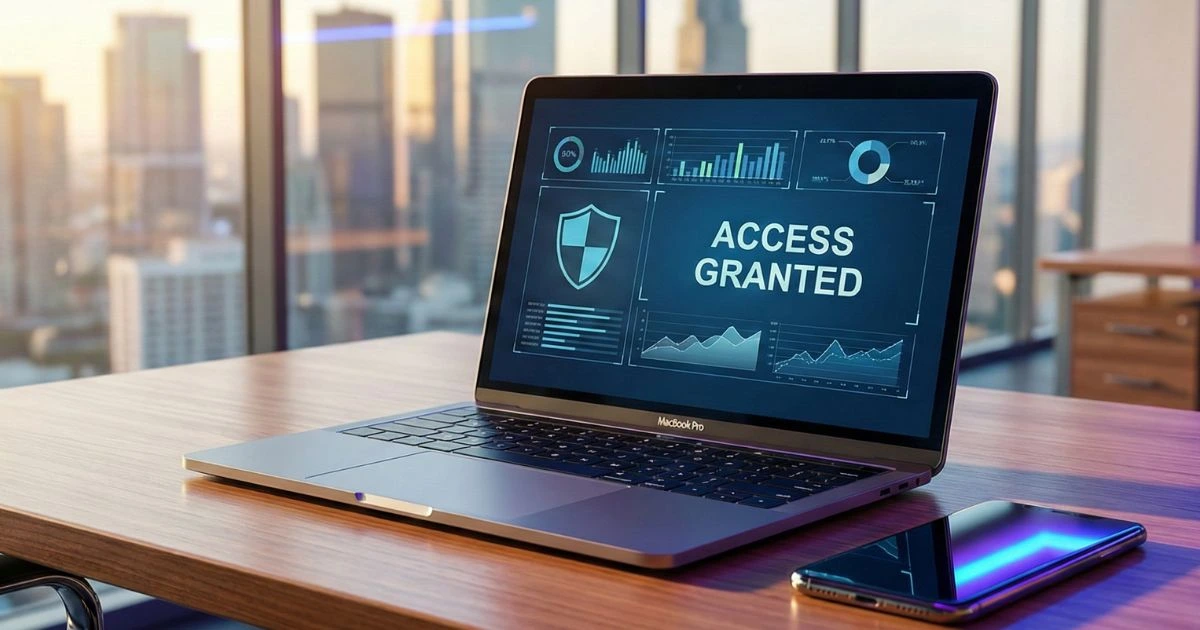
The old way of securing a company was simple, perhaps a bit naive. You built a high wall, dug a deep moat, and assumed that anyone who made it across the drawbridge was a friend. For a decade, the Corporate VPN was that drawbridge. But in the cold light of 2026, we have learned that the moat is dry and the gates are made of paper. Startups launching today are realizing that traditional hacking thrives on a single, fatal flaw: implicit trust. Once a bad actor steals a single set of credentials, they have the “keys to the kingdom” and can roam through your databases like a ghost in the attic.
This is where the shift toward a Zero Trust Business model becomes less of a technical choice and more of a survival instinct. We are seeing a generation of founders who treat their own internal networks as if they are already compromised. It sounds paranoid, even a bit cynical, but it is the only way to build a company that doesn’t collapse the moment a junior developer clicks a suspicious link in a phishing email. The reality of modern work, with its sprawling cloud dependencies and remote teams scattered across four continents, has made the very idea of a “secure perimeter” a relic of the past.
The Architecture of Constant Skepticism and Zero-Trust Business

Getty ImagesThe fundamental shift in how we protect a growing enterprise is moving away from the “who” and focusing entirely on the “what” and the “where” in real-time. In a traditional setup, if I log in from my laptop, the system recognizes my password and lets me see everything. In a Zero Trust environment, the system doesn’t care that I have the right password. It checks if my laptop has the latest security patches, it looks at my IP address to see if I’ve suddenly jumped from New York to Singapore in ten minutes, and it asks why a marketing manager is trying to access the raw SQL tables for the billing department.
This constant interrogation is what we call explicit verification. It is the end of the honeymoon phase for internal access. By breaking the network into tiny, isolated micro-perimeters, startups are ensuring that even if one room in the house catches fire, the rest of the building remains untouched. This concept of limiting the blast radius is the difference between a minor afternoon headache for the IT team and a front-page news story about a catastrophic data breach. When you remove the ability for a hacker to move laterally through your systems, you effectively turn a potential disaster into a contained, manageable event.
Navigating New Cybersecurity Trends Without Losing Agility
There is a common misconception among the old guard that this level of security has to be a friction-filled nightmare for employees. They remember the days of clunky hardware tokens and slow, lagging connections. However, the most successful startups I see in 2026 are using these security layers to actually move faster. By adopting passwordless authentication and biometric triggers, they are removing the human element of error. Most breaches still happen because someone used “P@ssword123” across five different services. By removing the password from the equation entirely, you remove the primary weapon of the modern hacker.
We are also seeing the rise of AI-driven threat detection that acts more like a biological immune system than a static firewall. These systems learn the “heartbeat” of a company. They know that Sarah usually logs in at 9 AM and spends her day in Slack and Figma. If Sarah’s account suddenly starts exporting gigabytes of sensitive client data at 3 AM on a Sunday, the system doesn’t wait for a human to wake up and look at a dashboard. It simply kills the session and locks the account. This level of proactive defense is what makes 2026 startups feel almost immune to the traditional “smash and grab” tactics that used to keep founders awake at night. It is about building a business that is secure by design, where the protection is baked into the code rather than bolted on as an afterthought.
The landscape of 2026 has no patience for the “it won’t happen to us” mentality. The cost of a breach in the United States has soared past $10 million on average, often more than the total seed funding of a promising young company. In this environment, your security posture is your most valuable asset, second only to your actual product. It is what allows you to sign enterprise-level contracts, what satisfies the increasingly sharp eyes of regulators, and what ultimately protects the equity you’ve worked so hard to build.
Founders are discovering that when they treat every request as hostile, they ironically create a much more hospitable environment for growth. They can hire talent globally without worrying about the security of a home router in a co-working space. They can integrate third-party APIs with the confidence that a breach at a partner won’t become a breach at home. It is a strange paradox: by trusting no one, you gain the freedom to work with anyone.
As we look toward the next wave of innovation, the companies that survive won’t necessarily be the ones with the most funding or the flashiest marketing. They will be the ones that understood the moat was an illusion and built their houses accordingly. The question isn’t whether your perimeter will be breached, but rather, what will the intruder find when they get there? If you’ve built your business on the principles of Zero Trust, the answer should be: absolutely nothing of value.

