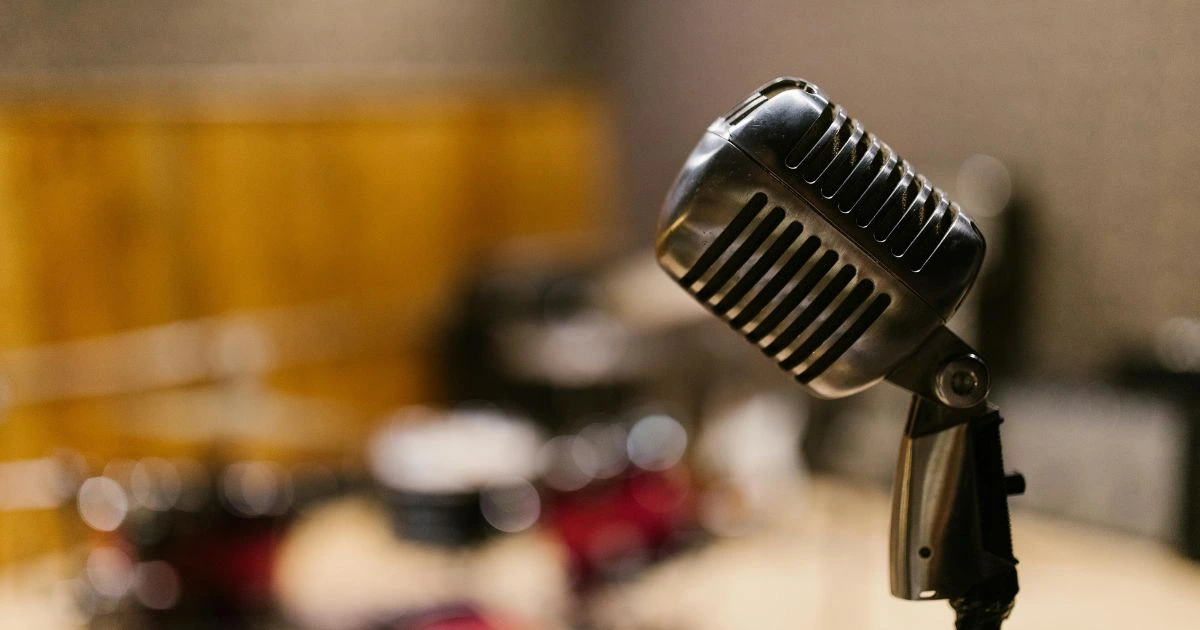
I spent most of yesterday staring at a condenser microphone that cost more than my first car, wondering why I was still trying to punch in the same paragraph for the fourteenth time. My throat felt like it had been scrubbed with sandpaper. That is the glamorous reality of traditional recording. We tell ourselves that the soul of a book lives in the waver of a human voice, the slight catch in the breath, or the way a sentence trails off when the emotion hits. But by the fourth hour of recording in a cramped, foam-lined closet, soul usually gives way to pure fatigue. This is where the landscape of self-publishing 2026 has shifted beneath our feet, almost without us noticing.
The shift isn’t about robots taking over the booth. It’s about a strange, digital immortality that we’ve finally learned to manage. We used to talk about AI voice cloning in hushed, slightly terrified tones, as if we were inviting a ghost into the room. Now, it’s just another tool in the kit, like a spellchecker that actually understands subtext. For anyone navigating the chaotic waters of being an independent author, the realization that you can replicate your own cadence without losing your sanity is a bit like finding a secret door in a house you’ve lived in for years.
There is a specific kind of magic in hearing a version of yourself read your own words back to you. It isn’t perfect, and that is exactly why it works. The early iterations of this technology were too clean. They lacked the “dirt” of human speech—the tiny hesitations and the idiosyncratic way we emphasize certain vowels. But the current tools have captured the ghost in the machine. I found myself listening to a sample of my own cloned voice last week and noticed it captured a specific, sharp intake of air I do before a long sentence. It was unsettling, then it was exhilarating, and finally, it was a relief.
Navigating the new ethics of audiobook production
The conversation around how we produce these things has moved past the “is it real?” phase and into the “does it matter?” phase. If a listener is moved to tears by a performance, does the origin of the sound waves change the chemical reaction in their brain? Some purists will say yes, forever. They want the sweat and the struggle. But for the rest of us, especially those trying to scale a career without burning out, the math is changing. Audiobook production used to be the mountain we couldn’t climb because of the cost or the sheer physical toll of narration.
I remember talking to a friend in Seattle who had three manuscripts sitting on a hard drive, gathering digital dust because she couldn’t afford the five thousand dollars a professional narrator wanted for the series. She didn’t have the “voice” for it herself, or so she thought. When she finally experimented with cloning her own speaking voice, she didn’t just get a file; she got her stories back. She found that by providing a high-quality sample of her reading just twenty minutes of her favorite prose, the software could interpolate her personality across a hundred thousand words.
It isn’t a hands-off process, though. Anyone who tells you that you just click a button and walk away is lying or selling something. You still have to be the director. You have to go in and tweak the emphasis, tell the algorithm that a specific word needs more “weight,” or ensure the pacing matches the tension of a scene. It is a collaborative effort between the author and their digital shadow. This hybrid approach is what separates the junk filling up retail platforms from the stories that actually resonate. The human ear is incredibly sensitive to laziness. We can sense when a creator didn’t care enough to listen through their own output.
Why AI voice cloning is the bridge to global reach
The barrier to entry has traditionally been a wall of glass. You could see the market, you could see the hunger for audio, but you couldn’t touch it unless you had a massive budget or a professional studio. In the current era of self-publishing 2026, those walls have effectively dissolved. We are seeing a democratization of sound that mirrors what happened to print twenty years ago. You no longer need permission to be heard. You just need a decent enough sample and the patience to refine the output.
This technology allows for a level of experimentation that was previously impossible. Imagine being able to release your audiobook in multiple languages using your own voice—your specific timbre and tone—translated and performed with native fluency in Spanish or Japanese. That used to be the stuff of science fiction. Now, it’s a Tuesday afternoon task. The “trick” isn’t the software itself; it’s the realization that your voice is a brand asset that can exist in multiple places at once. It’s about presence.
However, there’s a lingering question of what we lose when we stop being the ones physically speaking. There is a meditative quality to narration that I sometimes miss. There is something to be said for the physical act of performing your work. But then I look at my calendar and my bank account, and the nostalgia fades. The ability to produce a high-quality audio experience for a fraction of the time and cost means more stories get told. It means the weird, niche, and experimental books that would never get a traditional audio deal now have a voice.
I often think about the mid-list authors of the past who faded into obscurity because they couldn’t keep up with the demands of a multi-format world. They were writers, not actors, and the industry punished them for it. We are in an era where that divide is narrowing. You can be the quiet, introverted writer living in a cabin and still have a booming, professional audio presence that reaches millions. It’s a strange, disjointed way to live, perhaps, but it’s undeniably powerful.
The future of this space feels wide open and a little bit lawless. We are still figuring out the rules of the road. Who owns the “soul” of a voice clone if the company hosting the model goes under? How do we protect ourselves from being mimicked without our consent? These are the thorns in the rose garden. But for the person sitting at their desk today, looking at a finished manuscript and wondering how to get it into the ears of listeners, the path is clearer than it has ever been.
The technology will continue to get better, faster, and more indistinguishable from the real thing. Eventually, we won’t even call it “cloning” anymore. It will just be how audiobooks are made. We will look back at the era of sitting in a foam-lined closet for forty hours as a quaint, slightly masochistic relic of the past. For now, we are the pioneers, playing with a tool that feels a little bit like fire—dangerous if you’re careless, but capable of lighting up everything if you know how to use it.
There is a certain irony in using high-tech mimicry to achieve a deeper human connection. We use the artificial to broadcast our most intimate thoughts. It’s a contradiction I haven’t quite reconciled yet. Maybe I never will. I just know that when I play back a chapter and hear my own voice—or the version of it that doesn’t get tired or mess up the words—I feel like the story is finally whole. It’s a version of me that is better at being me than I am, at least on my bad days. And in a world that demands constant output, maybe that’s the best we can hope for.
The microphone is still there on my desk, catching the light. I might use it tonight, just to stay sharp. Or I might just open the software, upload my latest chapter, and let my digital twin take the shift. It’s a strange comfort, knowing the work will get done either way.
FAQ
It is a process where software analyzes your recorded voice to create a digital replica that can read text aloud with your specific tone and style.
Researching 2026 voice cloning platforms and recording a clean, high-quality sample of your reading voice.
It provides an alternative for those with lower budgets, but high-end professional narration remains a premium “artisanal” choice.
The technical generation can take just a few hours, though the editing and mastering process takes longer.
Generally, no. Once the model is created, you can generate as much audio as your subscription or credits allow.
Technically yes, if you have the rights to the book and the voice, but the tool is most popular for author-narrated projects.
This depends on the provider’s privacy policy; it is crucial to use reputable services that guarantee your data ownership.
Most platforms allow you to upload new samples to “refresh” or refine the digital model.
Yes, the technology has expanded to cover dozens of languages with native-level fluency.
If done well, many listeners cannot tell the difference, though transparency is often appreciated in the community.
Most systems allow you to provide phonetic spellings for made-up words, which is vital for fantasy and sci-fi authors.
Modern 2026 models have largely eliminated the “uncanny valley” effect, capturing natural breath patterns and emotional nuances.
Standard high-quality formats like WAV or MP3 are typically used for the training data.
A quiet room and a decent USB microphone are usually sufficient, provided there is no echo or background noise.
Most major retailers now allow AI-narrated content as long as it is properly labeled and meets quality standards.
Legality varies, but generally, you should only clone a voice you have explicit permission or rights to use.
It allows independent authors to release audiobooks simultaneously with print and ebook versions, increasing their visibility.
Assuming it’s a “set it and forget it” tool. You still need to proof-listen and edit for pacing and emphasis.
Yes, you can often adjust the “clone” to perform different accents or pitches, though some authors prefer using a few different clones.
Usually, twenty to thirty minutes of high-quality audio is enough for the system to build a convincing model.
Compared to hiring a human narrator, it is significantly cheaper, often costing a small monthly subscription or a per-project fee.