I remember sitting in a drafty coffee shop in Seattle, watching the rain blur the windows while I stared at a finished manuscript that felt more like a burden than an achievement. It was 2024 back then, and the barrier between a digital file and a professional audiobook was a wall of money I simply didn’t have. You either spent thousands on a narrator or you spent weeks in a makeshift closet studio, fighting the hum of the refrigerator and the sound of your own tired lungs. It felt like a rigged game where only the established names got to be heard. But things have shifted so fast that the old struggles feel like stories from a different century.
The landscape of self-publishing 2026 has become something almost unrecognizable to those who haven’t been paying attention. We’ve moved past the era of robotic, stilted digital voices that sounded like a GPS unit trying to read poetry. Now, the intimacy of a human voice is no longer locked behind a paywall of expensive studio time. There is a certain ghostliness to it, the way we can now capture the grit and the breath of our own speech and hand it over to a machine to carry the heavy lifting.
The strange intimacy of AI voice cloning
There is a visceral hesitation that comes with the first time you hear yourself saying things you never actually spoke. It’s a bit like looking into a mirror and seeing your reflection blink when you didn’t. AI voice cloning has reached a point where the nuance of a stutter, the specific way a person from the Midwest rounds their vowels, or the slight rasp of a morning voice is captured with startling fidelity. It isn’t just about text-to-speech anymore. It is about soul-to-data.
For those of us who write because we have something urgent to say, the voice is the final frontier of the narrative. Using these tools feels less like a technical shortcut and more like a prosthetic for the imagination. You feed a few minutes of your best reading into a system, and suddenly, you have a digital twin capable of reading for twenty hours without needing a glass of water or a break to clear its throat. This technology has stripped away the pretension of the industry. It allows a writer in a basement to produce something that sounds as polished as a production coming out of a major house in New York or Los Angeles.
The ethics of it are messy, of course. We are essentially creating ghosts. But for an independent author, those ghosts are the only way to compete. When I first tried to clone my own voice, I expected to hate it. I expected to feel a sense of loss. Instead, I felt a strange kind of relief. The burden of performance was gone, leaving only the purity of the story. It’s a tool that demands a different kind of honesty. You have to be willing to listen to yourself, really listen, and decide if that is the person you want telling your story to the world.
Finding the right free audiobook tools for your project
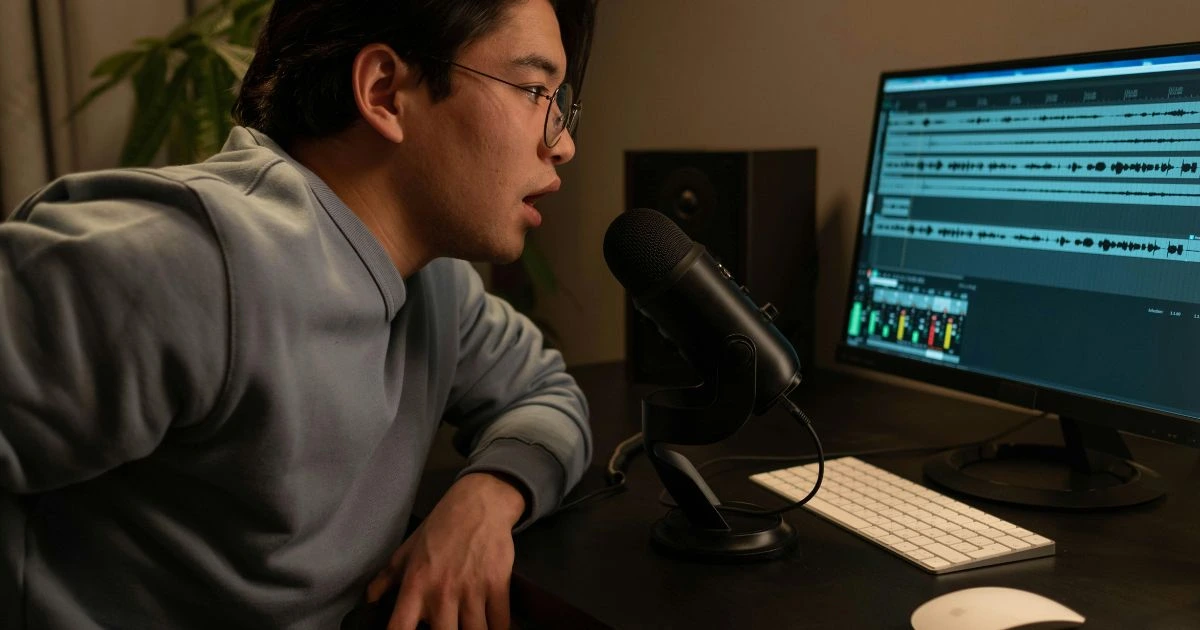
The market is currently flooded with platforms promising the world, but the real trick lies in finding the ones that don’t sanitize the life out of the audio. Most free audiobook tools offer a basic tier that is more than enough for a standard novel if you know how to manipulate the pacing. The secret isn’t in the software itself but in the quality of the sample you provide. If you record your base samples in a room with too much echo, the AI will learn that echo as part of who you are. It will bake the flaws of your environment into the very DNA of the narration.
I’ve spent nights tinkering with the cadence of my digital self, realizing that the software often misses the emotional peaks of a scene unless you manually intervene. You can’t just press play and walk away. It’s a collaborative process. You are the director, and the AI is a very talented, very literal actor. You have to tell it where to breathe. You have to nudge it to slow down when the tension rises. The democratization of this tech means that the “free” part usually costs you time in oversight. But compared to the old world of spending four grand on a narrator who might not even understand the subtext of your protagonist’s trauma, it’s a bargain I’ll take every single time.
There is a specific joy in seeing a file export and knowing that the barrier to entry has finally crumbled. Self-publishing used to mean being a jack-of-all-trades, but usually a master of none. Now, the tools are sophisticated enough to cover our weaknesses. We are seeing a surge in niche memoirs and experimental fiction that would never have seen an audio release because the math didn’t make sense. Now, the math always makes sense because the entry cost is effectively zero.
We are living in a time where the physical act of recording is becoming a choice rather than a requirement. Some people find this offensive. They think it cheapens the art of narration. I think it’s the opposite. It puts the power back into the hands of the person who dreamt up the words in the first place. If I can give my readers my own voice, with all its specific imperfections, without having to spend a month in a sound booth, why wouldn’t I?
The tech is still evolving, which is the most exciting and terrifying part. Every few months, the “uncanny valley” gets a little narrower. The breaths sound more natural. The way the voice handles a question mark feels less like a programmed rise in pitch and more like genuine curiosity. We are approaching a moment where the listener won’t be able to tell the difference, and perhaps more importantly, they won’t care. They just want to be told a story.
In the end, a book is a conversation. Whether that conversation happens through ink on a page, pixels on a screen, or a synthesized vibration in an earbud doesn’t change the core of the experience. We are finding new ways to be heard in a world that is increasingly noisy. The “trick” isn’t really a trick at all. It’s just the new reality of how we share our inner lives. You don’t need a studio. You don’t need a budget. You just need the willingness to let your voice become something else for a while.
The rainy days in Seattle don’t feel quite as lonely when you realize your stories can walk out into the world on their own two feet, or rather, in their own borrowed voice. It’s a quiet revolution, happening one chapter at a time, in thousands of home offices across the country. We are all becoming narrators now, whether we ever step up to a microphone or not. The future of the book is vocal, and for the first time, it belongs to everyone.
What happens next is largely up to how much of ourselves we are willing to give over to the process. There is a lot of talk about what is being lost, but I prefer to think about what is being found. We are finding voices that were silenced by the high cost of existing. We are finding stories that were too small for the big players but are just right for a listener somewhere on a long commute. The tools are there, sitting on your desktop, waiting for you to say something worth repeating.
FAQ
It is a process where software analyzes a recording of your speech to create a digital replica that can read any text you provide.
We are moving toward “real-time” emotional acting, where the AI understands the context of a scene and adjusts its tone automatically.
Some all-in-one tools allow this, but it’s usually better to export the raw voice and add effects in a separate editor.
Most tools have a “pronunciation library” where you can phonetically spell out tricky words or names.
Most free tools have character limits per month, so you may need to stagger your production or use multiple platforms.
Yes, AI voice cloning in 2026 has become remarkably proficient in dozens of languages and regional accents.
Providing a “flat” reading for the sample. If you don’t put energy into the clone’s DNA, the resulting narration will be boring.
Legally and ethically, no. You should only clone a voice you have explicit, written permission to use, preferably your own.
While the AI generates text quickly, the proofing and editing process for a full novel can still take several days of work.
A decent USB condenser microphone in a quiet room is usually enough; you don’t need a professional studio.
A world-class narrator brings an interpretive depth that AI still struggles to replicate, but for many authors, the cost-benefit ratio favors AI.
You often have to use “emphasis” or “stability” sliders within the software to force the AI to react more strongly to dramatic text.
Most distributors now accept AI-narrated content, though some require you to disclose that the narration is digitally assisted.
Yes, many platforms offer robust free tiers or trial periods that allow for full-length exports if you manage your characters and chapters efficiently.
Generally, if you own the text and used your own voice for the clone, you own the output, but always check the service’s terms.
While specific names change, look for browser-based platforms that offer “neural” voice cloning and allow for manual SSML editing.
The main difference is the integration of high-end production tools into the standard workflow of independent authors at no extra cost.
You can, though it requires creating different “profiles” or slightly altering your own voice for the AI to learn different personas.
Most modern systems require between five and thirty minutes of clean audio to create a believable clone.
If the pacing and emotional “weight” aren’t adjusted manually, some listeners might notice a lack of dynamic range, but the technology is closing that gap.
With high-quality input, the resemblance is often indistinguishable to the average listener, capturing your specific tone and cadence.