
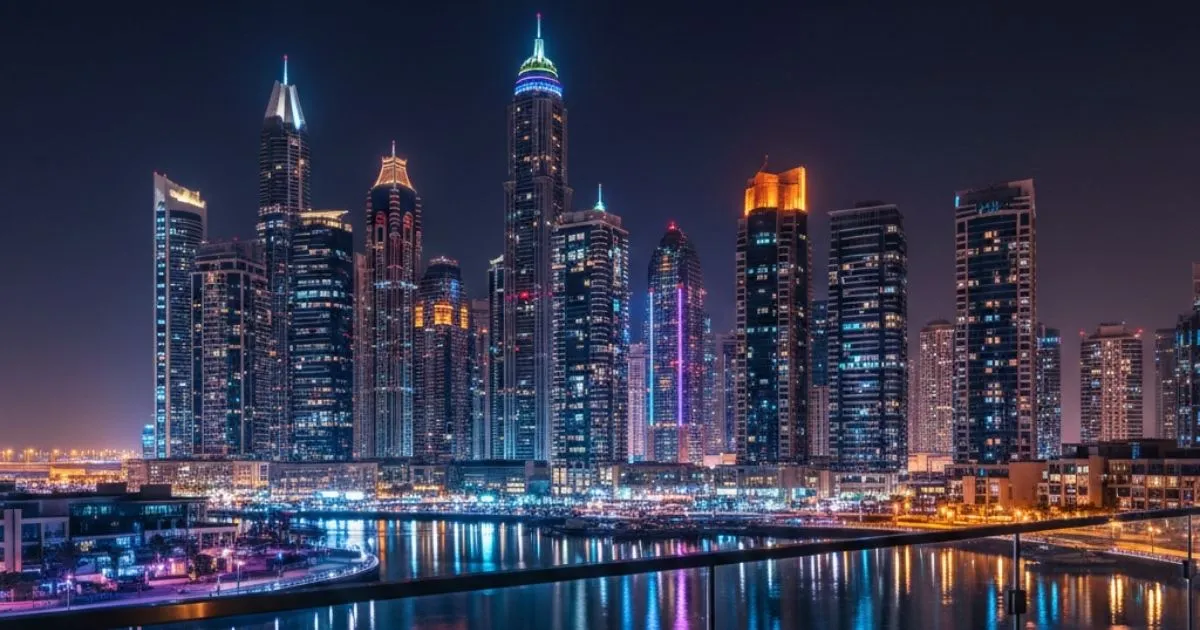
The view from a balcony in Downtown Dubai at sunset is a specific kind of gold. It is the color of extreme ambition, reflecting off the Burj Khalifa and shimmering across the artificial lakes that shouldn’t exist in a desert. For years, this view was a gated community for the ultra-wealthy, a playground where entry meant signing away millions in dirhams and navigating a labyrinth of physical paperwork. But as I sat with a local developer last week, sipping a bitter gahwa, he didn’t point at a penthouse. He pointed at his phone. On the screen was a simple digital asset, a fragment of the very building we were standing in, accessible for the price of a decent dinner. We are witnessing the moment where the friction of the old world finally gives way to the fluidity of the new.
Yield-Bearing Real Estate NFTs and the New Fractional Reality
There is a certain irony in the fact that the most solid asset on earth, brick and mortar, is becoming weightless. For a long time, the term NFT was poisoned by the memory of digital monkeys and speculative bubbles that burst with a whimper. But in 2026, the conversation has shifted toward substance. Yield-Bearing Real Estate NFTs have emerged not as a trend, but as a structural evolution in how we define ownership. When you strip away the hype, what you are left with is a smart contract that does the heavy lifting of a property manager. It holds the title, it tracks the ledger, and most importantly, it distributes the rent.
In Dubai, this isn’t just a tech experiment. The Dubai Land Department and the Virtual Assets Regulatory Authority have spent the last few years building a sandbox that actually works. They have created a bridge where a digital token represents a legal share in a Special Purpose Vehicle that owns the physical deed. It is a clean, clinical solution to an age-old problem. I remember talking to a young analyst who moved here from London specifically to track this. He noted that the psychological barrier to investing has vanished. You no longer need to worry about maintenance, tenant disputes, or the terrifying prospect of a three-month vacancy. The smart contract simply redirects a percentage of the daily rental yield to your digital wallet. It is a quiet, automated process that makes the traditional way of buying property feel like trying to send a telegram in the age of fiber optics.
The beauty of this model lies in its granularity. You can own a sliver of a waterfront villa in Palm Jumeirah and a corner of a commercial office in Dubai Silicon Oasis simultaneously. By diversifying across different neighborhoods and asset types, the risk is diluted until it is almost unrecognizable. The market here in 2026 has matured past the point of blind momentum. Investors are now looking at logic-based buying, focusing on infrastructure like the Blue Line Metro extension. If a project is within a ten-minute walk of a station, the tokenized value reflects that immediate utility. It is real estate investing with the agility of a stock portfolio, and it is happening right under our noses.
Tokenized Property and the Hunt for Sustainable Passive Income 2026
If you follow the money, you’ll see that institutional players are no longer laughing at the concept of on-chain assets. They are building them. The quest for passive income 2026 has led everyone from pension funds to retail savers toward tokenized property. There is something inherently comforting about knowing your yield is backed by a physical structure you can go and touch. Unlike the volatile yields of DeFi protocols that rely on complex lending loops, real estate yield is grounded in the basic human need for shelter and office space.
I spent an afternoon at a property tech summit in the DIFC recently, and the room was filled with people who wouldn’t know a blockchain from a jigsaw puzzle, yet they were all talking about liquidity. In the old days, if you needed cash, you couldn’t exactly sell the kitchen of your apartment to pay for a medical bill. You had to sell the whole thing, a process that took months and cost a small fortune in commissions. Now, you can list your tokens on a secondary marketplace and have the liquidity in your account before your coffee gets cold. This shift from illiquid to liquid is perhaps the greatest transfer of power from institutions to individuals we have seen in our lifetime.
The numbers are starting to back up the anecdotes. In 2026, we are seeing rental yields in Dubai hold steady between 6% and 9%, depending on the district. When you factor in the automated nature of these distributions, the net return often outpaces traditional REITs, which are weighed down by management fees and overhead. But it isn’t just about the rent. There is the capital appreciation to consider. As Dubai continues to expand toward the south, near the Al Maktoum International Airport, the value of the underlying land is shifting. Those who hold tokens in these growth corridors are seeing their digital assets appreciate in real-time, tracked by transparent, on-chain data that doesn’t rely on a biased appraisal.
Of course, it isn’t all sunshine and flawless code. There are still hurdles. The tax implications of cross-border token ownership can be a headache, and the regulatory landscape is a living document that changes with every new innovation. But the momentum feels irreversible. I’ve seen skeptics become believers the moment they receive their first fractional rent payment. It’s a small notification on a phone, a few dollars or dirhams, but it represents a fundamental change in the relationship between a person and the built environment. We are no longer just residents or observers of the skyline. We are its shareholders.
There is a sense of inevitability here. As the sun finally dipped below the horizon, turning the desert sky into a deep violet, my developer friend closed his phone and smiled. He didn’t need to sell me on a dream. The reality was already executing in the background, block by block, transaction by transaction. The barriers are down. The only question left is how much of the future you want to own.
The architecture of the world is being rewritten in code, and for the first time, the doors are wide open. Whether this leads to a more equitable distribution of wealth or just a faster way to trade remains to be seen, but the era of the $200 landlord is officially here. It is a strange, exciting, and slightly dizzying time to be watching the cranes.
