The digital publishing landscape of 2026 is virtually unrecognizable compared to the chaotic, platform-dominated era of the early decade. A silent but powerful rebellion has fundamentally reshaped how stories are funded, distributed, and consumed. We are witnessing the end of the traditional “broadcast” era of writing, where creators threw their work into the void of corporate algorithms, hoping to be seen. In its place, a new paradigm has emerged, driven by digital ownership and localized, highly engaged audiences. The most successful storytellers are no longer relying on centralized mega-retailers to act as middlemen. Instead, they are packing up their intellectual property, claiming absolute ownership over their distribution channels, and migrating to specialized ecosystems. This is the era of the token-gated community—a technological shift that is finally putting the power, and the profits, directly back into the hands of the people who actually write the words.
The Great Migration from the Algorithmic Treadmill
For years, authors found themselves running on a relentless, invisible treadmill controlled by the opaque algorithms of massive tech monopolies. In the early 2020s, a writer’s success was largely dictated by their ability to game a system that constantly changed its rules without warning. You could spend years building an audience of a hundred thousand dedicated readers on a social platform, only to find that your book launch announcement reached less than two percent of them unless you paid exorbitant “boost” fees. By the time we reached 2026, this simmering frustration had boiled over into a full-scale exodus. Smart authors realized they were essentially sharecroppers on someone else’s digital land, subject to the whims of corporate landlords who took a massive thirty percent cut of their royalties just for the privilege of processing a payment. The traditional publishing and massive retail ecosystems had become a stifling bottleneck, severely restricting creativity and severing the direct line of communication between the creator and the consumer. The solution for these forward-thinking writers wasn’t to build a better algorithm, but to abandon the treadmill entirely and build their digital houses on a decentralized foundation where they hold the ultimate authority.
Demystifying the “Token-Gated” Server
If the phrase “token-gated server” sounds like a piece of impenetrable cyberpunk jargon, the underlying concept is actually incredibly simple and historically familiar. Imagine an exclusive VIP club where entry isn’t granted by a fragile paper ticket or a recurring monthly credit card charge, but by a unique, unforgeable digital medallion that you carry in a digital wallet. In the context of modern publishing, this medallion is a cryptographic token. When a reader purchases this token directly from an author, they aren’t just buying a single, static e-book file; they are purchasing a permanent, verifiable key that unlocks a dedicated, private community server. This server is where the real magic of modern storytelling happens. It’s where the author releases new chapters week by week, hosts live audio Q&A sessions, and drops exclusive multimedia lore that the general public never sees. Because these systems are built on Web3 infrastructure, the token serves as an immutable receipt of patronage. It verifies that you are a true, invested fan, instantly granting you access to specialized reading apps and private forums without the need for cumbersome passwords. It is the ultimate digital backstage pass, operating entirely outside the walled gardens of the traditional tech giants.
The Financial Revolution of Direct Reader Sales
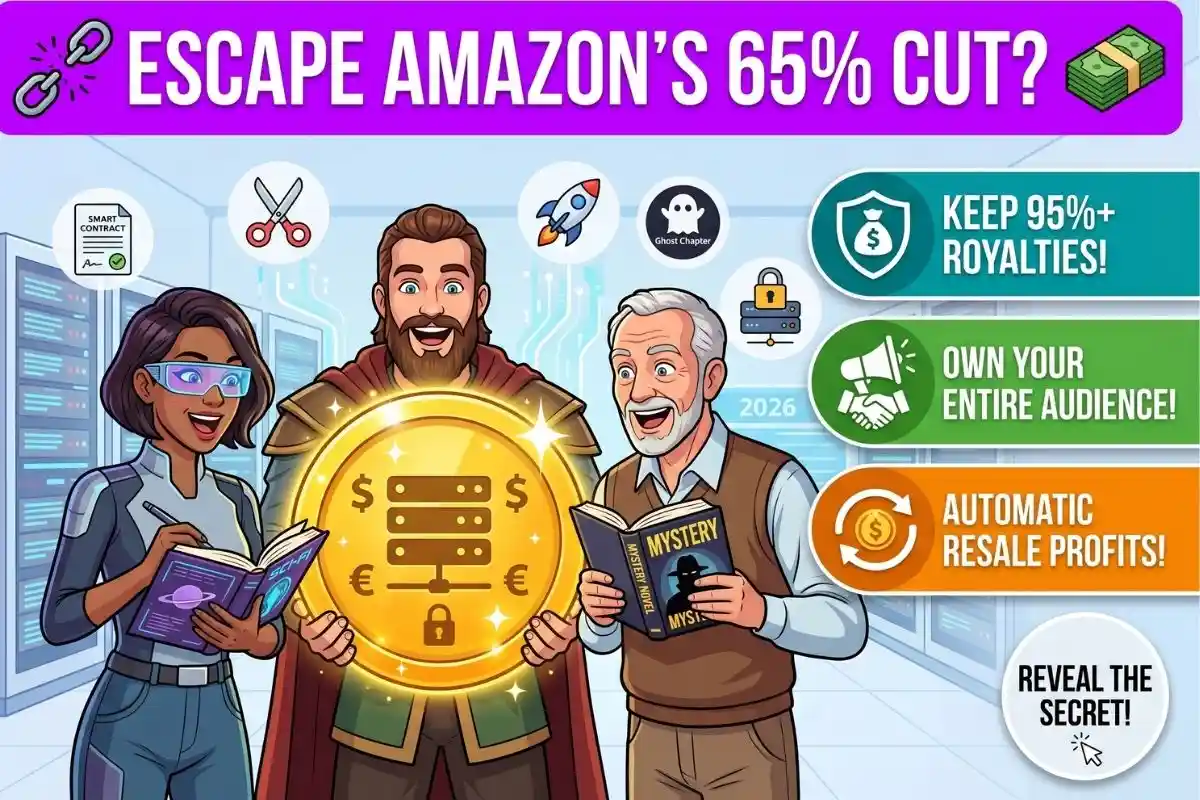
The most profound impact of this shift is the radical, almost overnight restructuring of the author’s financial reality through direct reader sales. In a conventional publishing setup, an author’s revenue is heavily diluted by an endless parade of intermediaries—distributors, giant online retailers, and payment gateways all eagerly taking their slice before the creator sees a single dime. By moving to token-gated models powered by smart contracts, authors execute a frictionless, peer-to-peer exchange of value. When a reader buys a token for a highly anticipated new sci-fi series, the funds are routed instantly and directly to the author’s digital wallet. There are no mysterious withholding periods, no complex royalty statements delayed by six months, and no sudden, arbitrary account suspensions that freeze an author’s livelihood. Furthermore, these smart contracts can be elegantly programmed with automated secondary royalties. If a reader decides they have finished the series and wants to sell their limited-edition “access token” to a newer fan on an open digital marketplace, the original author automatically receives a predetermined percentage of that resale. This completely transforms a book from a one-time static transaction into an ongoing, dynamic revenue stream, fundamentally altering the economics of a writing career forever.
Cultivating the “Inner Circle” Experience
Beyond the undeniable financial windfalls, token-gated communities are fundamentally changing the psychological and emotional relationship between the storyteller and the audience. Traditional publishing is inherently a one-way broadcast medium: the author speaks into the void, and the audience quietly consumes the final product years later. A token-gated server, however, is a vibrant, interactive, and living ecosystem. Authors are utilizing these private spaces to cultivate an “inner circle” of highly invested “super-fans” who become active participants in the creative journey. Because the author knows that everyone in the server has mathematically proven their dedication by holding a token, they know they are engaging with genuine supporters, completely eliminating the noise of internet trolls or algorithmic bots. This safe, walled environment fosters unprecedented collaboration. In 2026, it is standard practice to see authors run weekend polls to determine the fate of secondary characters, crowdsource intricate world-building details, and beta-test major plot twists in real-time with their most trusted readers. Readers are no longer just passive consumers; they feel a genuine sense of digital ownership and profound emotional investment in the success of the narrative.
Future-Proofing the Narrative Asset
Finally, the widespread migration to token-gated servers is a deeply strategic move to future-proof an author’s intellectual property in an increasingly volatile digital landscape. We have all seen the nightmare scenarios over the last decade where centralized platforms suddenly shut down, drastically change their terms of service, or arbitrarily delete user accounts, instantly severing a creator’s hard-earned connection to their audience. By utilizing decentralized technologies, authors are effectively immunizing themselves against the threat of deplatforming. The unalterable ledger of who owns a token—and therefore, who fundamentally belongs to the author’s community—exists independently of any single tech company or server hosting provider. If the interface an author uses to host their community server goes out of business tomorrow, the author can simply plug that exact same community ledger into a competing platform the very next day. The entire audience moves with them seamlessly, without losing a single member. This architectural design guarantees that the author’s most valuable asset—their direct, unmediated relationship with their readership—is permanently secured. A writer’s audience is no longer a static spreadsheet held hostage by an email provider; it is a portable, cryptographically secure community.
The Publishing Paradigm Shift: A 2026 Comparison
| Feature | Traditional Publishing & Retail | Token-Gated Communities (Web3) |
| Revenue Cut | Platforms take 30% to 65% of sales. | Author keeps 95%+ of direct sales. |
| Secondary Market | Author earns nothing on used book sales. | Smart contracts pay authors automatically on token resale. |
| Audience Ownership | Platform owns the customer data; author has limited access. | Author owns the direct relationship and ledger of supporters. |
| Content Delivery | Static, delayed release of the final product. | Dynamic, episodic, and interactive real-time delivery. |
| Platform Risk | High. Accounts can be banned or algorithms changed without notice. | Low. The community ledger is portable and decentralized. |
Frequently Asked Questions (FAQ)
Q: Do I need to understand cryptocurrency to read a token-gated book? A: Not anymore. While the early days of Web3 were clunky, 2026 platforms allow readers to purchase access tokens using standard credit cards or Apple Pay. The “wallet” creation happens invisibly in the background.
Q: Can a token-gated server be pirated? A: While the text itself could theoretically be copy-pasted, the core value of a token-gated community is the access to the server, the live interactions, the voting rights, and the verifiable status of being a supporter. You cannot pirate the community experience.
Q: Is this only for established authors with massive followings? A: Surprisingly, no. Because the profit margins are incredibly high, mid-list and debut authors are finding that they only need a few hundred dedicated “super-fans” holding tokens to replace a full-time traditional publishing income, rather than needing millions of casual clicks.
Q: What happens if I lose access to my digital wallet? A: Modern Web3 publishing platforms use “account abstraction,” meaning you can recover your digital wallet using a standard email or biometric login, eliminating the fear of losing your digital keys.
Q: Do authors still sell books on Amazon or traditional platforms? A: Many use a hybrid approach. They release the “premium, living experience” in their token-gated servers first. Years later, they might bundle the completed story into a traditional e-book for the mass market, using retail platforms merely as lead generation for their private servers.
The “Ghost Chapter”: A Final Curiosity
As token-gated communities continue to mature, an entirely new literary phenomenon has emerged: the “Ghost Chapter.” Because authors have direct, programmable access to their readers, some have begun encoding secret narratives directly into the smart contracts of their tokens. If a reader holds a specific combination of tokens—perhaps they attended a live digital reading and purchased the first draft edition—a previously invisible “Ghost Chapter” dynamically unlocks within their reading app. This gamification of literature is turning reading from a solitary pursuit into a massive, collaborative puzzle. It proves that the shift to token-gated servers isn’t just about changing how authors get paid; it is fundamentally evolving the architecture of storytelling itself.