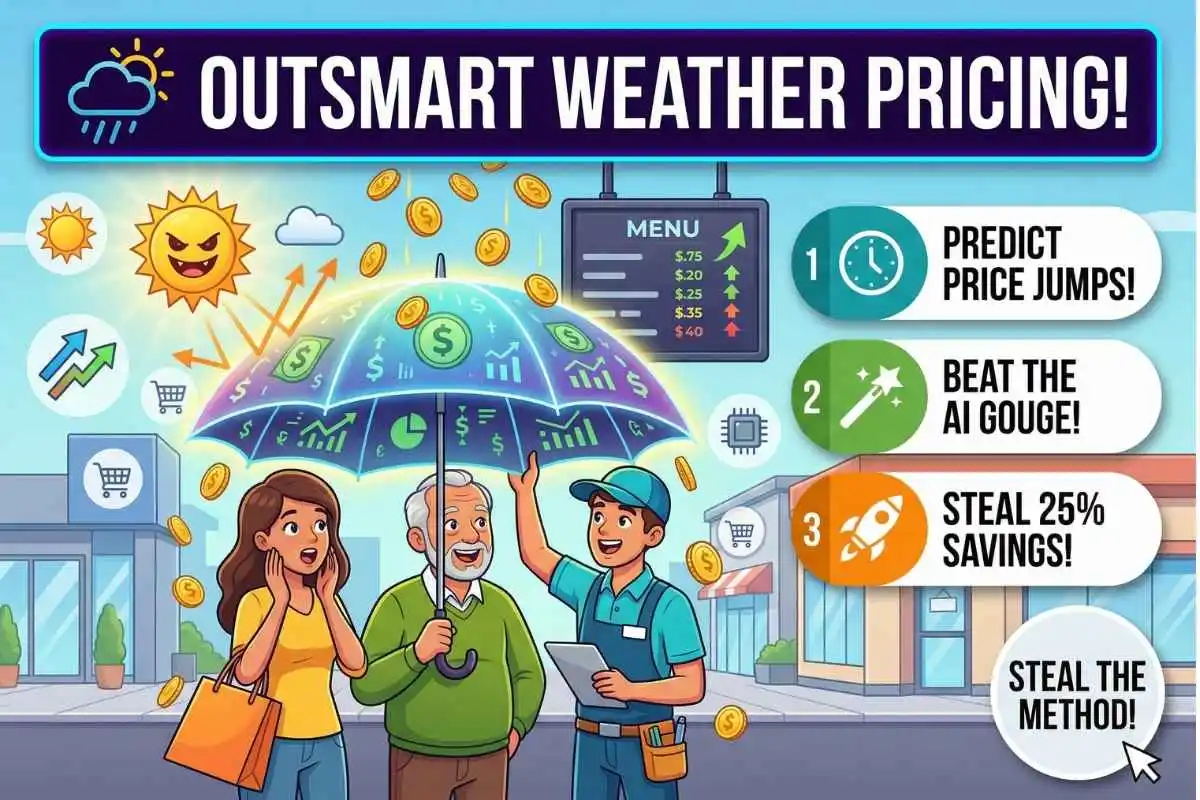
Imagine walking into your favorite local café on a sweltering July afternoon, craving an iced coffee. You look at the digital menu board, and right before your eyes, the price of that frosty beverage ticks up by fifty cents. Why? Because the sun just broke through the clouds, and the temperature outside spiked by three degrees. Welcome to the reality of shopping in 2026, where “weather-based pricing” is no longer a futuristic concept but a daily retail reality. By leveraging real-time meteorological data and advanced artificial intelligence, retailers are turning the weather forecast into a dynamic pricing tool, sparking fierce debates about fairness, convenience, and the future of commerce. Let’s take a stroll through this sunny, occasionally stormy, new retail landscape.
The Dawn of Meteorological Markups
To understand how we arrived at this point, we have to look back at the origins of dynamic pricing. Taking this localized model into physical retail spaces required a technological leap that only recently became viable. By integrating electronic shelf labels with sophisticated localized weather APIs, brick-and-mortar stores can now change prices across thousands of items in a matter of seconds. When the forecast predicts an unexpected heatwave, the prices of sunscreen, bottled water, and ice cream automatically begin to creep upward. Conversely, a sudden torrential downpour might trigger flash discounts on barbecue supplies while simultaneously raising the cost of umbrellas stationed conveniently by the front door.
The Shopper’s New Reality
Meet Sarah, a mother of two living in the suburbs of Chicago, who recently experienced the reality of weather-based pricing firsthand. She had planned a weekend camping trip and waited until Friday evening to purchase insect repellent and a new cooler. Unfortunately, the local news announced a record-breaking weekend heatwave, accompanied by high humidity. When Sarah arrived at the sporting goods store, she found that the digital price tags for summer gear were flashing with a subtle “high-demand” icon, marking a fifteen percent increase over the prices she had seen online just two days prior. Consumers are quickly realizing that timing the weather is everything.
The Mechanics Behind the Algorithm
The underlying technology driving this pricing revolution is incredibly complex, relying on an intricate dance between predictive analytics and hyper-local environmental sensors. Retailers install micro-weather stations on their rooftops to measure precise sunlight intensity, humidity, and barometric pressure. This raw environmental data is continuously fed into machine learning algorithms that cross-reference the weather patterns with historical sales data. If the algorithm determines that a sudden spike in ultraviolet radiation will lead to a rush on aloe vera gel, it preemptively adjusts the margin. You can learn more about how artificial intelligence shapes these complex systems on the Wikipedia page for Dynamic Pricing.
The Psychology of the Weather Purchase
Beyond the raw technology, weather-based pricing is fundamentally an exercise in consumer psychology. Behavioral economists have long understood that our purchasing decisions are deeply influenced by our immediate physical comfort and environmental surroundings. When we are hot and thirsty, our price sensitivity to a cold beverage drops significantly. We are no longer making a rational calculation about the intrinsic value of water and plastic; we are paying for immediate physiological relief. Retailers are utilizing this biological imperative to extract the maximum willingness to pay from a consumer at their most vulnerable moment, frustrating many organized consumer advocacy groups.
The Pushback and Regulatory Scrutiny
As the practice has proliferated throughout 2026, it has inevitably drawn the watchful eye of government regulators and consumer protection agencies. Several state legislatures have drafted bills aimed at capping how much a price can fluctuate based on environmental factors, particularly concerning essential goods. The fear is that algorithmic weather pricing could easily cross the line into illegal price gouging during declared states of emergency. In response, federal authorities are scrutinizing the transparency of these algorithms, demanding that stores clearly display active price manipulation. For legal frameworks surrounding these issues, you can review consumer protection guidelines at USA.gov.
The Retailer’s Perspective
From the perspective of the merchants, however, dynamic weather pricing is not a predatory tactic but a necessary evolution in supply chain management and waste reduction. Supermarket executives argue that by lowering the price of perishable goods when a weekend storm threatens to ruin outdoor plans, they can clear out inventory that would otherwise end up in a landfill. In their view, the higher prices charged during peak weather conditions simply subsidize the heavy discounts offered when Mother Nature refuses to cooperate. Furthermore, independent store owners claim this technological capability allows them to remain competitive against massive e-commerce giants.
Adapting to the Algorithmic Forecast
So, how is the modern consumer adapting to this volatile pricing landscape? A new cottage industry of financial and weather-tracking applications has emerged to help shoppers outsmart the retail algorithms. Consumers are now downloading “price-weather prediction” apps that analyze meteorological data to advise users on the optimal time to buy specific goods. For example, the app might send a notification advising you to buy winter rock salt on a warm Tuesday, warning that the algorithm will double the price by Friday’s snowstorm. Shopping has transformed into a strategic game of cat and mouse against the atmospheric forecast.
The Environmental Double-Edged Sword
Another fascinating angle to this economic shift is the environmental impact of weather-based pricing models. Proponents argue that by utilizing dynamic pricing, large superstores can significantly reduce their carbon footprints and minimize organic food waste. When a sudden, unseasonable frost is predicted, automated systems instantly slash the prices of vulnerable outdoor plants and delicate fresh produce, ensuring they find a home before they are destroyed by the cold snap. This efficiency prevents thousands of tons of organic matter from rotting in local dumpsters. However, critics counter that the constant manufacturing of disposable digital shelf labels and the massive server farms required to crunch this continuous meteorological data generate an entirely new, hidden carbon cost that negates these benefits.
At a Glance: Weather-Driven Markups
| Weather Event | Product Category | Average Price Fluctuation (2026) | Algorithmic Trigger |
| Heatwave (>90°F) | Cold beverages, Ice cream | +12% to +18% | Temperature threshold crossed |
| Sudden Rainstorm | Umbrellas, Rain ponchos | +20% to +35% | Hyper-local precipitation detection |
| Winter Blizzard | Shovels, Rock salt, Soups | +15% to +25% | Forecasted snow accumulation |
| Mild, Sunny Day | Barbecue meats, Charcoal | +8% to +12% | UV index and clear skies |
| Unseasonable Cold | Space heaters, Blankets | +10% to +20% | Dramatic temperature drop |
Frequently Asked Questions
When discussing weather-based pricing, several common questions frequently arise among consumers trying to navigate this new retail landscape. Shoppers often ask if this practice is genuinely legal, and the short answer is yes, provided the automated price hikes do not violate local price gouging laws during declared states of emergency. Another common query revolves around how to avoid these sneaky markups. Financial experts highly recommend planning your purchases well in advance of seasonal shifts and utilizing modern price-tracking applications. Finally, economists predict we will soon see weather-based dynamic pricing applied to everyday services like restaurant dining and outdoor entertainment.
The Final Curiosity: A Blast from the Past
Before you assume that this is entirely an invention of modern artificial intelligence, consider a fascinating historical curiosity from the retail world. Did you know that the earliest, most primitive attempt at weather-based pricing dates back to experimental vending machines in the late 1990s? A major international beverage corporation tested a smart soda machine equipped with a basic temperature dial that incrementally raised the price of a cold drink on hot afternoons. The public backlash back then was so intensely negative that the company abandoned the project within weeks. Today, this concept is seamlessly integrated into our daily routines.