


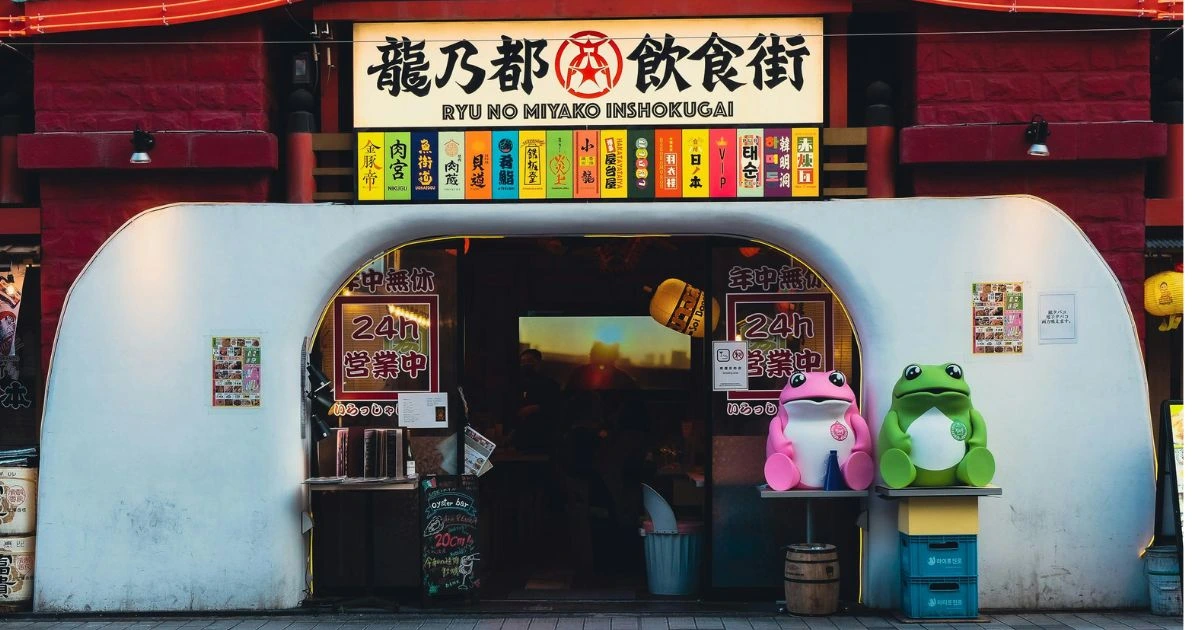
I spent most of last Tuesday staring at a flickering neon sign across from a coffee shop in Seattle, wondering if the manuscript I just finished would ever actually make sense to someone living in Hangzhou. It is a strange time to be a writer. We used to talk about the dream of being “discovered” by a big house that would handle everything, but that world feels like a museum exhibit now. If you are self-publishing in 2026, you aren’t just a storyteller; you are a global logistics manager who occasionally writes sentences. The wall that used to stand between an independent author and the massive, hungry market in China is not just cracking. It has basically dissolved into a stream of data.
Most people I talk to are still terrified of the logistics. They think about contracts that look like ancient scrolls and the nightmare of finding a translator who won’t turn their noir thriller into a slapstick comedy. But the shift toward Book Rights AI has changed the math. It is no longer about begging an agent to notice you at a crowded fair. It is about setting up a system that breathes on its own while you move on to the next chapter.
The Chinese market is specifically aggressive right now. They have a middle class that consumes digital literature at a pace that makes the Western market look like it’s standing still. They want stories, and they want them yesterday. If you are sitting on your rights because you’re waiting for a “traditional” breakthrough, you are essentially leaving your house unlocked with the lights on and nobody inside.
Navigating global publishing without the traditional gatekeepers
The old way of handling foreign rights sales was a slow dance of paper and patience. You’d send a PDF to an agent, who would send it to a sub-agent, who might eventually mention it over a very expensive lunch in Shanghai. By the time anyone signed anything, your “timely” tech thriller was about as relevant as a floppy disk. That lag is gone. We are seeing a shift where the negotiation and the localization happen almost simultaneously.
There is something inherently messy about the way we communicate across borders, and I think we’ve finally stopped trying to make it perfect. In the past, self-publishing felt like a lonely island. Now, the tools for managing your catalog globally are becoming as standard as a word processor. I’ve watched authors who couldn’t find their way out of a paper bag suddenly have their books trending on platforms they can’t even pronounce. It isn’t magic; it’s just the removal of friction.
We used to worry that automation would strip the soul out of the work. I had these visions of a machine churning out a Mandarin version of my book that read like a refrigerator manual. But the reality is more nuanced. The technology has reached a point where it identifies cultural idioms and suggests shifts in tone that a human editor can then bless or refine. It’s a hybrid existence. You are still the pilot, but the plane is largely flying itself. This doesn’t mean you’re redundant. It means you’re finally free to be the person who writes the books instead of the person who spends six months arguing over a royalty percentage for a territory they’ve never visited.
The sheer volume of content being consumed in China means that “good enough” and “fast” often beat “perfect” and “invisible.” This is a hard pill for some purists to swallow. I’ve argued about this with friends in the industry until my voice went hoarse. They want the prestige of the old guard. I want my stories in the hands of readers, regardless of whether a man in a pinstriped suit gave me permission to be there.
The quiet revolution of Book Rights AI in the indie world
There is a specific kind of vertigo that comes with seeing your book cover redesigned for a market that values entirely different aesthetics. When you lean into Book Rights AI, you aren’t just translating words. You are translating an entire brand identity. The algorithms are now smart enough to analyze what covers are converting on Chinese retail sites and suggest variations that might look garish to an American eye but are perfect for a reader in Beijing.
I remember talking to a writer who was convinced that her cozy mystery would never work in China. She thought the cultural gap was too wide. But the data showed a massive spike in interest for “pastoral Western comfort fiction” among young urban professionals in China. She wouldn’t have known that. No human agent would have spent the time to find that micro-niche for a self-published author with three books. The automation did it for her. It found the gap and pushed the rights through the pipeline before she’d even finished her morning toast.
This is the part where the “autopilot” element gets real. We are looking at smart contracts that execute payments instantly. No more waiting for a wire transfer that gets hung up in a corresponding bank for three weeks. When a reader in China buys your book, a fraction of that value moves into your account in real-time. It’s a level of transparency that the big publishing houses are actually quite scared of because it proves how unnecessary much of their overhead has become.
Of course, it isn’t all sunshine and passive income. There are still deep complexities with censorship and local regulations that require a light touch. You can’t just flip a switch and ignore the reality of the geopolitical landscape. But the barriers are lower than they have ever been. The risk has shifted from “Will I lose money?” to “Can I handle the scale?” It is a much better problem to have.
I find myself thinking about the future of the book as a static object. Is it even a book anymore if it exists in twelve different languages simultaneously, updated in real-time based on reader feedback from three different continents? Maybe not. Maybe the “book” is just the seed, and the global versions are the branches.
There is an undeniable grit to the self-publishing world in 2026. We are no longer the “leftovers” of the literary world. We are the R&D department. We are the ones testing the limits of how far a story can travel when you remove the gatekeepers and replace them with efficient, invisible systems. The sheer speed of the Chinese market forces you to grow up fast. You learn that your “precious” sentences are just vehicles for emotion, and emotion translates a lot better than grammar does.
I don’t think we will ever go back to the way it was. Why would we? The friction was never the point. The story was the point. If I can sit in a rainy corner of the Pacific Northwest and watch my sales numbers tick up in a time zone that is twelve hours ahead of me, then the technology has done its job. It’s not about losing control; it’s about expanding the definition of what being an author actually means. It means being heard. Even if the people hearing you are on the other side of the planet, reading characters you can’t decipher, feeling exactly what you wanted them to feel.
FAQ
It is a suite of automated tools that analyze, negotiate, and facilitate the sale of foreign publishing rights without traditional intermediaries.
While digital is the primary focus, some systems do connect with Print-on-Demand (POD) services in China.
Non-fiction is actually one of the easiest categories to automate because the language is often less metaphorical.
Over-saturation. Because it’s easier to enter the market, the competition for reader attention is fierce.
Yes, though having a “track record” in your home country helps the algorithm pitch your book more effectively.
It looks at your sales velocity, reviews, and reader engagement metrics in your home market.
Yes. You can choose to keep film and television rights separate from your print and digital translation rights.
The smart contracts usually include automated arbitration clauses to resolve issues without expensive international lawyers.
No. It’s a managed ecosystem that handles the legal, financial, and linguistic hurdles all at once.
For many territories, yes. The system handles the discovery and contract phases that agents traditionally managed.
Sci-fi, business non-fiction, and specific types of romance and mystery are currently very high in demand.
Likely yes. Cover art and titles are often optimized for local tastes.
Not at all. The interface and communications are translated back and forth in real-time.
It can happen in days if the data shows a high demand for your specific genre.
Absolutely. You have full granular control over where your book is offered.
Many platforms work on a commission-only basis, meaning they only take a cut when a sale is made.
It uses high-context neural networks to create a first draft, which is then usually refined by a cultural specialist or a localized editor.
No. You are selling specific rights (like digital distribution in a specific territory) while retaining the “master” copyright.
The AI usually flags content that might violate local regulations, allowing you to make adjustments before submission.
Most automated systems use smart contracts and digital ledgers to process micro-payments or lump sums directly to your bank.
It is more open than ever, specifically for digital-first content and serialized fiction.

