
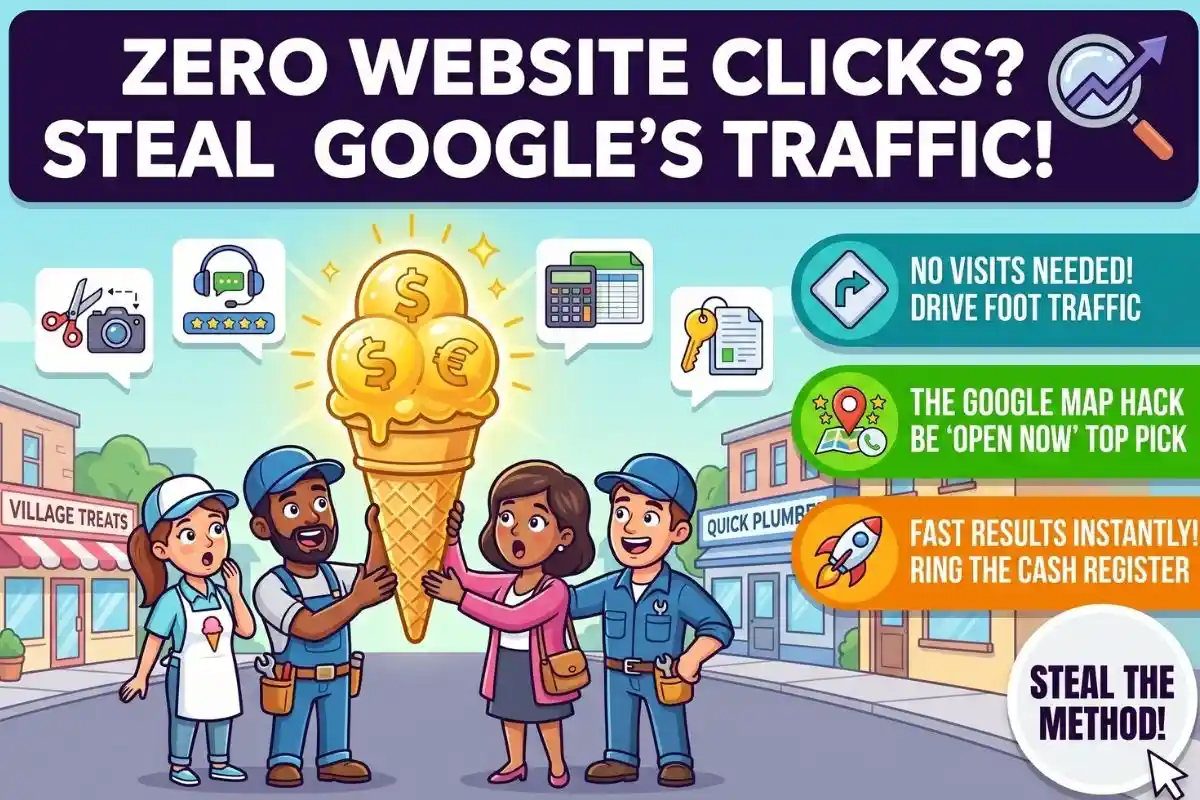
It is the peak of summer. The asphalt is shimmering, the humidity is oppressive, and there is only one logical solution: ice cream. Imagine a family piling into a hot car, turning on the air conditioning, and pulling out a smartphone. They type “best mint chocolate chip near me” into the search bar. In the past, this search would yield a long list of blue links. The family would have to click a website, navigate a clunky mobile menu, look for the address, and eventually figure out where to go. But today, the digital journey is radically different. Instead of a list of websites, they see an AI-generated summary, a vibrant map showing a shop just three minutes away, a photo of a towering waffle cone uploaded by a customer an hour ago, and a bright green indicator confirming the shop is “Open Now.” They put the car in drive and arrive at the destination without ever visiting the shop’s actual website. The ice cream parlor just made a sale, yet their website analytics will show zero new visitors. This invisible digital transaction is the new reality of local commerce, a phenomenon that is fundamentally reshaping the digital high street.
The Anatomy of a Zero-Click Search
Welcome to the era of Zero-Click Local SEO, a landscape where the search engine is no longer just a digital directory; it has become the final destination. In 2026, industry trends reveal that a staggering percentage of local queries end without the user ever clicking an external web link. For years, traditional Search Engine Optimization was entirely focused on driving organic traffic to a domain, operating under the assumption that a website was the sole gateway to consumer conversion. However, modern search interfaces are meticulously designed to answer questions directly on the results page. Features like rich knowledge panels, AI-powered overviews, and interactive image carousels extract the most relevant data from a business’s profile and serve it to the user instantly. If a customer only needs to know your operating hours, your physical address, or whether you offer dairy-free soft serve, they no longer need to hunt through your website’s “About Us” page. The search engine satisfies their query immediately. For local business owners, this means the battlefield has shifted entirely from the website domain to the search results page itself, redefining what digital visibility truly means.
Why Ice Cream Shops Are the Ultimate Test Case
You might wonder why neighborhood ice cream parlors are becoming the unsung heroes of this digital revolution. The answer lies in the deeply visual and highly impulsive nature of their product. When people crave a cold, sugary treat, they are not looking to read a long-winded origin story about how the dairy was ethically sourced; they want immediate, sensory validation that the product looks absolutely delicious. This aligns perfectly with the visual-first architecture of Google Maps 2026. The platform now heavily prioritizes user-generated photos, short-form video snippets, and real-time community reviews over static text descriptions. Savvy ice cream shop owners are capitalizing on this by treating their map listings as highly active social media feeds. They upload mouth-watering photos of their daily specials, respond rapidly to customer reviews to signal active management, and use granular attributes to highlight popular flavors. When the algorithm detects this high level of engagement and fresh visual content, it rewards the business with prime real estate in local search packs, ensuring they capture the lion’s share of foot traffic driven by impulsive summer cravings.
Mastering the Map: A Masterclass in Small Business Marketing
To truly leverage this shift, small business owners must undergo a complete mindset change regarding their digital assets. Your primary digital storefront is no longer the website you paid thousands of dollars to design; it is your search engine business profile. Effective small business marketing today hinges on keeping this profile obsessively updated and beautifully curated. This means treating every single feature offered by the platform as a crucial marketing channel. Owners must accurately categorize their services, list their complete inventory, utilize the Q&A section to preemptively address common customer inquiries, and activate direct messaging if they have the staff to support it. Furthermore, adhering to foundational business guidelines provided by authoritative bodies like the Small Business Administration can help establish rock-solid marketing practices that integrate seamlessly with modern local search strategies. By creating a comprehensive, engaging, and highly accurate profile, businesses create a frictionless experience for the searcher. When the search engine trusts that your profile contains the most accurate information, it confidently serves your business directly to the user, completely bypassing the need for a traditional website visit.
Measuring What You Can’t Click
The rapid transition to a zero-click reality presents a significant psychological challenge for traditional marketing analytics: how do you measure success when your website traffic is flatlining or even actively decreasing? Historically, a sudden drop in website visitors would trigger sheer panic among marketing teams. Today, however, it might actually indicate a highly optimized local search presence. To navigate this paradox, businesses must shift their focus from tracking traditional web clicks to measuring direct engagement metrics generated on the search engine itself. Key performance indicators now include the number of “get directions” requests, the volume of direct phone calls initiated from the search profile, and the frequency of profile views across mobile devices. Furthermore, correlating these digital engagement metrics with actual, physical foot traffic and point-of-sale data is absolutely essential. If your website traffic drops by twenty percent, but your daily ice cream cone sales increase by fifteen percent, your zero-click strategy is unequivocally working. It requires a more holistic, real-world approach to data analysis, recognizing that the ultimate goal of local SEO is not to farm pageviews, but to ring the cash register.
The Ripple Effect on Local Commerce
While the local ice cream shop provides a perfect, colorful illustration of this phenomenon, the core principles of this zero-click strategy extend far beyond the food and beverage industry. Think about emergency home services like plumbers, electricians, or locksmiths. When a homeowner has a burst pipe at midnight, they are not going to read a company’s blog post about the history of copper piping; they are going to search for an emergency plumber, look for the “Open 24 Hours” tag, and tap the “Call Now” button directly from the search results. Similarly, local boutiques, independent bookstores, and neighborhood hardware stores can use local inventory integration features to show searchers exactly what products are currently sitting on their physical shelves. By embracing the reality that search engines want to keep users on their own platforms for as long as possible, businesses can stop fighting the algorithmic current and start swimming with it. Adapting to this new digital ecosystem ensures that whether a customer is looking for a complex home repair service or just a double scoop of rocky road, your business remains the immediate, frictionless answer to their query.
The Shift in SEO Metrics: At a Glance
Understanding how to measure success is vital. Here is a breakdown of how traditional SEO goals compare to the new Zero-Click Local SEO reality.
| Feature | Traditional Local SEO | Zero-Click Local SEO (2026) |
| Primary Goal | Drive users to the business website. | Provide answers directly on the search page. |
| Key Metrics | Website sessions, bounce rate, pageviews. | “Get Directions” clicks, direct calls, profile views. |
| Visual Strategy | Optimizing images on website blog posts. | Uploading weekly photos to the Google Business Profile. |
| Content Focus | Long-form articles and local landing pages. | Quick Q&A answers, inventory feeds, short updates. |
| Conversion Point | Contact form filled out on the website. | Customer walks through the physical front door. |
Frequently Asked Questions
Q: If nobody is clicking on my website, do I even need one in 2026? A: Yes, absolutely. While your Google Business Profile serves as your frontline digital storefront, your website remains the foundational anchor for your brand’s authority. Search algorithms still crawl your website to verify the information on your profile. Furthermore, a website is essential for customers who want to make large purchases, read in-depth service descriptions, or verify your professional credentials.
Q: How do AI Overviews impact my small business marketing? A: AI Overviews pull data from a variety of sources, most notably your business profile and customer reviews, to generate quick summaries for users. If your profile is rich with keywords, high-quality photos, and detailed customer testimonials, the AI is much more likely to feature your business positively when summarizing the best local options for a searcher.
Q: What is the fastest way to improve my zero-click visibility today? A: The most immediate action you can take is to refresh your visual content and manage your reviews. Take a few high-quality photos of your storefront, your products, or your team and upload them to your profile. Next, respectfully reply to your most recent reviews—both positive and negative. Active management signals to the algorithm that your business is alive, well, and ready for customers.
The Curiosity Scoop: Why We Can’t Wait
There is a fascinating psychological undercurrent to the Zero-Click Local SEO phenomenon, perfectly mirrored by the act of buying ice cream. Human beings are fundamentally wired for instant gratification. In a world where we can stream any movie instantly or have groceries delivered in an hour, our tolerance for digital friction has plummeted. We no longer want to hunt for information; we expect it to be served to us on a silver platter. The ice cream shop succeeds in the zero-click environment because it perfectly marries digital immediacy with physical gratification. You see the photo on your phone, you follow the map, and five minutes later, you are eating the ice cream. It is the ultimate shortcut from desire to fulfillment. By mastering this frictionless journey, local businesses aren’t just adapting to a new search algorithm; they are mastering the modern psychology of consumer behavior.
