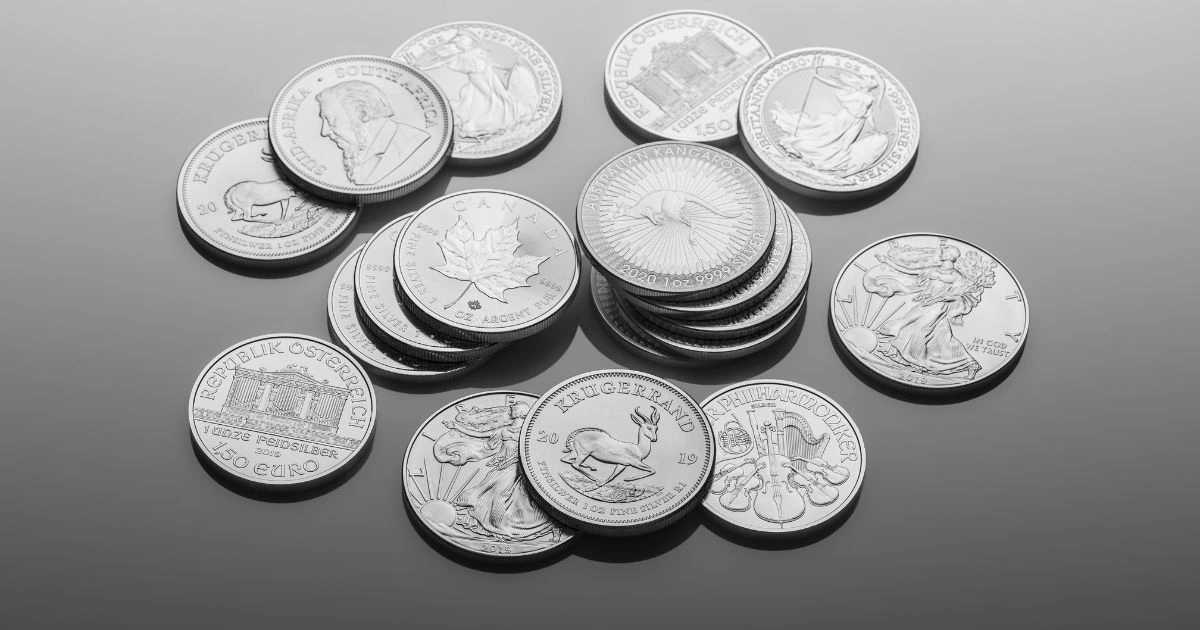
I remember sitting in a small coffee shop in Chicago, watching the rain blur the skyline, while a friend of mine, a guy who has spent three decades staring at tickers, tried to explain why he was dumping his gold. He wasn’t panicked. He was bored. Gold, for all its ancient luster and the security it offers when the world feels like it is tilting on its axis, can sometimes become a stagnant room. It is a bunker. But bunkers aren’t where growth happens. He kept tapping his pen against a printout of manufacturing data and whispering about the Silver Price Pivot as if it were a secret everyone was looking at but nobody was actually seeing.
There is a specific kind of exhaustion that comes with watching the yellow metal. It is heavy, literal and metaphorical. Gold reacts to fear, to the crumbling of currencies, and to the breathless headlines of late-night news cycles. But silver is different. Silver is restless. It has this dual personality that makes it infinitely more interesting for anyone who isn’t just looking to hide their wealth under a mattress. It is precious, yes, but it is also essential. It is the conductive spine of the modern world. When you stop looking at metals as a hedge against the end of the world and start looking at them as the fuel for the next one, the entire landscape changes.
For the last year, the conversation in high-end corridors has shifted. We are seeing a massive asset rotation 2026 that isn’t being led by retail panic, but by a cold, calculated realization that the green energy transition and the explosion of high-frequency electronics require physical materials that gold simply cannot provide. You cannot build a solar farm with gold. You cannot power a fleet of electric vehicles with it. This creates a tension in the market that most people miss because they are too busy looking at the dollar index.
The silent mechanics of commodity trading in a shifting decade
The way we talk about commodity trading often feels sterile, like we are discussing numbers in a vacuum. But there is a grit to it. It involves warehouses, shipping lanes, and the messy reality of industrial demand. Lately, that demand has been screaming. If you look at the silver-to-gold ratio, you start to see the cracks in the old argument for sticking solely with the traditional safe haven. The ratio has been stretched thin for so long that the snap back feels inevitable, yet many are still waiting for a permission slip that the market isn’t going to give.
There is a peculiar rhythm to how these things move. Gold usually takes the first step, acting like the scout. It moves up when people are nervous. But once the initial shock wears off and the industrial engines start humming again, silver tends to sprint. It has more “beta,” as the technical folks say, but I prefer to think of it as raw energy. It is more volatile, sure, but that volatility is just a reflection of its utility. When a factory in the Midwest or a tech hub in California needs silver for its circuits, they don’t care what the chart looks like. They just need the metal.
I’ve noticed that the most successful people I know aren’t the ones trying to timing the absolute bottom. They are the ones who recognize when a narrative has exhausted itself. The “gold is the only way” narrative feels tired. It feels like a relic of a time when we weren’t trying to re-electrify the entire planet. The shift toward industrial metals isn’t just a trend; it’s a structural necessity. We are seeing a fundamental re-rating of what “value” means in a world that is hungry for conductivity.
This isn’t to say gold is dead. That would be a foolish thing to claim. But the opportunity cost of holding it while silver begins its ascent is becoming harder to ignore. The Silver Price Pivot is less about one metal being better than the other and more about recognizing which one is actually being used by the world right now. One sits in a vault, gathering dust and prestige. The other is being consumed, integrated into our screens, our cars, and our power grids.
Rethinking the safety net during the asset rotation 2026
We often confuse price with value. A high price for gold might make you feel wealthy, but it doesn’t necessarily mean the market is healthy. When smart money starts looking at silver, it’s a sign of a different kind of confidence. It’s a bet on productivity. It’s a bet that we are going to keep building things, that the factories will stay open, and that the technological curve will keep steepening. This asset rotation 2026 is a move away from the static and toward the kinetic.
I think back to that afternoon in the United States, watching the cargo ships on the lake, realizing that every single one of those vessels was a moving testament to the demand for raw materials. The scale of the transition we are currently in is hard to wrap the human brain around. We are talking about millions of ounces of silver being pulled into industrial applications that didn’t even exist twenty years ago. The supply side is struggling to keep up, hindered by years of underinvestment in mining and the simple reality that silver is often a byproduct of other metals. You can’t just flip a switch and get more of it.
The scarcity isn’t theoretical. It’s physical. And when physical scarcity meets rising industrial demand, the price is usually the last thing to realize what’s happening before it jumps. It feels like we are standing on a ledge, looking out over a valley, and half the people are still looking back at the mountain they just climbed. They are comfortable on that mountain of gold. But the valley is where the new cities are being built.
There is a certain irony in how silver is treated as the “poor man’s gold.” It’s a label that has stuck for centuries, yet it misses the point entirely. If gold is the crown, silver is the sword. One is for show; the other is for work. In a period of high inflation or currency debasement, both will serve you well. But in a period of technological revolution, you want the metal that is actually doing the work. The pivot we are seeing now is a recognition that the work is just beginning.
I don’t have a crystal ball. Nobody does, despite what the slick brochures tell you. The markets are messy, influenced by geopolitical whims and the erratic behavior of central banks. But there is a logic to the movement of industrial metals that transcends the noise. It is the logic of the assembly line. It is the logic of the power plant. If the world is going to look the way we are being told it will look in ten years, then the math for silver becomes very simple and very compelling.
Perhaps the most interesting part of this whole shift is how quiet it has been. There are no parades for silver. There are no sensationalized documentaries about the “silver bugs” lately. It is just a steady, quiet accumulation by people who understand that the future is paved in conductors, not just ornaments. It makes you wonder what else we are missing while we stare at the shiny things that worked in the past.
The coffee in Chicago was cold by the time my friend finished his rant. He wasn’t trying to convince me to buy anything. He was just observing the inevitable. The world changes, and the tools we use to measure its value have to change with it. We are moving into a phase where utility might finally outweigh prestige. It’s a strange thing to witness, the dethroning of an idea, but that is exactly what a pivot feels like while it’s happening.
FAQ
It refers to the moment when market dynamics shift from favoring gold as a stagnant store of value to silver as a high-growth industrial and precious asset.
The article suggests a pivot or rotation, implying a shift in balance rather than a total abandonment of one for the other.
Many global green energy targets and infrastructure projects are reaching a critical mass by 2026, intensifying the search for raw materials.
It is frequently found in the same ore deposits as lead, zinc, and copper, meaning its supply is often tied to the demand for those base metals.
Its price tends to consolidate for long periods and then move violently in short bursts, unlike the more gradual climbs of gold.
Traditional film photography has declined, but silver is still used in digital imaging sensors and high-end screens.
Industrial demand might drop, but its “precious metal” side often kicks in as people seek safety, creating a complex price floor.
Copper is a great conductor, but silver is superior; in high-efficiency tech, there is often no substitute for silver’s performance.
Current projections suggest a growing deficit, as mine production has not kept pace with the surging demand from the EV and solar sectors.
Gold often stays stagnant during periods where the economy is growing, acting only as a defensive insurance policy rather than a growth engine.
Over 50% of silver demand comes from industrial applications like electronics, solar panels, and medical devices, whereas gold is primarily used for jewelry and investment.
As a leader in tech and green energy initiatives, US industrial policy directly drives the demand for the silver used in those sectors.
Institutional investors often move before retail investors, positioning themselves before a major price breakout occurs.
Both tend to rise with inflation, but silver can outperform if the inflation is accompanied by industrial expansion.
For many, it is also a strategic move to hold an asset that has intrinsic utility in a green-energy-focused economy.
Market manipulation, large paper-trading volumes, and the fact that silver is often a byproduct of lead or zinc mining can suppress immediate price reactions.
While it is recycled, the amounts recovered from electronics are often tiny and expensive to process compared to the large bars of silver found in jewelry or bullion.
Silver is the most conductive metal on earth, making it essential for the photovoltaic cells used in solar panels.
The ratio measures how many ounces of silver it takes to buy one ounce of gold; when the ratio is historically high, silver is often viewed as undervalued.
Generally, yes, because its smaller market size and industrial ties make its price more volatile and sensitive to economic cycles.
It describes the trend of large-scale investors moving capital out of traditional safe havens like gold and into metals that benefit from industrial growth.