
Last Tuesday, I sat in a small coffee shop in Austin, Texas, watching a young woman across from me stare into a pair of sleek glasses while her thumbs flicked through the air. She wasn’t playing a game. She was reading. Or rather, she was experiencing a narrative that hovered in the space between her eyes and the steamed milk of her latte. It hit me then that the traditional wall we built around the idea of a book has finally crumbled. We used to talk about digital publishing as a secondary thought, a sort of cheaper sibling to the hardcover. Now, if you aren’t thinking about a multi-format release from the very first paragraph of your draft, you are essentially whispering into a vacuum.
The anxiety most writers feel when they hear the words audio or virtual reality usually stems from the wallet. We have been told for a decade that high-quality production requires a studio, a narrator with a golden throat, and a team of developers who charge by the second. That was a comfortable lie that kept the gates locked. In the current landscape of 2026 publishing, those gates haven’t just been unlocked; they’ve been taken off their hinges and sold for scrap. I managed to push a project into three distinct dimensions last month for almost exactly one hundred dollars, and the process felt less like a technical mountain and more like a messy, exhilarating kitchen experiment.
Author productivity in the age of immersive media
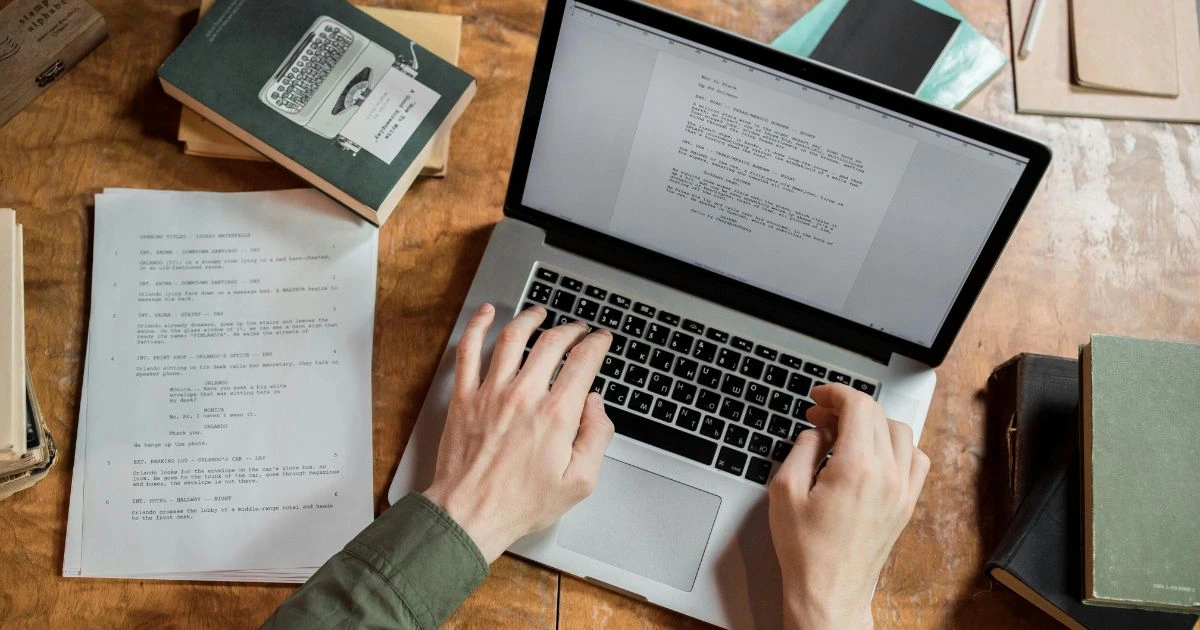
Efficiency is a dirty word in creative circles because it sounds like we are turning into machines. But real author productivity isn’t about typing faster. It is about the radical reclamation of your own intellectual property. When I started looking at my manuscript not as a static document but as a source of raw data, the cost of adaptation plummeted. The hundred dollars didn’t go toward expensive middle-men. It went toward the specific tokens and access points that allowed me to bridge the gap between text and sensory experience.
I spent forty dollars on a high-end neural voice synth that honestly sounds more human than some of the distracted narrators I’ve hired in the past. It captures the breathy hesitations and the slight vocal fry that gives a story its grit. The rest of the budget went into a localized spatial environment builder. People think VR requires a headset and a sprawling laboratory. In reality, it’s just a way to let a reader stand inside a scene you’ve described. By using open-source spatial anchors, I turned three key chapters of my book into “walk-in” environments. The reader isn’t just looking at words on a screen; they are standing in the rainy alleyway of chapter four while the audio version plays in their ears.
There is a certain arrogance in assuming readers only want to engage with us through a single sense. We are competing with everything now. We are competing with the silence of a bedroom at night and the chaotic noise of a subway commute. A multi-format release acknowledges that the person consuming your work is a living, breathing human with a shifting environment. Sometimes they have eyes but no hands. Sometimes they have ears but no patience for a screen. If you provide the bridge, they will cross it.
The shifting landscape of 2026 publishing and the $100 budget
What nobody tells you about the modern industry is that the tools have become invisible. We used to spend hours formatting CSS for an eBook. Now, the internal architecture of a file is almost sentient. It adapts. The real challenge is no longer the “how” but the “why.” Why should this story exist in a headset? Why does this specific character need a voice that carries a certain rasp? When I looked at my bank statement after the launch, the $100 felt like a joke. It felt like I had stolen something. But I hadn’t. I just stopped paying the “complexity tax” that legacy systems still try to levy on us.
I remember walking through a park in Chicago a few years ago and seeing people with those early, clunky VR rigs. They looked ridiculous. They looked isolated. But the tech we use today is social and thin. It’s part of the fabric of the day. If you are still thinking about your work as a “book” in the 1998 sense of the word, you are ignoring the way people actually live. We inhabit multiple layers of reality simultaneously. Your publishing strategy should reflect that. A multi-format release is not a luxury for the elite earners of the industry anymore. It is the baseline for anyone who wants to be heard over the roar of the digital ocean.
I didn’t spend a dime on marketing in the traditional sense. The formats did the marketing for me. When you tell a community that they can experience your world for the price of a coffee, but in a way that feels like a five-hundred-dollar production, they talk. They share the link because the novelty hasn’t worn off yet. We are in this sweet spot where the technology is cheap but the perceived value is still sky-high. That window won’t stay open forever. Eventually, everyone will be doing this, and the $100 secret will just be the standard operating procedure.
There is a specific kind of exhaustion that comes with being a creator right now. It feels like the ground is constantly moving under our feet. One day we are told to pivot to video, the next day it’s short-form audio, and the day after that, it’s some new neural interface. It’s enough to make you want to go back to a typewriter and a stack of stamps. But there is also a strange, quiet power in being able to control the entire sensory output of your imagination for less than the cost of a nice dinner out.
I found that the most difficult part wasn’t the software or the distribution. It was the ego. I had to let go of the idea that a “real” book is only something you can drop on a toe and cause an injury. Once I accepted that my story was a liquid that could be poured into any container, the barriers vanished. The audio version wasn’t a “version” at all; it was just the story in a different state of matter. The VR scenes weren’t gimmicks; they were the set design that I had already built in my head while writing.
We are moving toward a future where the distinction between reading, listening, and experiencing will be so blurred that we won’t even have separate words for them. I don’t know if that’s a good thing. Part of me mourns the simplicity of black ink on a white page, the way it forced the brain to do all the heavy lifting of visualization. But the other part of me, the part that saw that woman in Austin lost in a story while the world went by, knows that the connection is what matters. The format is just the delivery vehicle. If you can deliver it better, faster, and more deeply for a hundred bucks, why wouldn’t you?
The sun is setting earlier these days, and I find myself looking at my latest draft, wondering what it smells like, what the ambient temperature of the protagonist’s house is, and how I can translate that into the next iteration. The tools are sitting there, mostly free or close to it, waiting for someone to stop being afraid of them. It makes you wonder what else we’ve been overpaying for all these years, or what other gates we’ve been standing in front of, waiting for a key we already hold in our pockets.
FAQ
It is the simultaneous launch of a story across eBook, AI-generated audio, and immersive spatial or VR environments.
Only if you don’t spend the time to fine-tune the sensory details.
Many are installing “experience kiosks” where readers can sample the VR and audio before buying the physical copy.
It’s actually more cost-effective for shorts because the production time is halved.
Yes, most platforms allow for iterative updates just like an eBook file.
The core “raw data” of your manuscript remains yours; only the “wrapper” changes.
No, historical fiction and romance benefit immensely from atmospheric spatial settings.
For a simple “scene immersion,” it can take as little as a weekend of focused work.
Most paid platforms grant you full commercial rights to the output files.
It’s usually a project-based cost for the specific tools and tokens required for one book.
Yes, voice cloning technology allows you to “train” a model on your voice for a consistent brand.
The market is growing, particularly among younger demographics who view “reading” as a multi-sensory activity.
Proof-listening to the audio to ensure the AI hasn’t misinterpreted the emotional tone of a scene.
It provides a viable path for independence, but a publisher can still offer broader reach.
Specialized immersive marketplaces and integrated meta-stores are the primary hubs.
By using subscription-based neural voices and open-source VR creation tools instead of hiring traditional production houses.
Yes, it creates a larger “event” feel and satisfies different consumer habits immediately.
Absolutely, and it’s often easier because non-fiction benefits from “walk-through” data visualizations.
No, modern tools use drag-and-drop spatial anchors that work similarly to basic website builders.
In 2026, neural speech synthesis is nearly indistinguishable from human narration for most fiction genres.
Typically, this budget covers the “conversion” tools; many authors now use their own design skills or existing credits for visuals.
