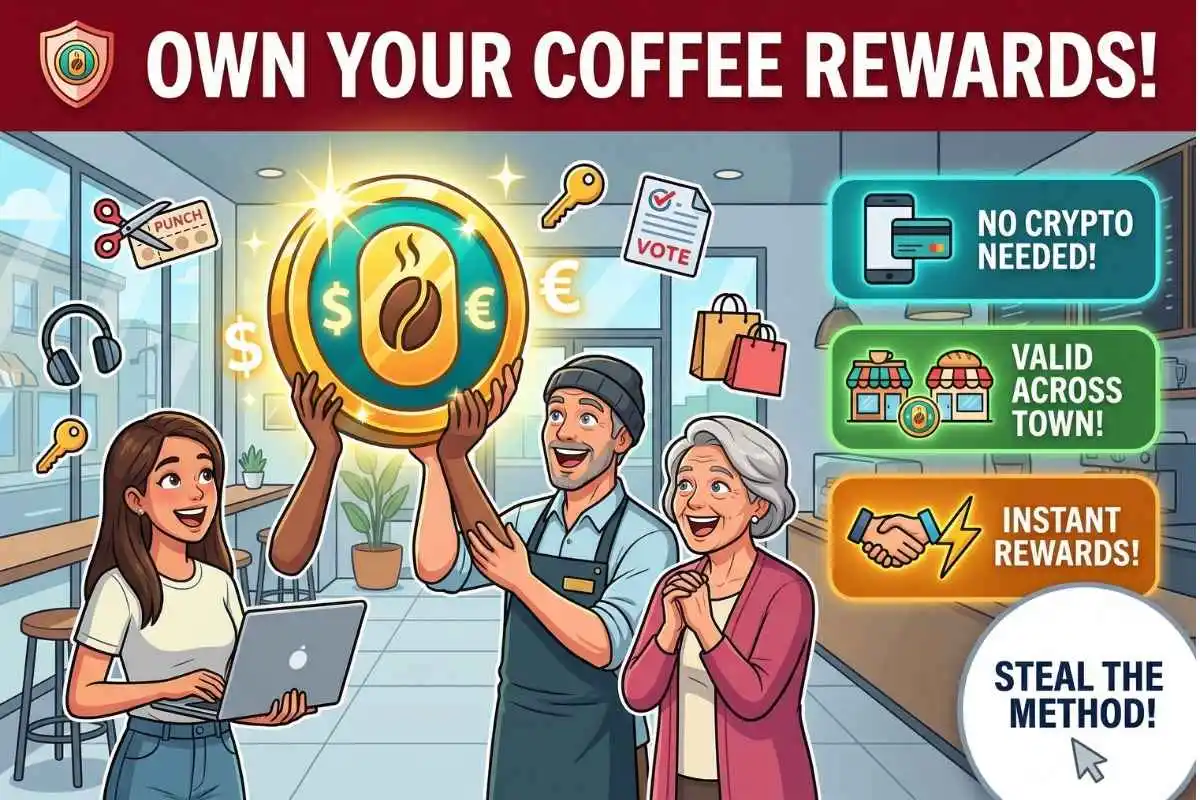
Imagine walking into your favorite neighborhood cafe on a crisp Tuesday morning. You order your usual oat milk latte, tap your phone to the terminal, and instead of a digital stamp on a generic app, a crisp notification pops up: “You’ve earned 5 CafeTokens.” This isn’t just a gimmick to get you to buy ten coffees to get one free. The year is 2026, and the humble paper punch card has been entirely replaced by sophisticated digital assets. Welcome to the era of the loyalty token, a revolutionary shift in how small businesses build unbreakable bonds, turning everyday coffee drinkers into genuine stakeholders in the community’s success.
The Death of the Punch Card
For decades, the standard method for retaining customers was simple but fundamentally flawed: the paper punch card. You would carry it around in your wallet, inevitably lose it when you were just one punch away from a free muffin, and have to start all over again. Even as technology advanced and these cards migrated to clunky mobile applications, the underlying psychology remained transactional and largely uninspiring. But by 2026, forward-thinking cafe owners realized that true loyalty isn’t built on a delayed discount; it is built on a sense of belonging and tangible value. When a customer buys a coffee today, they are awarded a digital token that goes directly into their secure digital wallet. Unlike a traditional point in a closed database, this token is a verifiable digital asset owned entirely by the customer. It cannot be arbitrarily deleted or expired by the cafe owner without notice. This shift from renting points to owning assets completely changes the psychological dynamic between the business and the consumer. The customer suddenly feels like a micro-investor in their favorite morning spot, making every sip of coffee feel like a small investment in the local community.
A Neighborhood Ecosystem
The true magic of the 2026 loyalty token model lies not just in ownership, but in unprecedented interoperability. In the past, your coffee shop points were entirely useless at the bakery next door or the bookstore down the street. Today, local economies are thriving by forming decentralized alliances and linking their loyalty programs together on shared networks. Imagine earning a handful of tokens for your morning espresso and later realizing you can seamlessly spend those exact same tokens to get a discount on a freshly baked sourdough loaf at the bakery across the street. This interconnected ecosystem transforms isolated customer retention strategies into a powerful, neighborhood-wide economic engine. Cafes partner with complementary businesses, creating a unified network where the currency of loyalty flows freely. If a customer decides they have too many coffee tokens, they can trade them on local decentralized exchanges for tokens belonging to a completely different service, perhaps a local car wash or an independent cinema. This liquidity ensures that the rewards never go to waste, constantly engaging the consumer and encouraging them to shop locally.
Data and Community Governance
From the perspective of the cafe owner, issuing loyalty tokens is far more than a fun technological experiment; it is a profound upgrade to their business operations and customer relationship management. Traditional punch cards provided absolutely zero actionable data. The owner never knew who you were, what else you liked to buy, or how often you visited unless they recognized your face. With modern ledgers, businesses now have access to incredibly rich, anonymized data about purchasing patterns, allowing them to tailor specific offers to their most dedicated patrons. Furthermore, tokens can be infused with voting rights. A cafe might propose three new seasonal drinks and allow token holders to vote on which one makes the menu. The more tokens you hold, the more weight your vote carries. This creates an incredibly powerful psychological bond. Customers are no longer passive consumers; they are active participants shaping the future of the establishment. They feel heard, valued, and invested in the outcome. By giving the community a voice, cafes create an army of passionate brand ambassadors.
The Invisible Technology
None of this futuristic loyalty ecosystem would be possible without the massive leaps in underlying technology that occurred leading up to 2026. In the early days of cryptocurrency, the idea of using a blockchain for a three-dollar coffee transaction was laughable. The networks were slow, heavily congested, and plagued by exorbitant transaction fees that could sometimes cost more than the coffee itself. Moreover, the user experience was a nightmare of seed phrases and complex digital wallets. However, the modern infrastructure powering these cafe tokens is entirely invisible to the end user. Fast, environmentally friendly networks process thousands of transactions per second with fractions of a cent in fees. The customer doesn’t need to know anything about cryptography or private keys; they simply use an app that looks and feels exactly like traditional digital payment systems. The complexity has been entirely abstracted away. When you tap your phone, the cryptographic settlement happens in milliseconds behind the scenes. This frictionless experience allowed local cafes to adopt the technology en masse.
The End of Customer Churn
As we look toward the end of the decade, the loyalty token model pioneered by these small, independent cafes is rapidly setting a new standard for the entire retail industry. Customer churn—the rate at which a business loses its clients—has plummeted for cafes utilizing these systems. The switching cost for a consumer is no longer just giving up a familiar taste; it means abandoning a digital portfolio of localized assets and community influence they have spent months or years accumulating. National brands are scrambling to reverse-engineer this success, attempting to launch corporate tokens. However, they lack the authentic community connection that makes local tokens valuable. The 2026 cafe has proven that when you treat a customer as a partner rather than a walking wallet, the dynamic shifts permanently. The loyalty token is not just a digital coupon; it is a new social contract between the creator and the consumer. It represents a cooperative paradigm shift ensuring that customers truly remain loyal forever.
Data Check: The Loyalty Evolution
| Feature | Traditional Punch Cards | 2026 Loyalty Tokens |
| Asset Ownership | Property of the business; can be expired or revoked. | True digital asset securely owned by the customer. |
| Interoperability | Locked exclusively to a single store or franchise chain. | Tradable and usable across partnered neighborhood businesses. |
| Data & Analytics | Almost none, relies entirely on manual tracking. | Rich, anonymized on-chain purchase behavior data for targeted offers. |
| Customer Role | Passive consumer awaiting a delayed free item. | Active community member with token-weighted voting rights. |
| Value Fluctuation | Strictly static (e.g., 10 coffees = 1 free coffee). | Dynamic; tokens can appreciate in local utility or value. |
Frequently Asked Questions
Do I need to buy cryptocurrency to participate in these cafe programs? Absolutely not. The beauty of the 2026 loyalty model is its complete invisibility. Customers earn tokens simply by purchasing their daily coffee using traditional payment methods like credit cards or cash. The cafe’s point-of-sale system automatically mints and sends the token to your phone’s background wallet. You never have to interact with an exchange or understand the complex mechanisms of cryptocurrency trading to reap the benefits.
What happens to my tokens if the cafe unfortunately goes out of business? In the era of paper punch cards, a closed business meant your earned rewards vanished completely. However, because today’s tokens belong to a neighborhood alliance, your assets retain utility. While you obviously can’t buy coffee from a closed store, the tokens you earned there can still be traded on the local network or redeemed for discounts at partnered bakeries, bookstores, and grocers within the same ecosystem.
Are there tax implications for earning these coffee tokens? Under the 2026 regulatory framework, earning standard loyalty tokens for everyday purchases is treated like earning traditional frequent flyer miles. They are viewed as a post-purchase rebate rather than taxable income. However, if a customer actively trades massive quantities of neighborhood tokens on secondary markets for profit, standard capital gains reporting rules apply, though this rarely affects the average coffee enthusiast.
Curiosity of the Day: The Vintage Token Market
Did you know that early coffee loyalty tokens have become digital antiques? As cafe culture embraced the digital shift, a fascinating secondary market emerged for “genesis tokens”—the very first batches of rewards issued by historic coffee shops. Much like collecting vintage stamps, coffee enthusiasts actively hunt for these original assets. A 2024 “First Pour” token from a famous Seattle roaster recently traded for the equivalent of three months’ worth of free coffee! It perfectly summarizes how the digital age transformed fleeting morning routines into highly collectible pieces of neighborhood history.