
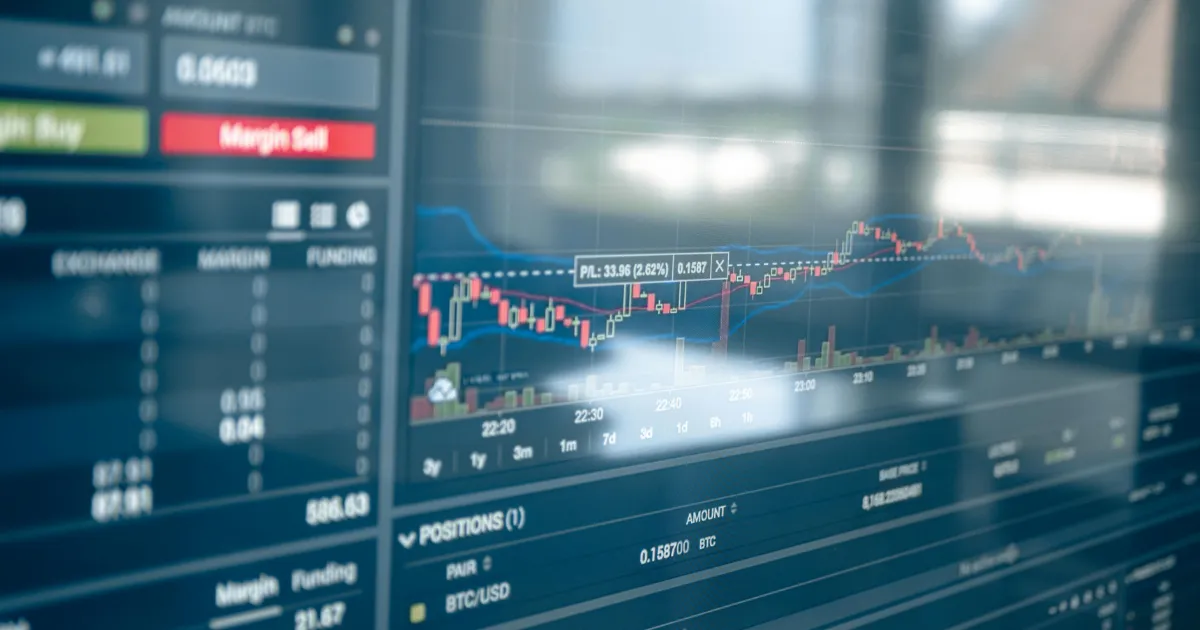
There is a specific kind of silence that comes with watching a screen at three in the morning when the rest of the neighborhood is asleep. It is not a peaceful silence. It is the hum of a cooling fan and the soft, repetitive glow of price feeds flickering between exchanges. You sit there wondering if the spread you found is real or just a ghost in the machine. Most people think of digital assets as a gamble on the future or a volatile rollercoaster to nowhere, but for a few, it is just a series of plumbing problems. You are looking for leaks. You are looking for that brief, fleeting moment where the price of a token in one corner of the internet hasn’t yet realized it is being sold for more in another.
Crypto arbitrage is often sold as a “get rich quick” scheme by people who have never actually tried to move liquidity through a bottleneck. In reality, it feels more like being a digital version of those old-school commodity traders who used to buy grain in one town and sell it in the next, except your horse is a fiber-optic cable and the towns are separated by millisecond latencies. It is a grind. It requires a certain temperament that finds joy in the decimal points, a willingness to be wrong, and the stamina to handle the moments when the bridge between two networks decides to stop working just as you’ve sent your capital into the void.
I remember sitting in a small coffee shop in Seattle, watching the rain hit the window while I tried to figure out why a particular trade had failed. On paper, the math was perfect. The gap was there. The execution should have been instantaneous. But I had forgotten about the human element of the code, the way congestion can turn a sure thing into a trapped asset. It was a lesson in humility. You realize quickly that the market does not owe you a profit just because you found a discrepancy. The discrepancy is often there for a reason, usually a terrifying one that you haven’t discovered yet.
Navigating the Chaos with a DEX Trading Bot
Eventually, you stop trying to click the buttons yourself. The human finger is a blunt instrument in a world governed by algorithms. This is where the transition happens, where you move from being a spectator to a sort of digital architect. Building or configuring a DEX trading bot becomes the natural evolution. You are essentially codifying your own intuition, trying to teach a machine how to spot the inefficiencies that occur when a decentralized exchange loses sync with the broader market. It sounds clinical when you put it that way, but the first time you see your script execute a perfect cycle without you touching the keyboard, it feels like magic. Or perhaps like setting a trap and finally hearing the click.
The decentralized world is messy. Unlike the polished interfaces of major centralized platforms, these pools of liquidity are often shallow and prone to wild swings. A bot doesn’t care about the narrative of a project or the hype on social media. It only cares about the ratio of one token to another. It lives in the smart contracts, waiting for someone to make a large swap that knocks the price out of equilibrium. There is a strange morality to it. By closing that gap, you are technically providing a service to the market, bringing prices back in line, even if your only motivation is the small slice of profit left over after gas fees.
There is a heavy irony in the fact that we use such high-tech tools to hunt for such tiny margins. You might spend weeks refining a piece of code just to capture a fraction of a percent. It is a game of volume and frequency. You start to see the world in terms of liquidity depth and slippage. You realize that most of the “alpha” people talk about is just noise, and the real substance is found in the plumbing. It is not about predicting where the price goes tomorrow. It is about knowing where the price is right now, in three different places at once, and having the infrastructure to act on that knowledge before the rest of the world wakes up.
Why a Market Neutral Strategy is the Only Way to Sleep
Most people in this space are obsessed with the “moon.” They want the price to go up. They tether their emotional well-being to a green candle on a chart. If you are pursuing a market neutral strategy, you stop caring about the direction of the wind. You only care that the wind is blowing. Whether the entire ecosystem is crashing or soaring is secondary to the fact that it is moving. In an arbitrage play, you are ideally protected from the underlying volatility because you are buying and selling simultaneously. You aren’t betting on the asset; you’re betting on the inefficiency of the venue.
This shift in perspective is a relief. It removes the existential dread of a bear market. In fact, some of the best opportunities arise when the market is panicking. When everyone is rushing for the exits, they stop being careful. They swap assets with total disregard for the price impact, creating massive holes that a patient observer can fill. It is a cold way to look at finance, I suppose. It lacks the tribalism of being a “believer” in a specific coin. But there is a quiet dignity in just being a mechanic, someone who keeps the gears turning while everyone else is screaming about the end of the world.
Of course, “neutral” is a bit of a misnomer. Nothing is ever truly safe. You still have platform risk, smart contract risk, and the ever-present danger of a stablecoin losing its peg. You are always exposed to something. The goal is to choose your risks deliberately rather than having them thrust upon you by the whims of a celebrity’s social media post. You trade the risk of price movement for the risk of technical execution. For some of us, that feels like a fair trade. It puts the responsibility back on your own ability to build and maintain your systems.
The landscape is changing, though. It used to be easier. A few years ago, you could find spreads that stayed open for minutes. Now, you are competing with sophisticated firms that have offices in world capitals and server racks located as close to the exchange data centers as possible. It has become an arms race. But even in a world of giants, there are still nooks and crannies. The decentralized space is too vast and too fragmented for any single entity to dominate every corner. There is always a new chain, a new protocol, or a new pool that is just inefficient enough to be interesting.
It makes you wonder where it all ends. As the systems get more efficient, the margins get thinner. Eventually, the gaps might disappear entirely, or at least become so small that only the most specialized machines can see them. But for now, the friction of the technology remains. As long as there is a delay in how information travels, as long as there is a cost to moving capital, there will be a place for the arbitrageur. We are the ghosts in the wires, the people who find the mistakes and quietly correct them for a fee. It is not a glamorous life, and it won’t make you a hero in the eyes of the public, but there is a certain satisfaction in the precision of it all. You just have to be willing to stay awake when everyone else is dreaming.
FAQ
It involves buying a digital asset on one exchange where the price is lower and simultaneously selling it on another where the price is higher. The goal is to capture the price difference, or spread, between the two venues while minimizing exposure to the asset’s actual market direction.
A bot automates the monitoring and execution of trades across decentralized exchanges. Since these markets operate on blockchain protocols, a bot can interact directly with smart contracts to execute swaps much faster than a human could, which is crucial for capturing fleeting price discrepancies.
This is an investment approach that seeks to profit regardless of whether the overall market is trending up or down. In the context of arbitrage, the strategy is neutral because you are typically holding a long and short position at the same time, or completing a trade so quickly that the general price movement of the asset doesn’t affect your return.
No, it carries significant technical and operational risks. These include “slippage” where the price changes before your trade completes, high transaction fees (gas) that can eat your profits, and the potential for smart contract bugs or exchange outages that can trap your funds.
Inefficiencies persist because moving capital between exchanges takes time, different platforms have varying levels of liquidity, and transaction costs can make small spreads unprofitable for many traders. The “friction” of the technology ensures that these gaps continue to appear.
