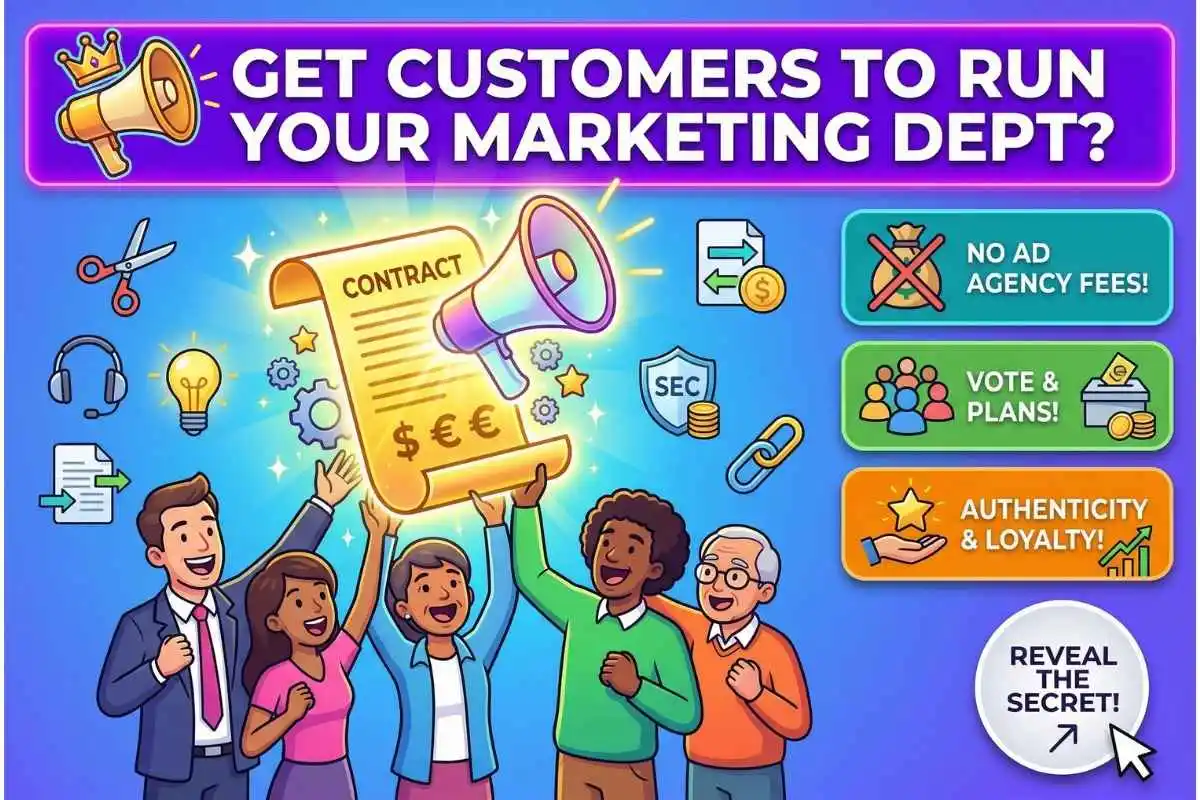
Imagine a world where your most loyal customers are not just buying your products; they are actually running your marketing department, making strategic decisions, and getting rewarded directly for their efforts without a middleman. Welcome to the era of the Decentralized Autonomous Organization, or DAO, applied to brand building. In 2026, the lines between consumer, creator, and corporate stakeholder have blurred entirely. The “Brand Ambassador DAO” is no longer a fringe Web3 experiment; it is rapidly becoming a mainstream strategy for companies looking to harness the authentic voice of their community. This article explores how turning your customers into co-owners of your marketing efforts can profoundly transform your business, aligning corporate goals with grassroots enthusiasm to create an unstoppable promotional engine.
The Shift from Passive Consumers to Active Creators
Let’s take a step back and look at how marketing used to function just a few short years ago, and why the current shift is revolutionary. Historically, brands spent millions of dollars relying on centralized advertising agencies, expensive celebrity endorsements, and opaque algorithms to push their message outward to a passive audience. However, the rise of blockchain technology and the widespread adoption of Decentralized Autonomous Organizations (DAOs) have completely flipped this traditional dynamic on its head. A DAO is essentially a community-led entity with no central authority, where rules are encoded as computer programs called smart contracts. When applied to a “Brand Ambassador” model, this means a company creates a shared digital treasury and a transparent voting system where actual customers hold governance tokens. These tokens represent both voting power and a stake in the marketing’s success. Instead of a detached executive deciding the next campaign, the very people who love the product pitch ideas, create content, vote on strategies, and execute the vision. This transforms the customer journey into a deeply engaging partnership where the consumer is emotionally and financially invested in the brand’s success.
How Decentralized Marketing Actually Works
How does a Brand Ambassador DAO function in the day-to-day operations of a modern business? The process begins when a brand allocates a portion of its marketing budget into a tokenized treasury, governed entirely by transparent smart contracts. Customers earn governance tokens by demonstrating brand loyalty through previous purchases, creating user-generated content, or participating in community events. Armed with these tokens, customer-ambassadors log into a decentralized portal and submit marketing proposals. A passionate customer might propose funding a grassroots experiential pop-up event in their city, or a localized digital ad campaign targeting a niche community they understand better than a corporate marketer. The rest of the DAO members then review and vote on these proposals. If a proposal passes the community vote, the smart contract automatically releases funds from the treasury directly to the creator to execute the project. If the resulting campaign drives measurable sales, the smart contract automatically distributes a percentage of profits back to the DAO or the individuals involved. It is a brilliant, self-sustaining ecosystem where the marketers are the product’s biggest fans.
Comparing the Old and the New
To truly understand the impact of this shift, it is helpful to look at a direct comparison of how these two distinct marketing philosophies operate side-by-side in today’s business landscape.
| Feature | Traditional Marketing | Brand Ambassador DAO |
| Decision Making | Centralized (CMO / Ad Agency) | Decentralized (Community Token Vote) |
| Compensation | Fixed Salaries / Retainer Fees | Token Rewards & Profit Sharing |
| Content Style | Highly produced, staged, corporate | Organic, user-generated, peer-to-peer |
| Transparency | Opaque budgets and hidden metrics | Public ledger, transparent treasury |
| Customer Role | Passive Consumer / Target Audience | Active Co-creator and Stakeholder |
The Real-World Benefits of Community Ownership
The tangible benefits of shifting to a Brand Ambassador DAO model are becoming incredibly difficult for modern businesses to ignore, especially as consumer trust in traditional advertising plummets to all-time lows. First and foremost, the authenticity generated by this decentralized approach is virtually impossible to manufacture in a corporate boardroom. When consumers see real people—who actually buy and use the product—creating content and advocating for a brand, it resonates far more deeply than a polished television commercial. Additionally, DAOs tap into the diverse, global intelligence of a brand’s entire customer base, unearthing brilliant, hyper-local marketing strategies that a centralized team would never even conceive of. Beyond mere content creation, this structure fosters an unprecedented level of long-term customer retention. Because the ambassadors physically hold tokens that increase in value as the brand succeeds, they are financially incentivized to see the company thrive, effectively turning them into highly motivated micro-influencers. The brand benefits from scalable marketing efforts without massive internal overhead, while customers are fairly compensated for their immense value.
Navigating the Challenges and Legal Complexities
Despite the immense potential surrounding community-driven marketing, establishing a successful Brand Ambassador DAO is not without its significant hurdles and learning curves. Transitioning to this open model requires a company to relinquish a substantial amount of creative control, trusting the community to represent the brand responsibly, which can be terrifying for traditional executives used to micromanaging public messaging. There is also the critical challenge of preventing the DAO from being hijacked by bad actors who acquire a disproportionate amount of voting tokens simply to siphon funds from the treasury. Furthermore, navigating the constantly evolving regulatory landscape remains a massive undertaking for modern enterprises. Brands must be incredibly careful not to run afoul of complex securities laws when issuing tokens. In the United States, for example, the U.S. Securities and Exchange Commission (SEC) closely monitors digital assets to protect consumers. If a token is deemed a financial security, the brand could face severe legal consequences. Companies must work closely with specialized legal counsel to ensure their structure complies fully with financial regulations while innovating.
Frequently Asked Questions
What exactly is a governance token in a DAO? A governance token functions as a digital voting ballot and a proof of membership within the Decentralized Autonomous Organization ecosystem. When a customer holds these tokens in their digital wallet, they are granted the specific right to vote on various marketing proposals, budget allocations, and strategic initiatives presented by the community. The number of tokens a person holds correlates directly to the weight of their vote, though many modern DAOs use quadratic voting to prevent wealthy members from dominating decisions. Furthermore, these tokens can sometimes accrue financial value if the brand’s ecosystem grows, providing a strong dual incentive to make smart choices.
How do brands ensure the quality of marketing campaigns? Ensuring high-quality output from a decentralized community relies heavily on establishing clear guidelines and strong peer-review mechanisms within the DAO’s foundational structure. Before any funds are released from the community treasury, proposals must pass rigorous voting thresholds, meaning the collective intelligence of the community acts as a massive quality control filter. If a proposal is completely off-brand, the majority of token holders will simply vote it down to protect their shared investment. Additionally, many brands implement reputation scores or establish core committees of trusted, long-term ambassadors who have veto power over potentially damaging campaigns to ensure consistent brand safety.
Can small businesses implement a Brand Ambassador DAO? Small businesses can absolutely implement a Brand Ambassador DAO, and in many cases, they may actually find it easier and more impactful to execute than massive multinational corporations. Smaller brands tend to have incredibly tight-knit, passionate communities that are highly motivated to help the foundational business succeed and grow. Setting up the basic infrastructure for a DAO has become remarkably accessible in 2026, with off-the-shelf software solutions allowing founders to deploy smart contracts with just a few simple clicks. For a small business with a limited budget, tapping into the creative power of local customers provides an unparalleled competitive advantage.
A Curious Return to Collaborative Roots
As we look toward the future of commerce and community engagement, the “Brand Ambassador DAO” represents a fascinating shift in how human beings collaborate to build lasting value. A curious historical parallel can actually be drawn to the early days of agricultural cooperative businesses or financial mutual societies, where the everyday members were simultaneously the patrons and the proud owners. Today, blockchain technology has simply digitized, automated, and globally scaled this incredibly powerful, centuries-old concept for the modern internet era. Whether you are running a small boutique online or managing the operations of a massive global corporation, the fundamental truth of business remains exactly the same: your customers are your absolute greatest asset. By leveraging a DAO to give them a real voice and a stake in the outcome, you are building an empire fueled by genuine passion and unshakeable loyalty.