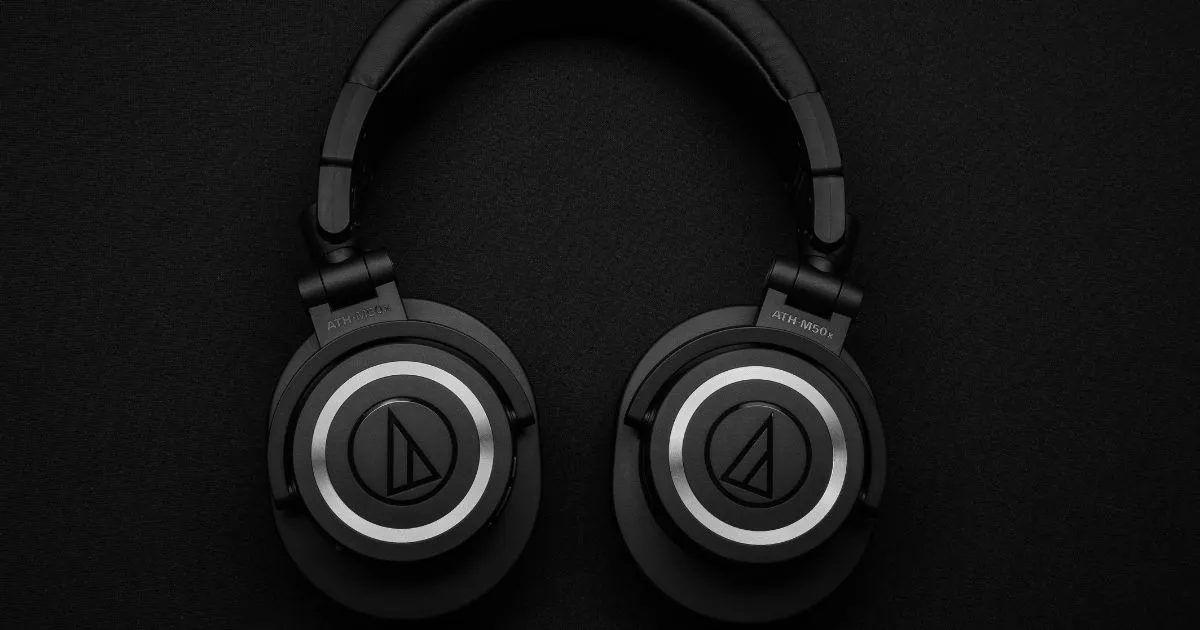
I spent yesterday walking through a crowded park in Austin, Texas, watching people exist in their own private sonic bubbles. Almost everyone had something in their ears. It occurred to me then that we aren’t just a culture of readers anymore. We are a culture of listeners who happen to occasionally glance at a screen. For those of us who make our living by stringing sentences together, this shift isn’t just a change in medium. It is a fundamental rewiring of how a story needs to breathe.
For decades, we were taught to write for the page. We obsessed over how a paragraph looked, the white space, the way a long sentence curled across the paper like a vine. But the paper is becoming a secondary artifact. The real real estate is the space between a listener’s left and right eardrum. This is where audio-first writing moves from being a niche experiment into the dominant strategy for anyone hoping to actually reach people.
When I sit down to work now, I don’t think about the reader’s eyes scanning a line. I think about the narrator’s breath. If a sentence is too long, if it lacks a natural cadence, the narrator stumbles. Or worse, the listener’s brain wanders. We are returning to an oral tradition, a campfire state of mind, where the rhythm of the words matters as much as the plot itself.
Navigating the shift in audiobook trends
The industry data is there if you care to look, but you can feel it without the spreadsheets. The growth in spoken word consumption has outpaced digital and physical text for several years running. People are “reading” while they wash dishes, while they commute, while they stare at the ceiling trying to fall asleep. This shift in audiobook trends has created a new kind of gatekeeper: the voice.
In the past, the audiobook was an afterthought. You finished the book, you sent it to a narrator, and they did their best with what you gave them. Often, what you gave them was dense, academic, or structurally bloated. Today, that approach is a recipe for a one-star review that complains about the “flow.” A book that feels great in your hands can feel like a slog in your ears.
The writers who are winning right now are the ones who realize that an audiobook isn’t a derivative product. It is the product. They are cutting the fluff that only works visually. They are leaning into dialogue that sounds like humans actually speaking, rather than characters delivering manifestos. There is a certain grit and immediacy required when someone is whispering your story directly into a stranger’s ear for ten hours. You can’t hide behind clever punctuation or experimental formatting. The ear is an unforgiving critic of pretension.
I’ve noticed that the most successful self-published authors are no longer waiting for the “print version” to validate their work. They are composing with the audio performance in mind from page one. They are testing their prose by reading it aloud into a microphone, listening for the hitches, the clunky transitions, and the moments where the energy drops. It’s a more visceral way to work. It’s messier. It requires you to be a performer as much as a scribe.
The subtle art of voice-optimized prose
There is a specific texture to writing that is meant to be heard. We call it voice-optimized prose, but that sounds too clinical for what it actually is. It’s really about intimacy. It’s about the way a sentence lands.
When you write for the eye, you can get away with complex, nested clauses. The reader can always pause, go back, and re-read a confusing bit. But a listener is moving forward at the speed of sound. If you lose them in a thicket of adjectives, they don’t always hit the “back thirty seconds” button. Often, they just drift off.
Voice-optimized prose demands a different kind of clarity. It doesn’t mean writing “simple” books. It means writing with a sense of percussion. You need the short, sharp sentences to punctuate the long, flowing ones. You need to use words that have a physical presence when spoken aloud. Some words are beautiful on paper but sound like a mouthful of marbles when a narrator tries to say them.
I’ve started leaning into contractions more. I’ve started using fragments. I’ve started ignoring some of the more rigid rules of grammar that exist solely to satisfy a visual logic. If it sounds right, it is right. This isn’t about being lazy. It’s about being effective. The goal is to create a seamless bridge between the author’s mind and the listener’s imagination.
There is also the matter of “tags” in dialogue. We used to be told to vary them, to use words like “retorted” or “exclaimed.” In an audio-first world, these often feel like speed bumps. A good narrator provides the emotion; the text just needs to provide the direction. Often, a simple “he said” is enough, or better yet, no tag at all if the character’s voice is distinct enough to stand on its own. It’s a stripping away of the unnecessary. It’s a return to the essence of the story.
I often wonder if we are losing something in this transition. There is a specific kind of internal silence that comes with reading a physical book that audio can’t quite replicate. In audio, you are sharing the experience with a third party—the narrator. Their interpretation of the text becomes your reality. As writers, we have to account for that partnership. We are writing scripts for a performance, not just blueprints for a dream.
The landscape is changing so fast that it’s hard to pin down exactly where we’ll be in another two years. Maybe we’ll see more books with built-in soundscapes or interactive elements that respond to the listener’s environment. But at the core, it will still be about the voice. It will still be about that ancient human need to be told a story while we do the mundane things that make up a life.
If you’re still writing for the eye, you’re writing for a shrinking slice of the world. The future is loud. It’s vibrant. It’s spoken. We are learning to find the music in our words again, and honestly, it’s about time. The page was always a bit too quiet anyway. There’s a certain freedom in letting go of the visual constraints and just letting the story talk. Whether that leads to better books or just different ones is something we’re all going to find out together as the batteries on our headphones inevitably run low.
FAQ
It is a method of composing text where the primary goal is how the words sound when spoken aloud. This involves prioritizing rhythm, natural dialogue, and a structure that is easy for a listener to follow without visual cues.
Not at all. Most authors still publish in all formats. However, by focusing on the audio experience first, you ensure the prose is punchy and engaging, which actually tends to make the print version better and more readable too.
The simplest way is to use text-to-speech software or read your entire manuscript aloud. If you find yourself running out of breath or tripping over certain phrases, those are the sections that need to be tightened or rewritten for better flow.
While thrillers and memoirs have traditionally dominated the audio market, almost every genre is seeing a shift. Even complex non-fiction benefits from a more conversational, audio-friendly tone that helps listeners retain information more effectively.
Writing for audio doesn’t dictate who narrates, but it does make the narrator’s job easier. Some authors choose to narrate their own work to maintain that “human” connection, while others find that a professional voice actor brings their voice-optimized prose to life in ways they couldn’t imagine.