Sitting in a quiet corner of a London coffee shop last week, I watched a friend—a founder who has successfully exited twice—spend forty minutes trying to cancel a single marketing automation subscription. He wasn’t even angry anymore. He was just tired. He looked at me and said, “I own the company, I own the strategy, but I don’t own the tools I use to run them.” It was a moment of clarity that perfectly captures the growing unrest in our industry. We are currently witnessing a quiet but fierce rebellion against the “rent-everything” economy. This movement, often whispered about in private Discord servers and at the back of venture conferences, is what many are now calling the Anti-SaaS Movement.
The promise of Software as a Service was always about agility and low entry costs, but by 2026, that promise has curdled into something much more restrictive. For the modern founder, the fatigue is no longer just about the money leaving the bank account every month. It is about the lack of agency. When you build a business on a stack of twenty different subscriptions, you aren’t just a customer, you are a digital sharecropper. You are tilling soil that someone else can take away with a single “terms of service” update or a sudden 40% price hike.
The shift toward life-time software isn’t just a nostalgic return to the era of floppy disks and one-time licenses. It is a strategic pivot by founders who realized that “Business Overhead” has become a silent killer of innovation. In a world where AI can now generate code in seconds, the high-premium, per-seat pricing model of 2019 feels like a relic. Why pay $50 per user per month for a project management tool when the underlying technology has become a commodity? The smart money in 2026 is moving toward assets that can be bought, kept, and even modified.
Life-time software and the end of the subscription tax
The mathematics of the traditional SaaS model started to break down for many of us about eighteen months ago. We reached a saturation point where the average small startup was spending more on its “stack” than on its actual office space. This is where life-time software stepped back into the light. Founders are increasingly looking for tools they can pay for once and host themselves, or at the very least, licenses that don’t come with an expiration date.
There is a visceral sense of relief that comes with owning your infrastructure. I remember the first time I migrated a client from a monthly-billed CRM to a self-hosted, one-time-buy alternative. Their internal team’s energy changed almost overnight. They weren’t afraid to add new users or experiment with new workflows because every click didn’t feel like it was ticking a meter. When you remove the recurring cost, the software becomes a tool again, rather than a liability.
This isn’t to say that all subscriptions are evil, but the “everything is a subscription” mentality has led to a bizarre fragmentation of the workspace. We have a tool for our emails, a tool for our tasks, a tool for our notes, and a tool to make all those tools talk to each other. By the time you’ve finished your morning routine, you’ve interacted with six different companies that all want a piece of your monthly revenue. The Anti-SaaS Movement is a pursuit of simplicity. It is the realization that a lean business with fewer, permanent tools is often more profitable and far more resilient during market downturns than one with a bloated, “top-tier” tech stack.
Managing business overhead in an era of commoditized code
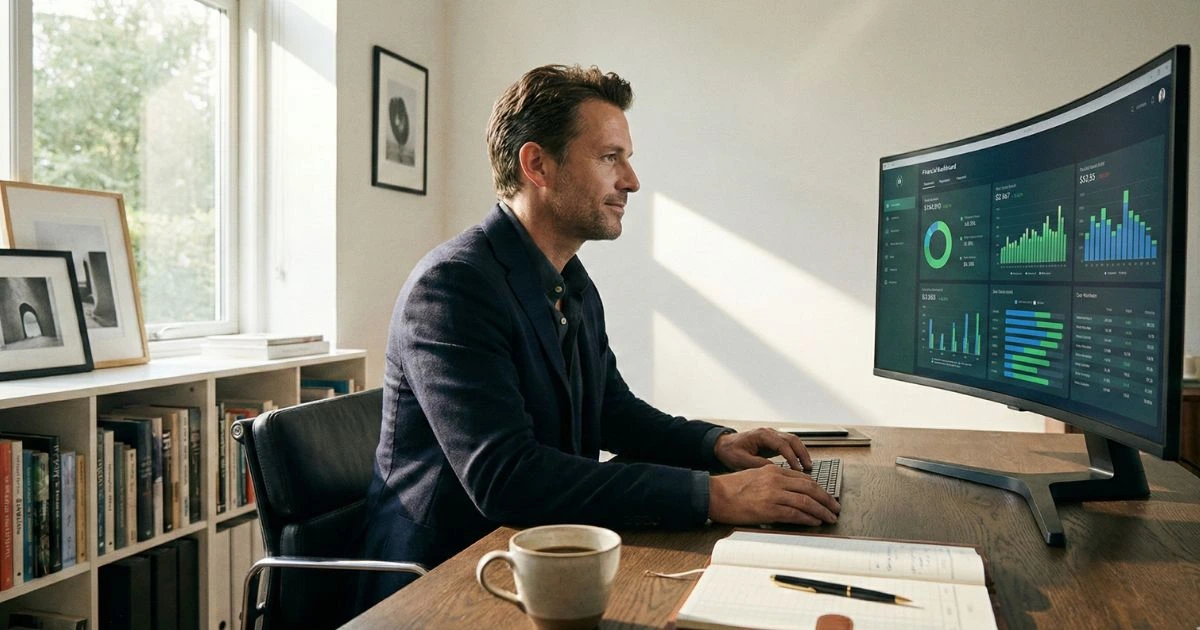
The elephant in the room is, of course, artificial intelligence. In the past, we paid for SaaS because we were paying for the expertise of the developers who maintained the code. But in 2026, the barrier to creating a functional, highly specific business tool has dropped to near zero. This has fundamentally changed how we view SaaS alternatives. If a founder needs a specific dashboard for their financial data, they are no longer forced to wait for a major provider to add that feature to their roadmap. They can build it, or buy a localized version of it, and own it forever.
This shift has profound implications for how we calculate business overhead. We used to view software as a variable cost that scaled with our headcount. Now, the most efficient founders are treating software as a capital expenditure—an asset to be acquired. This changes the balance sheet of a company entirely. When a business is sold or evaluated, a tech stack that is fully owned and integrated is worth significantly more than one that consists of a dozen logins that the new owner will have to keep paying for.
I’ve seen dozens of agencies and small firms start to “trim the fat” by looking for these permanent alternatives. They are finding that by reducing their monthly burn, they can survive longer, pivot faster, and most importantly, keep more of their profit. There is a specific kind of freedom that comes from knowing that if you didn’t make a single sale next month, your business wouldn’t instantly go dark because your software providers cut off your access.
The aesthetic of the 2026 founder is one of independence. We are moving away from the “growth at all costs” mindset that required endless venture-backed subscriptions and toward a “sustainability at all costs” model. We want tools that reflect our values: privacy, ownership, and longevity. The “Life-Time” ownership model isn’t just a financial choice; it’s a statement about who is actually in charge of the company.
As we look at the landscape today, the question isn’t whether SaaS will disappear. It won’t. But its dominance as the default choice is over. The next generation of successful companies will be built on a foundation of owned assets. They will be lean, they will be private, and they will be remarkably hard to kill. Whether you are looking for SaaS alternatives or just trying to get your business overhead under control, the path forward is clear: start looking for things you can own, not just things you can rent.
The era of the “unlimited” subscription is ending. In its place, we are finding something much more valuable: the ability to build on solid ground. It makes me wonder what the digital landscape will look like in another five years. Will we look back at the 2020s as the decade where we accidentally rented out our entire professional lives? I suspect so. But for those of us making the switch now, the future feels a lot more like home.