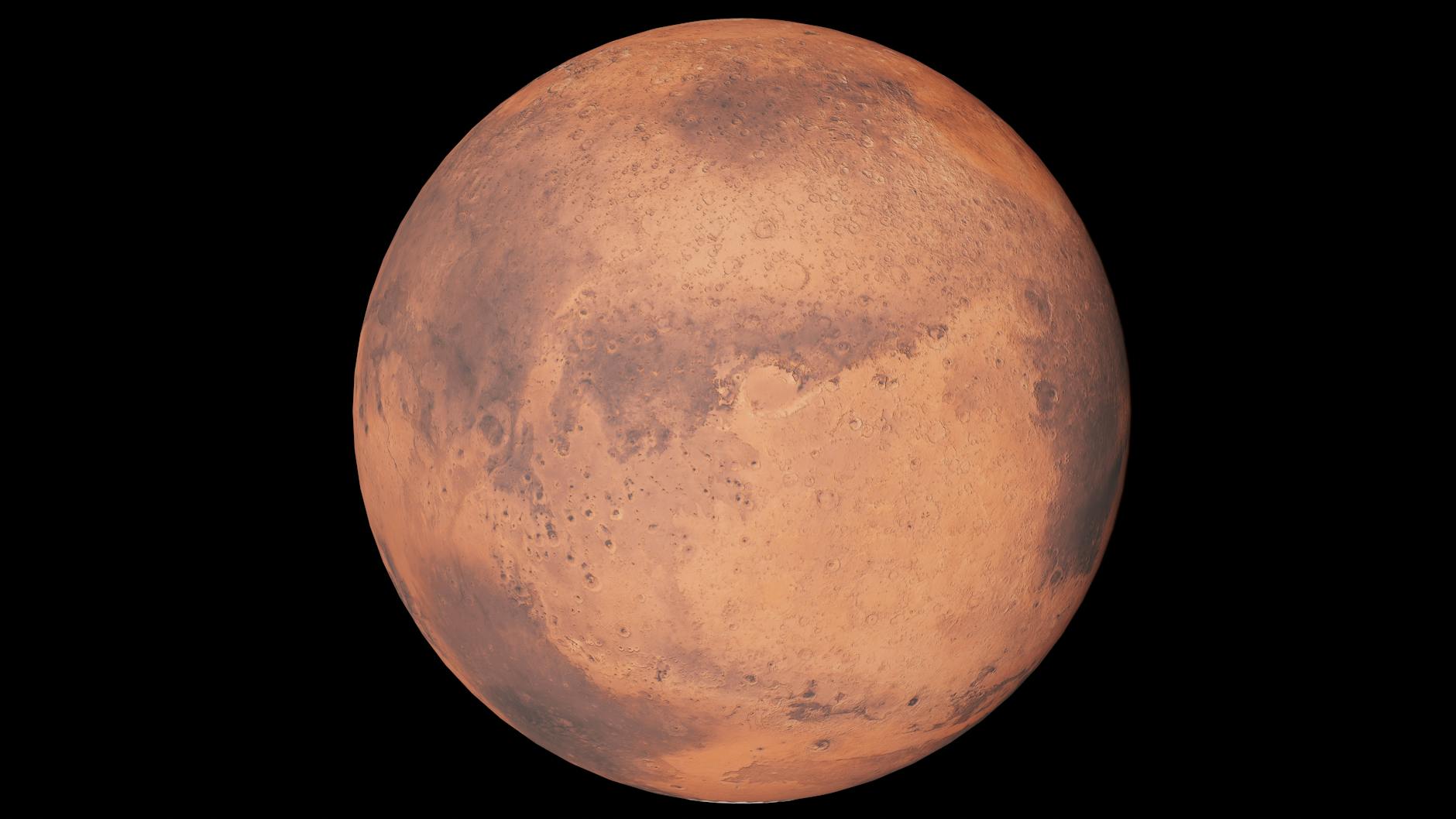
Forget the high-stakes poker tables of Vegas; the real cosmic \*\*Casino\*\* is the Solar System, and the stakes just shot through the roof. In May 2024, the Sun unleashed a behemoth—the most powerful solar storm in over two decades. While Earth residents were treated to auroras dancing down to Mexico, our robotic neighbors on Mars were taking a direct hit. This wasn’t just a light bump; it was an atmospheric pummeling that has the European Space Agency, NASA, and every mission planner on Earth scrambling to reassess the fundamental fragility of interplanetary tech. The critical data beamed back by ESA’s orbiters provides a terrifyingly clear picture of the radiation deluge facing future human colonists and the hidden threats lurking in space weather.
The Martian Megastorm: Radiation Levels That Shocked Scientists
The immediate fallout from this solar outburst provides a stark warning to anyone dreaming of a Red Planet future. ESA’s Mars Express and ExoMars Trace Gas Orbiter (TGO), working in an almost surgical celestial maneuver, managed to document the invisible carnage. What they found was staggering: within a mere 64 hours, Mars was saturated with a radiation dose equivalent to what it normally absorbs over 200 full days. Think about that dose accumulation. This isn’t background noise; this is an atomic bombardment sufficient to fry unshielded electronics and pose immediate, acute danger to any biological system not encased in meters of rock or specialized shielding. ESA scientists published these findings, detailing how the solar storm caused electron densities in Mars’s upper atmosphere to spike by an unprecedented 45% and 278% in specific layers. These levels represent the most severe atmospheric response to a space weather event ever observed on the planet.
This event was a trifecta of solar aggression. It wasn’t just a slow-moving Coronal Mass Ejection that arrived; it was preceded by a massive X2.9 class solar flare and followed by a burst of high-energy particles. Both Earth and Mars were in the direct line of fire, but Earth has a massive cosmic shield—its potent, enveloping magnetosphere—which deflected most of the dangerous assault toward the poles, creating those dazzling, yet deceptive, auroras. Mars, lacking that robust global magnetic field, took the full brunt. The consequences were immediate, even for the hardened spacecraft observing it. Both ESA orbiters experienced noticeable computer errors, a direct consequence of high-energy solar particles interfering with sensitive electronics. While these probes were built with radiation-hardened components and recovery protocols, the fact that they flagged severe errors shows the raw power unleashed by the Sun, setting a worrying precedent for upcoming missions.
The data collection itself involved a highly sophisticated, yet rarely used technique around Mars: radio occultation between spacecraft. The Mars Express acted as the transmitter, beaming a radio signal through the affected atmosphere layers toward the TGO receiver just as the first orbiter dipped below the horizon. This technique allowed the team to map the electron density with incredible precision, effectively creating a sonic tomography of the atmospheric layers under duress. This successful execution, capturing the aftermath of precisely three distinct solar ejection types, was a technical triumph layered on top of a cosmic disaster happening elsewhere. It proves we can monitor these events in near real-time, but the data only confirms how much danger we invite by traveling beyond Earth’s protective bubble.
Historical Precedent: From the Carrington Event to the Modern Grid
To truly grasp the severity observed in the \*\*Casino\*\* of space weather, we must look backward. The gold standard for solar calamities remains the 1859 Carrington Event. That storm terrified the nascent electrical age; telegraph systems worldwide failed spectacularly, with sparks flying off equipment and operators receiving electric shocks. If that event happened today, experts estimate the damage to our global power grids, communication satellites, and GPS infrastructure would run into the trillions of dollars, effectively shutting down modern society for weeks or months. The recent May superstorm, while not reaching Carrington levels, was the most significant event in the modern satellite era, pushing close enough to stress our technological dependency.
When comparing the Mars saturation to Earth’s experience, the contrast is perhaps the most telling datum. Earth’s magnetosphere shrugged, absorbing the shock, although it required heightened monitoring. Mars, stripped bare of this protection billions of years ago, allows scientists to study the pure, unmitigated effect of deep-space radiation. Historically, the disappearance of Mars’s ancient, dense atmosphere and its water has been linked to this very solar wind—a slow-motion erosion driven by constant particle bombardment. The May event provided a concentrated, accelerated view of this process. It validated theories that solar storms are pivotal drivers of planetary evolution, essentially showing the engine that turned a wet, potentially habitable Mars into the desiccated world we explore today.
Furthermore, this event mirrors other, less dramatic but equally significant space weather incidents that have plagued space agencies. Consider the 1989 Quebec blackout, a relatively mild geomagnetic storm that caused Hydro-Québec’s entire power grid to collapse, plunging millions into darkness for hours. This was caused by much smaller induced currents in the ground compared to the sheer particle flux hitting Mars. If ground infrastructure on Earth is susceptible to lesser storms, the vulnerability of unshielded hardware millions of miles away on the Martian surface—such as unpressurized habitats or delicate scientific instruments—becomes a paramount concern eclipsing mere mission objectives.
The Economic and Operational Fallout: Mission Planning Under Fire
The long-term economic ramifications run far beyond repairing a single damaged satellite. Every future mission—manned or unmanned—must now account for materials science capable of resisting these elevated radiation spikes. Shielding is heavy, and weight equals exponentially more fuel, which translates directly into billions of dollars in launch costs. The data published regarding the electron density spikes above Mars directly informs the calculus of manned missions currently being planned. If engineers must double the radiation redundancy or triple the shielding mass, the timelines for establishing a sustainable presence on Mars stretch further, and the financial burden increases commensurately.
The study’s secondary implication concerns communication itself. As the lead researcher noted, a Martian atmosphere suddenly inflated with energetic plasma—that massive electron cloud—can actually disrupt the very radio signals we use to command rovers and probes on the surface. Imagine trying to execute a delicate landing sequence when the expected refraction of your radar signal is suddenly distorted by an unpredictable, energy-packed layer of ionized gas caused by a recent solar tantrum. This necessitates dynamic adjustments in communication protocols and ground control strategies, adding layers of complexity and potential failure points to every operation, turning mission control into a high-stakes reactive environment rather than a proactive directive center.
This necessitates a fundamental shift in how we treat space environmental monitoring. It is no longer a purely scientific pursuit; it is critical infrastructure defense. The ability to deploy advanced warning systems that predict the interaction of CMEs with planetary bodies like Mars is now essential for protecting investments in high-value orbital assets. The sophisticated use of radio occultation between the Mars Express and TGO sets a new minimum standard for planetary monitoring systems. Any future constellation around Mars, especially one supporting human habitation, will require redundancy in monitoring platforms to ensure that critical warning times—which might be as short as ten minutes before impact, as observed—are not missed.
Future Scenarios: Three Paths for Planetary Exploration
Looking ahead, the path of solar weather research and planetary exploration splits into three plausible trajectories. The first scenario is aggressive acceleration. Recognizing the need for speed, governments and private entities double down, investing heavily in breakthrough radiation-hardening technology—perhaps advanced magnetic shielding or utilizing subsurface habitats immediately upon arrival. This path minimizes the lag time between sending humans and establishing a protective base, motivated by the urgency demonstrated by the recent storm’s potential for catastrophe.
The second, more cautious scenario involves a significant slowdown in manned missions. The data from the May storm serves as a five-year pause button. Missions are delayed while comprehensive studies are concluded on radiation effects on long-term human health in Martian habitats that are currently only simulated or conceptualized. Exploration shifts focus entirely to robotic precursors, prioritizing the construction of autonomous, deeply buried radiation shelters before a single human boot touches the regolith. This prioritizes astronaut safety over aggressive schedule milestones, accepting the financial cost of delay.
The third scenario is one of systemic failure in prediction and preparation. If a subsequent, slightly larger storm hits Mars before adequate shielding or robust monitoring is in place, the result could be the loss of irreplaceable orbital assets, perhaps even a manned habitat. Such a catastrophic, unavoidable failure—a true cosmic disaster—would deflate public and private enthusiasm for deep space exploration for a decade. It would force a complete, embarrassed restructuring of NASA and ESA priorities, shifting the focus back to near-Earth systems engineering and perhaps cementing the perception that space travel beyond the Moon is simply too dangerous a prospect for reliable long-term endeavors, especially when facing the unpredictable volatility of our Sun.
Ultimately, the data gathered by ESA’s persistent orbiters during that high-stakes cosmic confrontation on Mars is a free lesson delivered at immense cost. We have seen clearly how vulnerable an unprotected world is to the Sun’s temper. The question now is whether we internalize this knowledge quickly enough to protect the pioneers we plan to send to that radiation-soaked frontier, or whether we continue to gamble in the solar \*\*Casino\*\* with human lives on the line.
FAQ
What was the key observation made by ESA orbiters in May 2024 regarding Mars’s radiation levels?
ESA’s Mars Express and TGO documented that Mars absorbed a radiation dose equivalent to 200 days of normal absorption within just 64 hours. This demonstrated an unprecedented saturation level from the solar outburst. This massive influx poses an immediate danger to unshielded electronics and biological systems.
How much did the solar storm increase the electron densities in specific layers of Mars’ atmosphere?
The event caused electron densities in specific atmospheric layers to spike by an unprecedented 45% and 278%. These severe atmospheric responses are the most extreme ever observed following a space weather event on the Red Planet. This inflation affects communications and radiation penetration.
Why did Earth experience auroras while Mars took the full radiation brunt?
Earth is protected by a potent global magnetosphere that deflects most dangerous solar particles toward the poles, creating auroras. Mars lacks this robust magnetic shield, leaving it exposed to the direct, unmitigated assault of the incoming solar particles.
What specific technical malfunction occurred on the ESA orbiters during the storm?
Both the ESA Mars Express and ExoMars TGO experienced noticeable computer errors due to the interference of high-energy solar particles with their sensitive electronics. Although the probes had radiation-hardened components, these errors confirmed the raw power of the unleashed solar event.
What sophisticated technique allowed scientists to map the electron density during the storm?
Scientists used a technique called radio occultation between the Mars Express (transmitter) and the TGO (receiver) as the first orbiter dipped below the horizon. This allowed them to map the ionized atmosphere with incredible precision, providing a tomography of the layers under stress.
How does the recent solar event compare in scale to the historical Carrington Event of 1859?
While the May 2024 storm was the most significant in the modern satellite era, it did not reach the catastrophic levels of the 1859 Carrington Event. The Carrington Event caused massive failures in telegraph systems, while the recent event served as a warning under current technological dependency.
What immediate terrestrial analogy is used to illustrate the power of the storm hitting Mars?
The article contrasts the Martian saturation with the 1989 Quebec blackout, which was caused by a much smaller geomagnetic storm inducing ground currents. This comparison highlights how vulnerable even Earth’s ground infrastructure is compared to the raw particle flux Mars directly absorbed.
What link is theorized between solar storms and the evolutionary history of Mars?
The constant bombardment of solar wind and storms is theorized to be the primary driver in the historical erosion of Mars’s ancient, dense atmosphere and water. The recent event provided a concentrated, accelerated view of this long-term planetary weathering process.
How does the increased radiation density above Mars impact mission planning and costs?
Engineers must now account for heavier shielding or increased radiation redundancy in future hardware, significantly raising launch fuel requirements. This added weight translates directly into exponential increases in mission costs and potentially stretches development timelines.
Beyond structural damage, what other mission critical system is threatened by the electron density spikes?
The inflated layer of energetic plasma in the Martian atmosphere can severely disrupt the radio signals used for commanding rovers and probes on the surface. This necessitates dynamic adjustments to communication protocols, introducing new failure points during critical operations like landing.
Why must space environmental monitoring now be considered critical infrastructure defense rather than purely scientific pursuit?
Protecting multi-billion dollar investments in orbital assets requires timely warnings to prevent catastrophic failure from solar events. The ability to predict these interactions now dictates the viability and success rate of expensive deep space hardware.
What is the minimum standard now set for future Martian monitoring systems based on the ESA observation?
The sophisticated radio occultation technique used by Mars Express and TGO now sets a new minimum requirement for planetary monitoring. Future constellations supporting human habitation must ensure redundancy in monitoring platforms to capture critical warning times.
What is the estimated minimum warning time before a high-energy particle impact reaches Mars, as observed?
The article suggests that the critical warning time before particle impact might be as short as ten minutes, based on observations of the recent event. This extremely short notice emphasizes the need for highly responsive, autonomous warning systems.
What is the ‘aggressive acceleration’ scenario for future exploration based on the storm data?
This scenario involves rapidly doubling down on investment in breakthrough radiation-hardening technologies, such as advanced magnetic shielding or utilizing pre-established subsurface habitats immediately. The goal is to minimize the time humans spend vulnerable on the Martian surface.
What is the outcome of the ‘cautious’ scenario regarding manned mission timelines?
The cautious scenario suggests delaying manned missions by several years to fully study the long-term health effects of Martian radiation exposure. Exploration focus would strictly shift to building autonomous, deeply buried radiation shelters before any human arrival is permitted.
What defines the ‘systemic failure’ scenario for deep space exploration?
This scenario involves a subsequent, slightly larger solar storm hitting Mars before adequate shielding or monitoring is implemented, resulting in the loss of irreplaceable orbital assets or even a manned habitat. Such a failure could set back public and private enthusiasm for at least a decade.
What specific class of solar flare preceded the coronal mass ejection that hit Mars?
The solar aggression was a trifecta, explicitly preceded by a massive X2.9 class solar flare. This highlights the multi-stage threat profile presented by severe solar weather events.
What is the primary danger to delicate scientific instruments on the Martian surface from such a storm?
Unshielded hardware, such as delicate scientific instruments or unpressurized habitats, faces immediate danger from the bombardment of high-energy solar particles. The radiation flux observed is sufficient to fry exposed electronics.
What fundamental fragility of interplanetary technology did this event force planners to reassess?
The event forced mission planners to fundamentally reassess the fragility of space technology against natural, unmitigated space weather events. Earth’s magnetic shield provides a false sense of security regarding the inherent dangers of deep space environments.
How did the massive electron density spike affect the observation of the event itself on Mars?
The inflated plasma layers in the upper atmosphere caused severe distortions in signal refraction, which complicates data gathering and communication. This means the environment itself actively fights against the ability to monitor the event accurately.
What term does the article use metaphorically to describe the Solar System when discussing the high stakes of space weather?
The article uses the term **Casino** metaphorically to describe the Solar System due to the high-stakes, unpredictable nature of space weather events. The recent storm dramatically increased the perceived risk facing future human colonists.