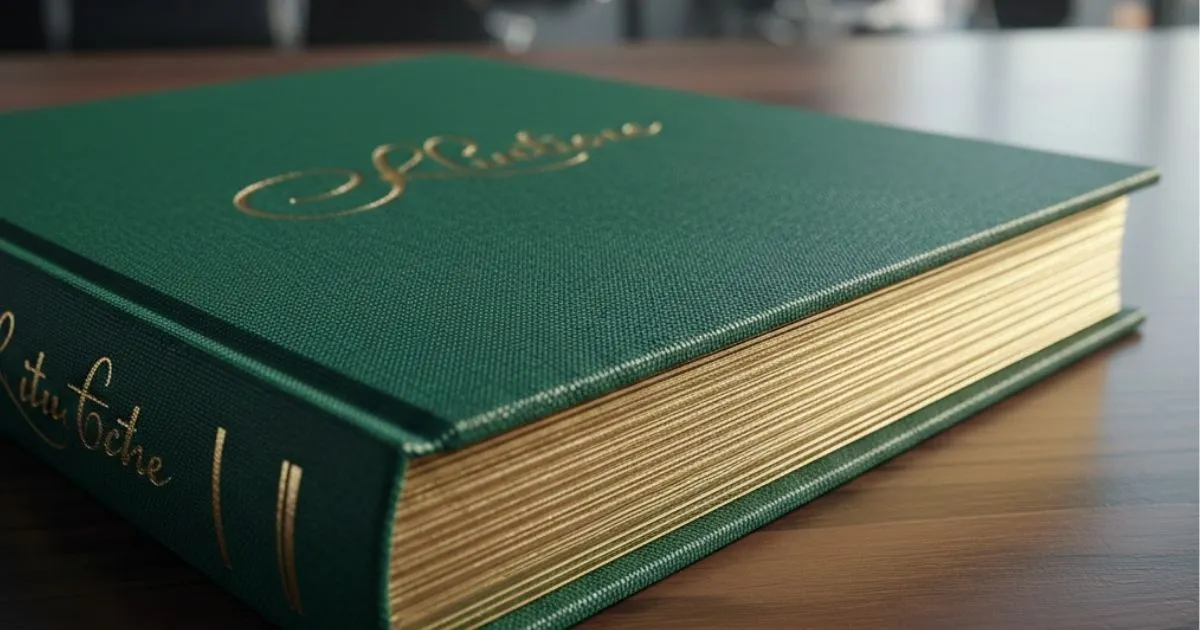
There is a specific kind of quiet that only exists in a library of well-made things. It is not the silence of an empty room, but the heavy, expectant presence of objects that carry weight, both literal and metaphorical. In the world of finance, where assets are increasingly ethereal and numbers exist primarily as glowing pixels on a screen, the physical world has begun to reclaim its status as the ultimate luxury. I spent an afternoon last week holding a prototype for a client project, a book that felt less like a collection of pages and more like a slab of honed marble. We are seeing a massive shift in how value is perceived in the publishing space. The era of the flimsy, mass-produced paperback is being challenged by a new demand for tactile permanence. This is where Print-on-Demand Textures: Selling “Premium Feel” books beyond standard paper becomes the focal point of a very lucrative conversation.
Digital fatigue is a real metric now. Investors are looking at the tangibility of their portfolios, and creators are realizing that a PDF is a ghost, while a physical book is an heirloom. But for the longest time, the print-on-demand model was the enemy of the high-end. It was synonymous with grainy covers and paper that felt like it belonged in a mid-range office copier. That has changed. The technology has finally caught up to the ambition of the boutique publisher. We are no longer limited to “glossy” or “matte.” We are entering a period where the skin of the book matters as much as the soul of the text.
High-end publishing in the age of digital saturation
The psychology of a high-end transaction often begins with the fingertips. When you hand someone a report, a brand bible, or a limited edition retrospective, the first thing they register is the resistance of the cover and the grain of the paper. If it feels cheap, the data inside feels cheap. I have seen brilliant financial strategies ignored because they were presented on 20-pound bond paper that felt like a grocery receipt. In the realm of high-end publishing, we are moving toward materials that demand attention.
Texture is the new signal of authority. I am talking about linen-wrapped hardcovers that use digital inkjet technology to simulate the feel of woven fabric without the cost of traditional offset binding. There is a specific thrill in feeling the slight “tooth” of a 100-pound uncoated cream stock. It absorbs ink in a way that creates a soft, charcoal-like depth to the typography. In 2026, the trend is moving toward what some call “Quiet Luxury” in print. It is about the subtle interplay of light and shadow on a debossed title.
People ask me if the cost is worth the margin. My answer is usually a question: what is the cost of being forgotten? A premium book stays on the mahogany desk. It lives on the coffee table. It becomes a permanent fixture in the reader’s environment. When you utilize advanced POD features like scuff-resistant velvet laminates or spot UV that rises off the page like Braille, you are creating a sensory anchor. You are moving from a commodity to an asset. This is why the most successful agencies and independent publishers are moving away from the race to the bottom on price. They are racing toward the top on touch.
The evolution of book design 2026 and the tactile economy
We have to talk about the machinery of this. The shift in book design 2026 is heavily influenced by the rise of “digital embellishment.” Historically, if you wanted gold foil or a textured finish, you had to order five thousand copies and pray you could sell them. The risk was a financial anchor. Now, we have machines that can apply a metallic polymer or a haptic varnish to a single copy. This is the democratization of the “special edition.”
I recently sat down with a developer who was building a series of niche financial guides. He wanted them to feel like leather-bound ledgers from the nineteenth century but needed the flexibility to update the data every six months. In the past, this was a contradiction. Today, it is a workflow. By using high-yield inkjet presses and digital foil stamping, we can create books that look like they belong in a private vault but are printed as they are ordered. This eliminates the “death by inventory” that kills so many publishing startups.
The colors are changing too. We are seeing a move away from the “neon and noise” of the early 2020s. The palette for 2026 is grounded in earth tones, deep forest greens, and midnight blues, usually paired with a paper stock that has a “felt” finish. There is something profoundly honest about a paper that doesn’t try to hide its fiber. It suggests transparency. It suggests that the information within is rooted in something real. For those of us looking at the flipping of digital assets or the scaling of specialized agencies, these books are the physical manifestation of our expertise. They are the handshake that happens when you aren’t in the room.
The market is also seeing a surge in “hybrid” materials. We are experimenting with covers made from recycled apple peel that feels like soft suede, and pages that have the snap of ancient vellum but are entirely acid-free and sustainable. Sustainability used to be a compromise on quality, but now it is the hallmark of the elite. The investor of today wants to know that their premium product isn’t a burden on the world. They want the luxury of a thick, heavy book without the guilt of old-world manufacturing waste.
I often wonder where the line is between a book and a piece of art. When you look at the current landscape, the line is blurring. We are seeing books with “exposed” Swiss binding that shows the stitching, inviting the reader to see the mechanics of the construction. It is a raw, industrial aesthetic that fits perfectly with the transparency demanded by modern finance. It says: here is the work, here is the structure, here is the value.
We are no longer just selling information. Information is free. It is everywhere. It is in the air we breathe. What isn’t free is the experience of focused, tactile engagement. When someone closes their laptop and opens a book that feels substantial, their heart rate slows down. Their focus narrows. They are no longer skimming; they are consuming. That transition is where the sale happens. Whether you are building a brand or selling a service, the goal is to occupy that space of undivided attention.
There is a certain irony in using cutting-edge digital technology to recreate the feeling of a handmade object. But that is the paradox of our time. We use the most advanced tools available to return to the things that make us human: the weight of a story in our hands, the smell of fresh ink on high-quality paper, and the simple, undeniable pleasure of a well-made thing. As we move further into this decade, the winners won’t be the ones who produce the most content. The winners will be the ones who produce the most meaningful objects.