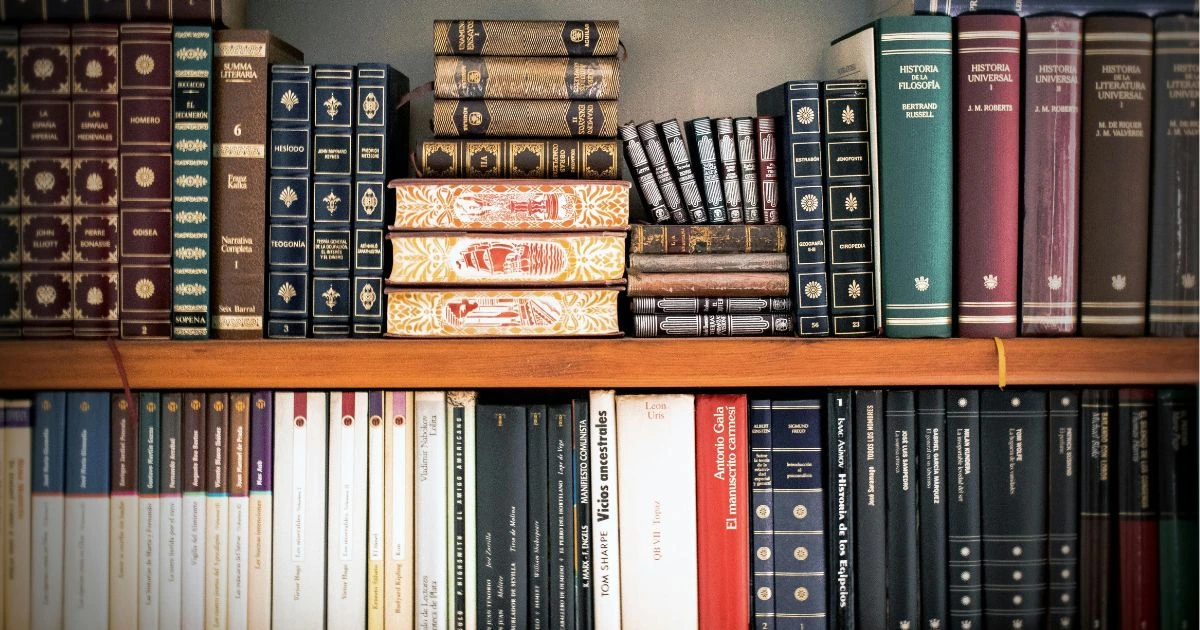
The smell of a fresh book used to be a cliché of the analog world, a shorthand for nostalgia that felt increasingly thin as we moved toward digital fatigue. But walk into a high-end coffee shop in Brooklyn or a quiet library in Seattle today and you will see something strange. People are holding objects that look like they were recovered from a nineteenth-century estate sale, yet the ink inside is barely a week old. We have entered a strange, beautiful era where the machine has finally learned how to mimic the soul of the craftsman. This shift toward Premium POD is not just a fluke of the market. It is a quiet rebellion against the disposable nature of the last decade.
For years, self-publishing was a race to the bottom. It was about how many paperbacks you could churn out for five dollars a piece, often with covers that looked like they were designed in a dark room by someone in a hurry. But the tide turned. Readers realized they didn’t want more content; they wanted more permanence. When someone shells out sixty dollars for a book that was printed on an industrial inkjet in a warehouse in Ohio, they aren’t paying for the convenience of the delivery. They are paying for the way the light hits the texture of a linen-wrapped spine. They are paying for the weight of a heavy cream paper stock that doesn’t bleed through when they underline a passage with a fountain pen.
There is a tactile honesty in these new editions. I spent an afternoon last month flipping through a friend’s collection of recent independent releases. One of them was a memoir, printed through a high-end service that utilizes these new tactile finishes. It felt substantial. The cover was a deep, muted sage green with a matte foil stamp that caught the afternoon sun. It felt like something you would keep for fifty years. It felt like an heirloom. This is the new standard for the self-publishing world. We are no longer satisfied with “good enough.”
The shifting landscape of luxury books 2026
The definition of luxury has migrated away from the brand name and toward the specific material experience. In the past, a luxury book was something you bought from a heritage publisher in London or Paris. Now, the technology behind Premium POD has democratized that feeling of exclusivity. It is a bizarre paradox. A writer sitting in a small apartment in Austin can upload a file and, within days, produce a volume that rivals the quality of a limited-edition museum catalog.
This isn’t about mass production anymore. It’s about the deliberate choice of materials. The trend we are seeing in luxury books 2026 is a move toward sensory saturation. We want to feel the tooth of the paper. We want to see the slight irregularity of a deckled edge, even if that edge was technically cut by a laser guided by an algorithm. There is a deep human craving for the imperfect, or at least the illusion of it. We spent so much time perfecting the digital screen that we forgot how much we enjoy the friction of the physical world.
The economics of this are equally fascinating. For a long time, the advice given to independent authors was to keep the price point low to compete with the giants. But that advice was rooted in a world of scarcity. Today, we have an abundance of cheap content. What we lack is quality objects. People are willing to pay a premium because the book itself has become a piece of art, separate from the text it contains. The object is the message. It sits on a shelf and anchors a room. It says something about the owner that a plastic-wrapped mass-market paperback never could.
I remember talking to a designer who works exclusively on these high-end projects. She told me that the most requested feature isn’t a complex layout or flashy graphics. It’s “the feel.” Authors are obsessed with the weight of the boards used for the cover. They want to know if the linen is genuine or a synthetic blend. They are becoming curators of their own physical legacy. This level of intentionality is what separates a hobbyist from someone who understands the current cultural moment.
Why hardcover publishing became the new vinyl
There is a striking parallel between what is happening in the book world and what happened to the music industry. When everything became a stream, the physical record became a totem. We are seeing the exact same trajectory with hardcover publishing. The ebook is for the commute; the premium hardcover is for the home. It is for the ritual of reading.
The technical hurdles that used to make high-end printing impossible for the individual have crumbled. The software is better, the logistics are faster, and the finishing machines are more precise. But the real driver is the shift in consumer psychology. We are tired of the ephemeral. We want things that age. A well-made book doesn’t just sit there; it matures. The linen frays slightly at the corners after a few years of use. The spine develops a character. These are things you cannot simulate on a tablet.
In many ways, the rise of Premium POD is a response to the loneliness of the digital age. Writing is a solitary act, and for a long time, publishing was equally clinical. You hit a button and your words appeared on a screen. Now, there is a physical weight to the accomplishment. Holding a heavy, cloth-bound book with your name on it provides a psychological closure that a PDF never will. It anchors the work in the real world. It makes it undeniable.
I recently saw a collection of poetry published by a small collective in Northern California. They used a heavy, charcoal-colored linen for the binding with a simple, stark white slipcase. It was breathtakingly expensive for a book of sixty pages. And yet, they sold out of their first run in forty-eight hours. The buyers weren’t just fans of the poetry; they were collectors of the experience. They wanted the object. They wanted to participate in the physical reality of the art.
We are also seeing a change in how these books are marketed. It’s no longer about “available everywhere.” It’s about “available for those who care.” The language has changed. It’s about limited batches, specific paper mills, and custom endpapers. This level of detail used to be the province of the elite, but now it belongs to anyone with a vision and a decent internet connection. The democratization of beauty is perhaps the most unexpected outcome of the technological boom of the last few years.
There is a certain vulnerability in creating something this nice. When you publish a cheap paperback, you can hide behind the medium. If it doesn’t do well, you can blame the format. But when you produce a sixty-dollar linen edition, you are making a statement. You are saying that this work deserves to be preserved. You are betting on your own longevity. It’s a bold move, and it’s one that readers are clearly responding to.
Where this goes next is anyone’s guess. Perhaps we will see even more experimental materials. I’ve heard whispers of publishers looking into wood-veneer covers or recycled textile bindings that incorporate old clothing. The boundaries are blurring. What remains constant is the human need to touch, to hold, and to keep. We are tactile creatures living in a digital dream, and sometimes we just need something heavy to wake us up.
The era of the disposable book isn’t over, but its dominance is certainly being challenged. As we look further into the year, the divide between content and object will only grow. Those who understand that a book is more than just a delivery system for information will be the ones who define this new landscape. It is a good time to be a reader, and an even better time to be someone who loves the feel of a well-made spine.
FAQ
It moves beyond the basic “glue-and-paper” feel. We are talking about smyth-sewn or high-end notched bindings, heavy-weight acid-free cream paper (usually 70lb to 80lb), and cover materials like genuine linen, buckram, or soft-touch scuff-resistant laminates that feel like silk.
As digital clutter increases, the value of the physical anchor will only rise. We are likely moving toward a “Bifurcated Market” where books are either invisible (digital) or exquisite (premium). The middle ground is what’s disappearing.
Most premium printers sell “sample kits.” Never skip this step. You need to feel the difference between 60lb and 80lb paper in your own hands before you set your retail price.
Counter-intuitively, yes. Higher-quality books are less likely to end up in a landfill. The “slow publishing” movement argues that making one book someone keeps forever is better than making five cheap ones they throw away.
Huge. Books are now lifestyle accessories. A linen book photographed next to a cup of coffee and a window in Vermont sells a mood. The “shareability” of the object is a major driver of the Premium POD movement.
It can be a powerful marketing hook. In a sea of generic debut paperbacks, a stunning, high-end object stands out to reviewers and “BookTok” influencers who prioritize the visual aesthetic of their shelves.
Linen is remarkably resilient. While a paper-wrapped “dust jacket” will tear or fade, cloth can handle decades of being pulled off a shelf. It’s the difference between a temporary coat of paint and a stained piece of hardwood.
Standard layout tools like InDesign or Affinity Publisher are fine, but you do need to learn how to manage “spot colors” for things like foil layers or spot UV. It’s a slightly higher technical bar than a basic PDF.
Linen provides an immediate, visceral sense of history. In a world of smooth glass screens, the coarse, organic weave of linen offers a sensory contrast that signals “permanence” to a reader’s brain before they even open the first page.
We are seeing a trend toward “earthy” and “dark academic” tones—forest greens, deep navy, slate greys, and a specific “oxidized” terracotta. These colors look better as they naturally age and pick up oils from the hands.
Transparency is key. Show them the “unboxing.” Film the way the light hits the foil or the sound of the spine opening. When people see the physical difference, the price usually justifies itself without much verbal defense.
Pigment-based inks are preferred over dye-based ones for premium work. They sit on top of the fibers rather than soaking in, which keeps the text crisp and the blacks deep, even on more absorbent, high-quality paper stocks.
Scarcity creates a community. When an author says, “I am only making 200 of these linen editions,” it transforms the reader into a patron of the arts. It’s no longer a transaction; it’s an acquisition.
In 2026, several major premium providers have added this. You can now upload a separate file for the inside of the front and back covers, allowing for maps, patterns, or solid blocks of color that make the book feel fully “finished.”
“Tooth” refers to the surface texture. A paper with a bit of tooth feels “grabby” and substantial under the thumb. It makes turning the page a deliberate, satisfying mechanical action rather than a slippery, accidental one.
Yes, because the “value” has shifted from the information to the artifact. While your unit cost might be twenty-five dollars instead of five, the margin remains healthy because your audience is no longer price-comparing you to mass-market paperbacks; they are comparing you to art.
Not at all. Ebooks are thriving for “disposable” reading—thrillers or light romance read on a flight. However, readers are increasingly “dual-buying”: they read the digital version for convenience and purchase the premium hardcover to keep on their shelf as a trophy.
Keep it minimalist. Fine details can get lost in the “valleys” of the fabric weave. Bold typography, stark silhouettes, and gold or silver foil stamping tend to perform much better than complex, multi-colored illustrations on cloth.
It does. A linen-wrapped book with 80lb paper is noticeably heavier than a standard trade paperback. You have to account for the extra ounces in your fulfillment strategy, as it can push a book from a standard rate into a higher shipping tier.
High-opacity cream paper reduces the “glare” and “ghosting” (seeing text from the other side) common in cheap white paper. It creates a high-contrast yet soft reading environment that significantly reduces eye strain during long sessions.
Many boutique printers in the United States, particularly in hubs like Minneapolis or Chicago, have integrated digital foil technology. This allows for the “stamped” look without the expensive traditional die-making process, making it viable for runs as small as one copy.