
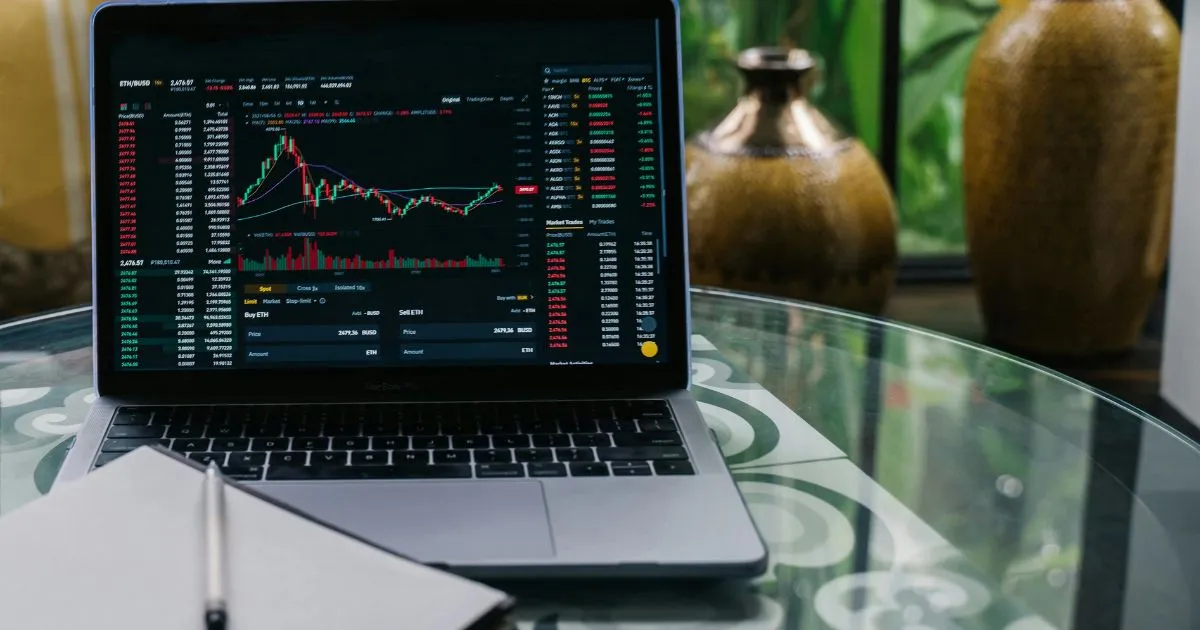
There was a time, not so long ago, when the “private market” was a fortress. You didn’t just walk in; you were born in, or you managed a sovereign wealth fund. If you wanted a piece of a company like SpaceX or Stripe before the ticker symbol hit the Nasdaq, you needed a Rolodex that smelled of mahogany and old money. But the air is changing. By the time we hit the spring of 2026, the fortress walls haven’t just cracked; they have been re-engineered into digital gateways.
We are living through a strange, quiet revolution where the traditional IPO—the grand, ringing-of-the-bell moment—has become the exit, not the entrance. The real wealth is being built in the “waiting room.” This is where Pre-IPO Crypto comes into play, acting as a bridge for the rest of us to cross into territory once reserved for the elite. It is a messy, exciting, and slightly unnerving shift in how we think about ownership.
I remember sitting in a coffee shop in Austin last year, watching a friend pull up a dashboard that looked more like a video game than a brokerage account. He wasn’t trading Bitcoin or some fleeting meme coin. He was looking at tokenized interests in a silicon-valley AI firm that hadn’t even filed its S-1 yet. That was my “click” moment. The technology isn’t just about decentralization anymore; it’s about access. It’s about taking a massive, illiquid block of private equity and slicing it into digital units that a person can actually afford.
The mechanics of early access finance in a digital age
If you look at how tech investing 2026 is shaping up, you’ll notice that companies are staying private for much longer. They are scaling to valuations of $50 billion or $100 billion before they even consider a public listing. For the average investor, this is frustrating. By the time you can buy shares on a standard exchange, the 10x or 50x growth has already happened behind closed doors.
The rise of tokenization has turned this frustration into a market. When we talk about Pre-IPO Crypto, we aren’t necessarily talking about a new currency. We are talking about a wrapper. It’s a digital receipt, secured by a blockchain, that represents a claim on actual private shares held in a special purpose vehicle. It’s a bit of a workaround, a clever piece of financial engineering that allows for a secondary market to breathe where there used to be total stagnation.
Of course, this isn’t without its quirks. You aren’t buying a stock that you can flip in ten minutes if the news cycle turns sour. There is a “lived-in” reality to these assets. They require a different kind of patience. You are essentially betting on the trajectory of a titan-in-waiting, and while the digital interface makes it feel fast, the underlying asset is still a heavy, private company moving at its own pace.
I find myself wondering if we’re ready for this level of transparency, or rather, this level of exposure. In the past, the lack of access was a form of protection. Now, the guardrails are thinning. You have to be your own analyst. You have to look past the slick UI of the platform and ask: “Who is actually holding the keys to these shares?”
Navigating the risks of early access finance
The allure of early access finance is intoxicating, but it’s also a hall of mirrors. In 2026, the primary challenge isn’t finding the opportunity; it’s discerning the quality. Because these tokens trade on secondary platforms, the price discovery can be… let’s call it “creative.” Without the rigid disclosure requirements of a public company, you’re often flying by instrument, relying on rumors, Series L funding round whispers, and the general sentiment of the crowd.
I’ve seen people get burned by over-leveraging into a “hot” pre-IPO token only to realize there’s a two-year lock-up period after the eventual IPO that they didn’t read about in the fine print. Or worse, the IPO gets pushed back indefinitely because the macro environment shifted. In places like San Francisco or New York, the talk at dinner parties has shifted from “What crypto are you holding?” to “Which private cap table do you have a slice of?” It’s a status symbol as much as an investment, and that’s always a dangerous sign.
There is also the regulatory shadow. The United States has been grappling with how to categorize these instruments for years. Is it a security? Is it a derivative? While the GENIUS Act and new SEC guidelines in early 2026 have provided some much-needed sunlight, it still feels like the Wild West in certain corners. You have to be comfortable with the idea that the rules might change while you’re in the middle of the game.
Still, the potential is hard to ignore. When you look at the wealth gap, a lot of it comes down to who gets to participate in the growth phase of technology. If Pre-IPO Crypto can truly democratize that phase, the social implications are as massive as the financial ones. It’s a way of saying that the future shouldn’t just be owned by the people who build it, but by the people who believe in it early enough to take a risk.
I don’t think the old way of investing is dying, but it’s certainly being forced to share the room. We are moving toward a world where the distinction between “crypto” and “finance” is becoming irrelevant. Everything is becoming a digital asset. The question is no longer whether you should own these things, but how much of the volatility you can stomach in exchange for a seat at the table.
As I look at my own screen, flickering with the real-time price of a pre-public robotics company based in California, I realize we’ve entered a point of no return. The secret is out. The tools are there. But as with any frontier, the map is still being drawn by the people who are brave—or perhaps foolish—enough to walk it first.
It makes me think about what we’ll be talking about in 2030. Will these tokens be as common as a mutual fund? Or will we look back on this era as a brief, chaotic window where the rules were briefly suspended? There is no clear answer yet, and maybe that’s the point. The uncertainty is where the opportunity lives, provided you don’t mind a little bit of dust on your boots.
FAQ
It is a digital asset that represents a fractional ownership interest or a claim on shares in a private company before it goes public.
It’s a structural shift in finance, but 2026 is seen as the “breakout year” due to regulatory maturity.
Yes, in most jurisdictions, they are treated as capital assets subject to capital gains tax.
This is a major risk; you must ensure the shares are held by a regulated third-party custodian.
Yes, platforms typically charge a percentage for the transaction and sometimes an ongoing management fee.
A legal entity created specifically to hold the private shares that the tokens represent.
You have to rely on private placement memorandums (PPMs), news reports, and platform disclosures.
Not usually; they are often “permissioned” tokens held on the platform’s ledger for compliance reasons.
2025 legislation that clarified stablecoin and digital asset rules, paving the way for more secure tokenized trading in 2026.
It varies by platform, but it’s often much lower than the millions required for traditional private equity.
It provides liquidity for early employees and founders without the company needing to go public immediately.
Rarely; private tech giants usually reinvest all profits back into growth.
By supply and demand on the secondary platform, often influenced by the company’s most recent private funding round.
No, Bitcoin is a currency; these tokens are tied to the equity and performance of a specific private corporation.
The company might never go public, or the valuation could collapse before it does, leaving the tokens worthless.
Yes, the SEC increasingly oversees these platforms, especially under the 2026 “Tokenization Taxonomy” guidelines.
A duration (often 6-12 months) after an IPO where early investors are legally barred from selling their shares.
Only if there is a buyer on the secondary platform you are using; liquidity is much lower than the New York Stock Exchange.
Usually, they are converted into actual public shares, often after a mandatory lock-up period.
Often, yes, though new 2026 regulations have opened certain “sandbox” exceptions for broader participation.
You typically use specialized secondary market platforms that facilitate the tokenization of private shares.
