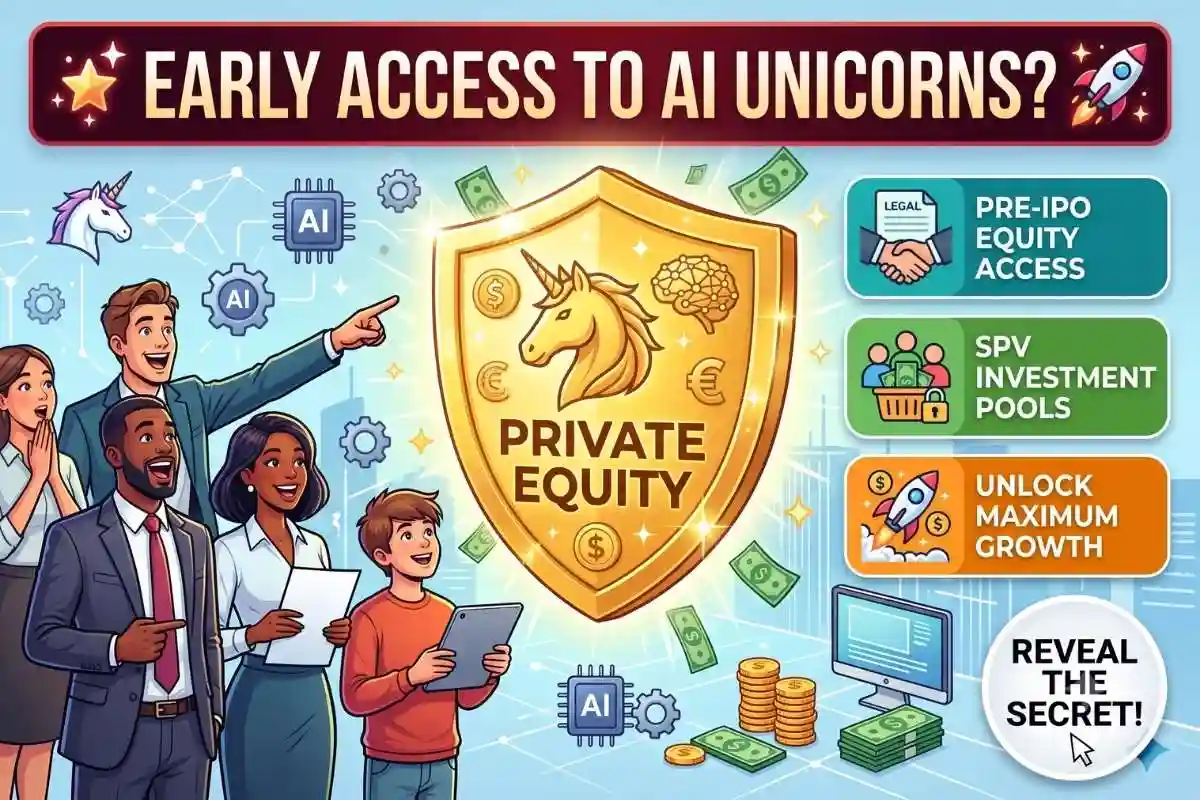
Imagine waking up in 2026 and reading bold headlines about yet another artificial intelligence powerhouse reaching a massive hundred-billion-dollar valuation without ever ringing an opening bell on a public stock exchange. Just a decade ago, retail and institutional investors alike could comfortably rely on traditional initial public offerings to capture the explosive growth phases of pioneering technology companies. Today, however, that financial dynamic has fundamentally transformed across global markets. The highest-margin expansion and life-changing wealth creation now happen squarely within private market ecosystems, leaving public market traders to invest primarily in mature, slower-growing corporate giants.
For forward-looking portfolio builders, this dramatic shift creates an urgent question: how can you actively participate in the artificial intelligence boom before these coveted companies eventually list publicly? The answer lies in a rapidly expanding alternative marketplace known as pre-IPO secondary trading. By connecting early employees and venture capitalists who need immediate liquidity with outside buyers eager for high-growth equity, secondary platforms have demystified private market investing. This innovative ecosystem has opened a previously locked door to the world’s most promising AI unicorns, enabling sophisticated investors to build positions long before the public ticker goes live.
Why AI Unicorns Are Staying Private Longer Than Ever
To understand why pre-IPO secondary markets have exploded in popularity by 2026, we must examine the shifting life cycle of modern technology enterprises. In previous eras, a high-growth startup typically went public within four to six years of founding to raise essential capital from public investors. Today, flush with massive venture funds, sovereign wealth infusions, and private equity backing, artificial intelligence pioneers face virtually zero pressure to endure Wall Street scrutiny. By remaining private for ten to thirteen years on average, founders can focus entirely on breakthrough model development without worrying about quarterly earnings volatility.
This extended private tenure creates a structural challenge for early employees and seed venture backers who helped build these disruptive enterprises from the ground up. Software engineers, AI researchers, and early investors may hold stock options worth millions of dollars on paper, but they cannot easily cash out to buy a home or rebalance wealth if the company refuses to list. This intense demand for real-world liquidity fuels the secondary market boom. Instead of waiting patiently for a public exchange debut that might be years away, shareholders sell vested private units directly through specialized secondary trading networks.
The Mechanics of Buying Secondary Shares
Entering the pre-IPO secondary arena requires understanding how these complex transactions differ fundamentally from standard retail brokerage trades. Unlike buying a public stock where shares change hands instantly through automated engines, secondary transactions involve private contracts, transfer restrictions, and formal corporate approvals. When an employee lists vested equity on a secondary marketplace, the transaction generally proceeds through either a direct share transfer or a special purpose vehicle, commonly called an SPV. In an SPV arrangement, investors pool capital into a dedicated fund that purchases shares as a single entity, simplifying legal paperwork while providing fractionalized access.
However, prospective buyers must navigate specific regulatory requirements designed to protect individuals from high-risk, illiquid, and opaque financial assets. Under federal securities laws, participation in most private secondary offerings is restricted to individuals or entities meeting specific wealth or professional criteria. For those unfamiliar with these legal boundaries, you can review the formal accredited investor definition on Wikipedia to see how thresholds are structured globally. In the United States, criteria involve earning over $200,000 annually or maintaining a net worth exceeding one million dollars. To explore how platforms verify qualifications, consult the detailed SEC guidelines on Regulation D.
Navigating Valuation Traps and Illiquidity Risks
While buying into an artificial intelligence unicorn before its public listing sounds like a surefire strategy for outsized returns, the reality demands rigorous due diligence and level-headed risk management. The private secondary market operates without the daily price transparency of public exchanges, meaning shares trade at dramatic discounts or massive premiums depending on shifting market sentiment. An AI enterprise valued at fifty billion dollars during a primary round might see common shares trade at a thirty percent discount on secondary boards if growth slows down, or at a steep premium if a product launch triggers widespread excitement.
Beyond valuation complexity, illiquidity remains the most significant hurdle for pre-IPO investors to master before allocating hard-earned capital. Once you purchase private secondary shares or invest in an SPV, your funds are essentially locked away until a definitive liquidity event occurs, such as an initial public offering or corporate acquisition. If the broader economy cools down or the executive board postpones its debut, your money could remain tied up for several years without any mechanism to sell on short notice. Successful private market investors treat these holdings as long-term satellite investments rather than accessible emergency reserves.
Public vs. Pre-IPO Secondary Markets at a Glance
| Feature / Metric | Traditional Public Market Investing | Pre-IPO Secondary Market Trading |
| Company Maturity | Mature, established public enterprises | Late-stage private growth companies & AI unicorns |
| Investor Accessibility | Open freely to all retail and institutional investors | Generally restricted to verified accredited investors |
| Liquidity & Speed | Instantaneous intraday buying and selling | Multi-year holding periods until IPO or acquisition |
| Price Transparency | Real-time public exchange ticker pricing | Negotiated private pricing based on supply and demand |
| Growth Potential | Moderate, steady compounding market gains | High-beta, exponential value appreciation potential |
Frequently Asked Questions About Pre-IPO Trading
What happens to my secondary shares when the AI unicorn finally goes public?
When a private company successfully executes an initial public offering on a major exchange like the Nasdaq or New York Stock Exchange, your private equity interest converts automatically into public common stock. If you purchased directly through a formal share transfer, shares are typically deposited into your personal brokerage account once the transfer agent processes listing documents. If you invested through a special purpose vehicle, the fund manager handles conversion and distributes either public shares or net cash proceeds directly to your account. Keep in mind that a standard six-month lock-up period usually applies before selling freely.
Can non-accredited retail investors participate in pre-IPO secondary deals?
Direct participation in private secondary marketplaces and special purpose vehicles remains largely restricted to verified accredited investors due to strict securities regulations governed by federal oversight bodies. However, everyday retail investors are not entirely locked out of the pre-IPO growth ecosystem. Enthusiasts can gain indirect exposure by investing in publicly traded asset management firms, venture capital trusts, or technology conglomerates holding substantial equity stakes in prominent private AI startups. Furthermore, evolving equity crowdfunding platforms occasionally host late-stage secondary pools under Regulation A+ frameworks, allowing non-accredited individuals to invest smaller amounts with built-in regulatory safeguards.
How do secondary marketplaces determine the share price of a private startup?
Unlike public stock exchanges that rely on continuous order books and automated matching to establish real-time market prices, private secondary share prices are driven by direct negotiation between willing buyers and motivated sellers. Marketplaces use the company’s most recent primary funding round valuation, often referred to as the preferred share price, as a baseline anchor. From there, the secondary common share price adjusts dynamically based on buyer demand, company revenue growth, macroeconomic trends, and how urgently sellers require liquidity. This often results in secondary common shares trading at a reasonable discount or premium compared to institutional valuations.
The Curiosity Corner: Why the Future of Wealth Lies Behind Closed Doors
As we navigate through the exciting landscape of 2026, the traditional boundary separating public and private financial markets continues to dissolve, creating unprecedented opportunities for proactive investors. Artificial intelligence is reshaping global industries at lightning speed, yet the most transformative value creation unfolds long before companies ever draft an initial public offering prospectus. By understanding how pre-IPO secondary trading functions, mastering qualification requirements, and respecting inherent illiquidity risks, you can peer behind the private market curtain. The secret to capturing the next wave of technological wealth is knowing exactly where to buy a seat at the table.