


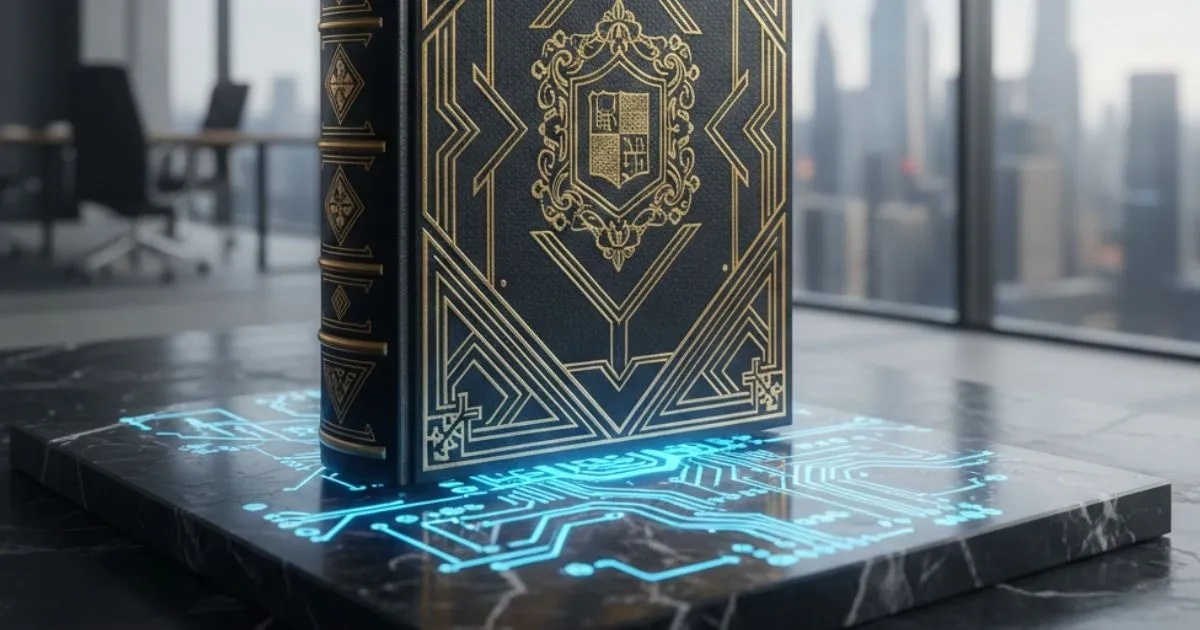
The smell of old paper used to be the only way to verify that a first edition was real. You would lean in, catch that hint of vanilla and decay, and trust the dealer at the back of the shop. But we are in 2026 now, and the air in the collector’s market has changed. It is no longer just about the physical object sitting on a mahogany shelf. It is about who actually holds the keys to the kingdom. If you have spent any time in the high-stakes world of modern finance or rare assets lately, you have probably noticed a shift that feels quiet yet tectonic. Ownership is being recoded. The old guard of bibliophiles is waking up to a reality where NFT Books 2026 isn’t a futuristic concept but a standard for preservation.
I remember talking to a collector who had spent thirty years hunting down rare manuscripts. He was terrified of the digital age because he equated digital with disposable. He thought a PDF was a book. It took a long time to explain that we aren’t talking about files, we are talking about a ledger that cannot be lied to. When a limited edition moves to the blockchain, it isn’t just becoming a string of code. It is gaining a permanent, unalterable shadow. This shadow, or the NFT-Bound Ownership, ensures that the history of the book, its previous owners, and its absolute authenticity are woven into its very existence. It is a bit like having a DNA test for your library that updates itself every time a hand changes.
The transition from physical archives to digital collectibles
The friction of the old world was always the middleman. You wanted to sell a rare piece, you needed an auction house, a certification expert, and a mountain of paperwork that could be forged by anyone with a decent printer and some tea-stained paper. In 2026, the move toward digital collectibles in the literary space has effectively removed the need for that exhausting dance. People are starting to realize that a digital twin of a physical asset provides a layer of security that a locked vault simply cannot match. It is about more than just a JPEG of a cover. It is a smart contract that dictates exactly how many copies exist and who holds the rights to them.
There is a certain irony in using the most advanced technology we have to protect the oldest medium we know. I have seen portfolios where the most stable assets aren’t the stocks or the crypto-coins, but the tokenized rights to limited print runs. The market has matured. We are past the era of the cartoon apes and the speculative bubbles that burst back in 2022. Today, the focus is on utility. When a publisher releases a 2026 limited edition, they are often minting the ownership right before the ink is even dry on the paper. This allows a level of liquidity that the rare book market has never seen. You can trade the ownership of a thousand-dollar volume in seconds, across oceans, without ever having to worry about shipping a fragile object until the final collector wants it on their desk.
It is a strange feeling to see a leather-bound volume and know that its true heart beat is on a decentralized server. Some purists hate it. They think it strips the soul from the hobby. But if you look at the numbers, the stability that blockchain brings to book ownership is undeniable. It eliminates the “is this real?” question that haunts every major transaction. In a world where deepfakes and high-end forgeries are becoming indistinguishable from the original, having a cryptographic proof of origin is the only way to sleep soundly. I often find myself wondering if the collectors of the 19th century would have traded their wax seals for a private key. I suspect the smart ones would have.
How the blockchain is redefining the future of book ownership
We are living through a period where the definition of “having” something is being rewritten. In the past, you owned a book because it was in your hand. But in 2026, you own it because the network agrees you do. This shift in book ownership is particularly vital for the rare and limited edition market. Imagine a world where an author can release a work and ensure that every time it is resold, they receive a percentage of the value. It creates a circular economy that supports the creators as much as the investors. It is no longer a one-and-done transaction. It is a living relationship between the work and the market.
I recently saw a project where the digital version of a book changed its content based on who owned it. That is the kind of idiosyncratic evolution that only happens when you move away from static paper. But even for the traditionalists, the blockchain offers a “provenance-as-a-service” model. Every time a book is traded, the ledger records it. If a famous financier once owned a specific copy, that fact is cemented in the metadata forever. It adds a layer of cultural value that was previously lost to the mists of time or lost receipts. We are essentially building a global, transparent library where every volume is tracked with surgical precision.
This isn’t just about the technology, though. It is about the psychology of the modern investor. People are looking for things that feel real in a world that feels increasingly synthetic. Paradoxically, the blockchain—a completely intangible thing—is providing that sense of reality. It provides a border around an idea. It says “this copy is one of fifty, and no more can ever exist.” That scarcity is the engine of the finance world. When you combine that with the prestige of a limited edition book, you get an asset class that is remarkably resilient. I have seen agencies and firms pivoting their entire strategy toward these tokenized real-world assets because they understand that the future isn’t just digital, it is verified.
We are still in the early days, despite being years into this transition. There are still hurdles, of course. People worry about wallet security, about the longevity of specific chains, and about the legal frameworks that govern these assets. But the momentum is clearly visible. The books on our shelves might stay there for a hundred years, but the way we buy, sell, and prove we own them has already crossed the digital rubicon. It makes one think about what else we are holding onto that could be made more secure by a bit of code.
Perhaps the most interesting part of this whole movement is how it democratizes high-end collecting. You no longer need to be in a specific room in London or New York to participate in the acquisition of a rare piece. The barrier to entry has been lowered, not in terms of price, but in terms of access. If you have the capital and the connection, you can be part of a limited edition’s history from anywhere. It is a globalized, frictionless version of the old-world connoisseurship.
As we look further into 2026, I suspect we will see fewer “standard” digital releases and more of these hybrid models. The book is not dying. It is just getting a better suit of armor. Whether you are in it for the love of the prose or the cold logic of the investment, the blockchain is the new reality. It is a messy, complicated, and utterly fascinating evolution of how we value things. And in the end, isn’t that what collecting has always been about? The thrill of the find, the security of the hold, and the knowledge that what you have is yours, and yours alone.

