I was walking through a quiet residential street in South London last Tuesday when I noticed something odd about an old, converted dry cleaner. It wasn’t a boutique coffee shop or another minimalist yoga studio. Instead, a steady stream of electric cargo bikes was buzzing in and out of a side door. No massive signage, no loading docks, just a hum of efficiency. This is the new face of retail. We are living in the year of the great compression, where the sprawling, dusty distribution centers of the past are being sliced into thousand-piece puzzles and scattered across our city blocks. Micro-warehousing isn’t just a buzzword anymore, it is the only way the math still works for digital brands in 2026.
For years, we were told that bigger was better. Huge hubs in the middle of nowhere, miles of conveyor belts, and a reliance on the brutal efficiency of national carriers. But that model broke under the weight of its own fuel bills and the frantic demands of a consumer base that now views a forty-eight-hour wait as an ancient relic. I remember talking to a founder last month who liquidated his centralized warehouse because the last-mile costs were eating fifty percent of his margin. He moved his top twenty SKUs into three small basements in high-density postcodes. His delivery times dropped to ninety minutes, and his shipping costs plummeted. It was a messy transition, full of inventory syncing headaches, but it saved his business.
The shift is visceral. When you bring the product within three kilometers of the person who bought it, the entire physics of the transaction changes. You aren’t fighting highway traffic anymore, you are navigating neighborhood alleys. You aren’t paying for a diesel truck to idle in a gridlock, you are paying a local courier to zip across a park. This is the reality of e-commerce 2026, where the competitive advantage has shifted from who has the most stock to who has the best map.
The mechanical heart of hyper-local delivery
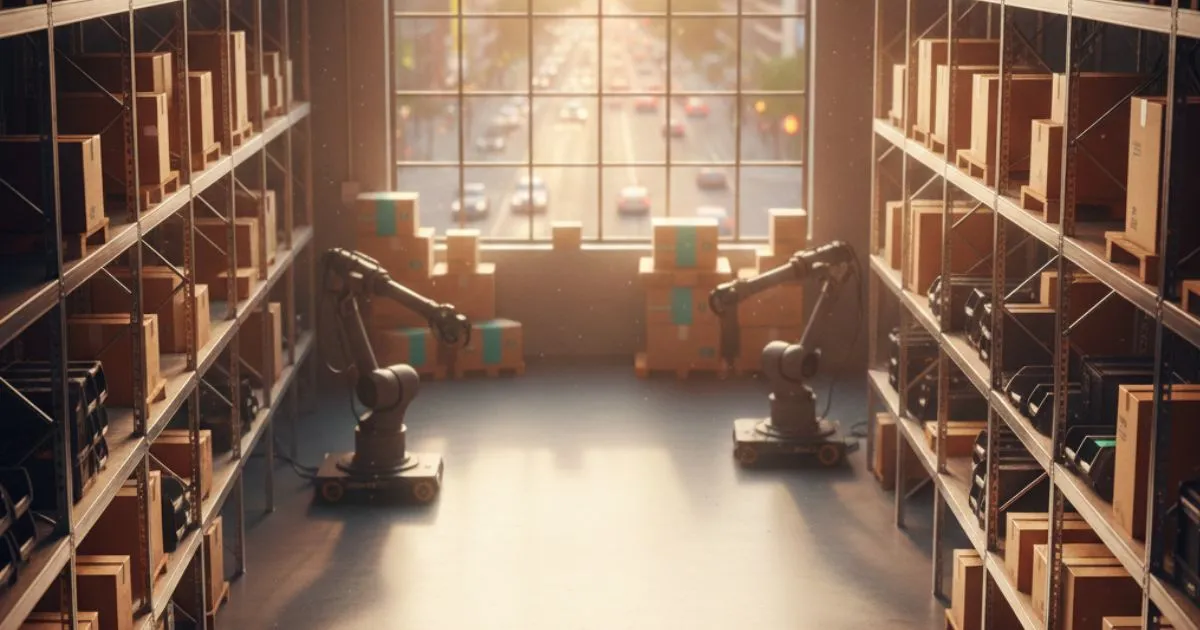
The architecture of these spaces is fascinating in its austerity. You don’t have space for the “just in case” inventory that used to clog up regional hubs. In a micro-fulfillment center, every square inch is under trial. If a product isn’t moving within a forty-eight-hour window, it shouldn’t be there. I’ve seen converted parking garages where the shelving is so dense it feels like a library for consumer goods. This is where the magic of hyper-local delivery happens. It is a game of high-velocity picking and immediate dispatch.
I often wonder if the giants of the early 2010s saw this coming. They built cathedrals of commerce in the desert, while the future was actually in the vacant storefront next to your favorite bakery. The data requirements are, frankly, exhausting. To run a successful network of these hubs, you need a level of predictive accuracy that didn’t exist five years ago. You have to know that on a rainy Thursday in Seattle, people aren’t just buying umbrellas, they are buying specific brands of artisanal pasta. If you get that wrong, your micro-warehouse is just an expensive closet.
But when it works, it is a thing of beauty. The carbon footprint of a package dropped off by an e-bike from a hub four blocks away is negligible compared to the old cross-country trek. There is a certain irony in it. We spent decades trying to build a global village, only to realize that the most profitable move was to focus back on the actual village. The local economy is being reinforced by digital backbones, creating a hybrid that feels more sustainable, if a bit more frantic.
Navigating the friction of e-commerce 2026
Of course, it isn’t all seamless logistics and happy customers. The operational complexity of managing ten tiny sites instead of one big one is enough to give any operations manager a permanent migraine. I’ve spent enough time in the backrooms of these “dark stores” to know that the tech often fails at the most inconvenient times. Inventory drift is a real ghost in the machine. A customer buys the last bottle of high-end serum, the system says it’s there, but the picker finds an empty slot because someone didn’t scan a return correctly. In a centralized world, you just grab another one from the next aisle. In a micro-world, you’ve just failed a ninety-minute promise.
The pressure on margins in this new landscape is relentless. Urban real estate is not getting any cheaper, and the competition for these small, light-industrial spaces is fierce. I’ve heard stories of “warehouse wars” in Brooklyn where brands are outbidding each other for basement space that hasn’t seen a coat of paint since the nineties. Yet, the alternative is irrelevance. If you can’t meet the speed of the neighborhood hub, you are essentially invisible to a large segment of the urban population.
There is also the human element. The delivery partners who power this ecosystem are the new essential workers of the digital age. We’ve seen a shift from the faceless van driver to the local courier who knows which gates are finicky and which dogs are friendly. It is a more personal, albeit high-pressure, interaction. The technology tries to optimize their routes down to the second, but the reality of the street always intervenes. A protest, a burst pipe, or a sudden downpour can throw the most sophisticated AI for a loop. We are still deeply tied to the physical world, no matter how much we try to digitize our desires.
I find myself thinking about what happens next. As these neighborhood hubs become more integrated into our buildings and our habits, the line between “online” and “local” will probably vanish entirely. Maybe we will stop calling it e-commerce and just go back to calling it shopping, just with a much shorter walk to the door. There is a quiet satisfaction in seeing a neglected corner of the city find a new purpose, even if that purpose is just making sure a replacement charging cable arrives before your phone dies.
It is a strange, fragmented world we are building. It is one where the big win is found in the small spaces. We are moving away from the era of the grand warehouse and into the age of the strategic nook. It makes me wonder what other parts of our lives are about to be decentralized, shrunk down, and moved right next door. Perhaps the savior of the modern economy was never going to be a giant leap forward, but a thousand small steps taken right in our own backyard.