
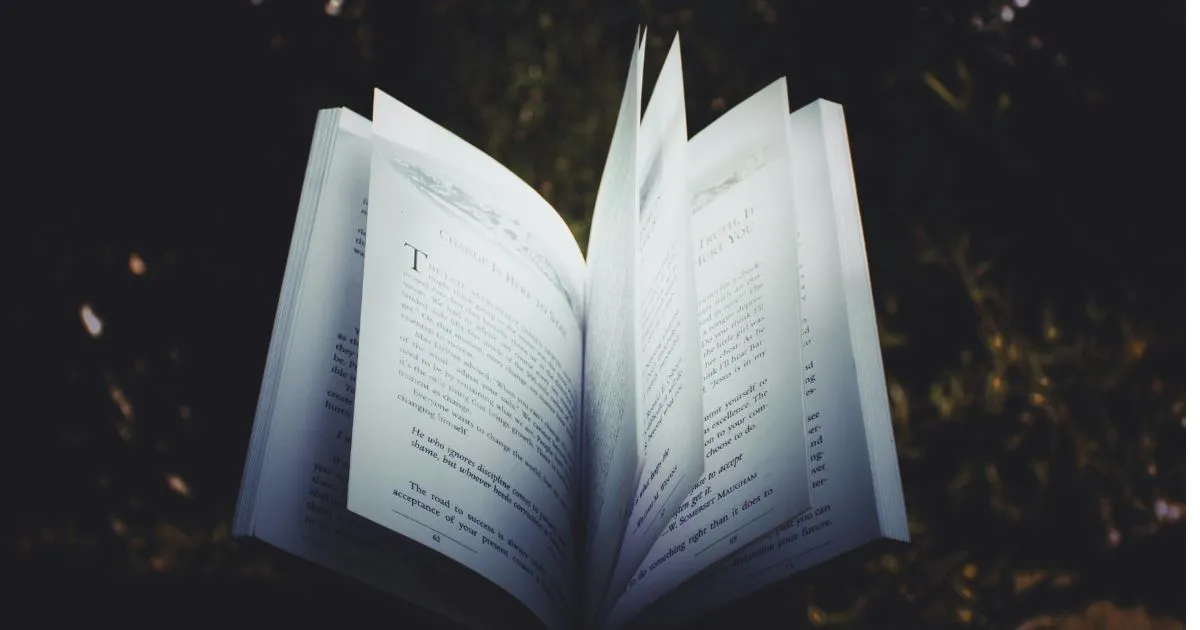
The subway ride from Brooklyn into Manhattan used to be a graveyard of mindless scrolling, a repetitive motion of thumbs catching on flashy ads and volatile news cycles. But lately, something has shifted in the way people consume words. We are witnessing a strange, frantic, and beautiful compression of narrative. It is the era of the bite-sized epic. If you had told me five years ago that people would be paying real currency for stories that barely fill a smartphone screen, I would have laughed. Yet, here we are in the thick of the Nano-Fiction 2026 movement, where brevity is no longer a constraint but a premium product.
Writing short used to be a stylistic choice or a creative exercise for the bored. Now, it is an economy. The transition hasn’t been clean or particularly organized. It feels more like a gold rush in a very small, very crowded room. Writers are finding that the traditional gatekeepers of the literary world are being bypassed by nimble, aggressive platforms that treat a hundred words with the same reverence a 19th-century publisher might have treated a three-volume novel. It is about the punch, the immediate emotional resonance that hits before the reader even realizes they’ve finished the piece.
I spent an afternoon last week sitting in a small park in Portland, watching people interact with their devices. It wasn’t the usual vacuous stare. They were leaning in. They were reacting. In 2026, the attention span hasn’t necessarily vanished, but it has become more selective, more surgical. We want the soul of a story without the decorative lace. This shift is where the money is starting to flow, and for the self-publishing crowd, it represents a frontier that is as terrifying as it is lucrative.
The survival of the briefest in flash fiction apps
The mechanics of how we get paid for this work have mutated. We are moving away from the “buy the whole book” model toward a micro-transactional reality that feels almost like busking in a digital city square. Flash fiction apps have become the new storefronts. These platforms operate on a “per-snack” basis. A reader spends a few cents to unlock a story that takes forty seconds to read. It sounds trivial until you see the volume. When a story goes viral in this ecosystem, it isn’t measured in weeks of bestseller lists; it is measured in millions of instantaneous unlocks over a Tuesday lunch break.
The challenge, of course, is the craft itself. You cannot hide behind flowery prose when you only have a hundred words to make someone feel a sense of loss or a spark of joy. Every syllable carries a weight that feels almost physical. I’ve spoken to writers who spend more time editing a fifty-word micro-fiction piece than they used to spend on entire chapters. The economy of language has become literal. If a word doesn’t earn its keep, it’s a drain on the profit margin.
These apps aren’t looking for the next great American novel in the traditional sense. They are looking for “vibes” that can be serialized. A story about a haunted vending machine in a Chicago train station might run for fifty installments, each one a self-contained unit of Nano-Fiction 2026. The monetization happens in the hook. You give away the first three breaths of the story, and then the reader is invested enough to drop a dime on the fourth. It’s a gambling mechanic applied to the literary arts, and while it feels a bit dirty to some, it’s keeping the lights on for a new generation of creators who refuse to wait for a New York agent to call them back.
There is a specific kind of grit required to succeed here. You have to be okay with the ephemeral nature of the work. These stories aren’t necessarily meant to sit on a mahogany shelf for decades. They are meant to be consumed, felt, and passed along like a secret. The platforms are designed for high-frequency interaction. If you aren’t posting, you are invisible. This demand for constant output is the shadow side of the boom, leading to a frantic pace that can easily burn out the unprepared. But for those who can find a rhythm in the chaos, the rewards are surprisingly steady.
Micro-publishing strategies for the modern minimalist
The transition from hobbyist to professional in this space requires a rethink of what a “publication” actually looks like. We aren’t talking about ISBNs and library bindings anymore. Micro-publishing is about carving out a niche in a fragmented landscape. It’s about building a digital footprint that feels personal and direct. I’ve noticed that the most successful writers in this niche aren’t the ones with the most polished websites. They are the ones who inhabit the comments sections, who treat their readers like a small, rowdy congregation.
Some are finding success by bundling their micro-stories into “season” packs. Once a series hits a certain threshold on the apps, they move it over to a subscription model or a limited-edition digital zine. It’s a way to double-dip on the content. The first wave is the fast, cheap thrill of the app unlock; the second wave is the curated experience for the superfan. It’s a strategy that requires a bit of ego-shedding. You have to accept that your work is being consumed in the gaps of people’s lives—while they wait for the kettle to boil or for the light to change.
I often wonder if we are losing something in this compression. There is a richness to a long, slow burn of a novel that a hundred words can never replicate. But then I read a piece that manages to encapsulate the entirety of a failed marriage or the terror of a first flight in a handful of sentences, and I realize the art form is just evolving. It’s becoming sharper. It’s becoming more weaponized. In the United States, particularly in the tech-heavy hubs where the pace of life feels like it’s being played at 1.5x speed, this style of storytelling feels inevitable. It’s the literary equivalent of a double espresso.
The monetization isn’t just about the direct sales, either. We are seeing brand partnerships where the story is the vehicle for a subtle, atmospheric placement. It sounds cynical, and perhaps it is, but it’s also a way to fund the weirder, more experimental stuff. If a story about a futuristic coffee shop is sponsored by an actual coffee brand, and that sponsorship allows the writer to spend the rest of the month writing surrealist horror about sentient clouds, then maybe it’s a fair trade. The boundaries are blurring, and the old definitions of “selling out” feel increasingly quaint in a world where everyone is a brand by default.
We are still in the early, messy stages of this. The platforms are competing for dominance, and the algorithms are still being tweaked to see what keeps a human eye glued to a screen for those precious thirty seconds. There is no manual for this yet. We are all just throwing words at the digital wall and seeing what sticks, what pays, and what actually moves people. It is a strange time to be a writer, but it’s certainly not a boring one.
The beauty of the current state of things is the lack of a center. There is no one place where you have to be to make it. You can be writing from a rural cabin or a crowded city apartment; as long as you can capture a moment in a way that feels authentic, there is a path to an audience. The barriers to entry have been demolished, replaced by a different kind of barrier: the difficulty of being truly memorable in a sea of instant content.
As the year progresses, I expect we will see even more specialized platforms. Some might focus exclusively on micro-horror, others on “missed connection” style romance. The fragmentation will continue, and the writers who can adapt their voice to these specific frequencies will be the ones who thrive. It’s a marathon made of thousand tiny sprints. You just have to keep running, even if you aren’t quite sure where the finish line is, or if one even exists.
FAQ
While definitions vary, the current standard usually caps these stories at 100 words. The goal is to provide a complete narrative arc—beginning, middle, and end—within a single screen view on a mobile device without requiring the user to scroll.
Most platforms use a micro-payment or token system. Readers purchase a pack of tokens and spend one or two to “unlock” a story. The platform takes a percentage, and the writer receives the rest. Some apps also offer revenue sharing based on ad views or monthly subscription tiers.
Generally, no. Most of these apps are open-access, allowing anyone to create a profile and start uploading. However, some of the premium, “editor-choice” apps are starting to move toward an invitation-only or curated model to maintain a higher quality of content.
Horror, sci-fi, and “slice-of-life” drama tend to be the heavy hitters. Genres that rely on a “twist” or a strong emotional gut-punch work well because they provide a satisfying conclusion in a very short amount of space.
Always read the Terms of Service. Most reputable apps allow you to retain the copyright while granting them a license to distribute the work. Be wary of any platform that demands a full transfer of rights for a pittance.
