


I spent yesterday afternoon sitting in a small, aromatic coffee shop downtown, watching people interact with their phones. It is a hobby of mine, observing the digital tether in the wild. A woman at the table next to me wanted a specific type of ergonomic desk lamp. She opened her browser, typed a few words, and then did something that would have been rare five years ago but is now the standard operating procedure. She didn’t click the first sponsored Amazon link. Instead, she swiped over to a map.
She wanted to see if the lamp existed within a three-mile radius of her current seat. She wanted to know if she could touch it, see the true color of the brass, and have it on her desk by sunset without worrying about a cardboard box being mangled in a delivery van. This is the heartbeat of Local-First E-commerce, a shift in consumer consciousness that is quietly dismantling the monopoly of the “everything store” by leveraging the one thing a global giant can never truly possess: physical presence.
We have entered an era where the scale of Amazon is becoming its greatest liability. The friction of the “global shelf” is real. Shipping delays, counterfeit goods, and the sheer exhaustion of scrolling through ten pages of identical white-labeled products have pushed the high-intent buyer back toward the neighborhood. But they aren’t looking at shop windows anymore. They are looking at the digital twin of your storefront.
The Geography of Trust and Local-First SEO
There is a specific kind of magic that happens when a business aligns its digital footprint with the soil it stands on. In the current landscape, ranking for a broad term is a fool’s errand, a high-cost battle with diminishing returns. However, the algorithm has grown sophisticated enough to prioritize the “near me” intent with startling accuracy. When we talk about Local-First SEO, we are talking about a strategy that treats the searcher’s latitude and longitude as the most important data point in the transaction.
Amazon can optimize for keywords, but it cannot optimize for a Tuesday afternoon rainstorm in Seattle or a local festival in Austin. A local retailer can. By weaving the specifics of the community into the digital narrative, you create a relevance that a centralized warehouse in the Midwest cannot replicate. This isn’t about stuffing city names into your footer. It is about proving to the search engine that you are a living, breathing part of the local ecosystem.
I often see business owners get caught up in the technical weeds, forgetting that the “Local” in the name refers to people. Google’s 2026 updates have placed an incredible weight on behavioral signals. They are looking at how many people ask for directions to your shop after seeing a product online. They are tracking the “dwell time” of a customer who found you via a mobile search. These real-world signals are the new backlinks. If your digital presence doesn’t bridge the gap between the screen and the sidewalk, you are leaving the door open for the giants to step back in.
Mastering the Map Pack and E-commerce 2026
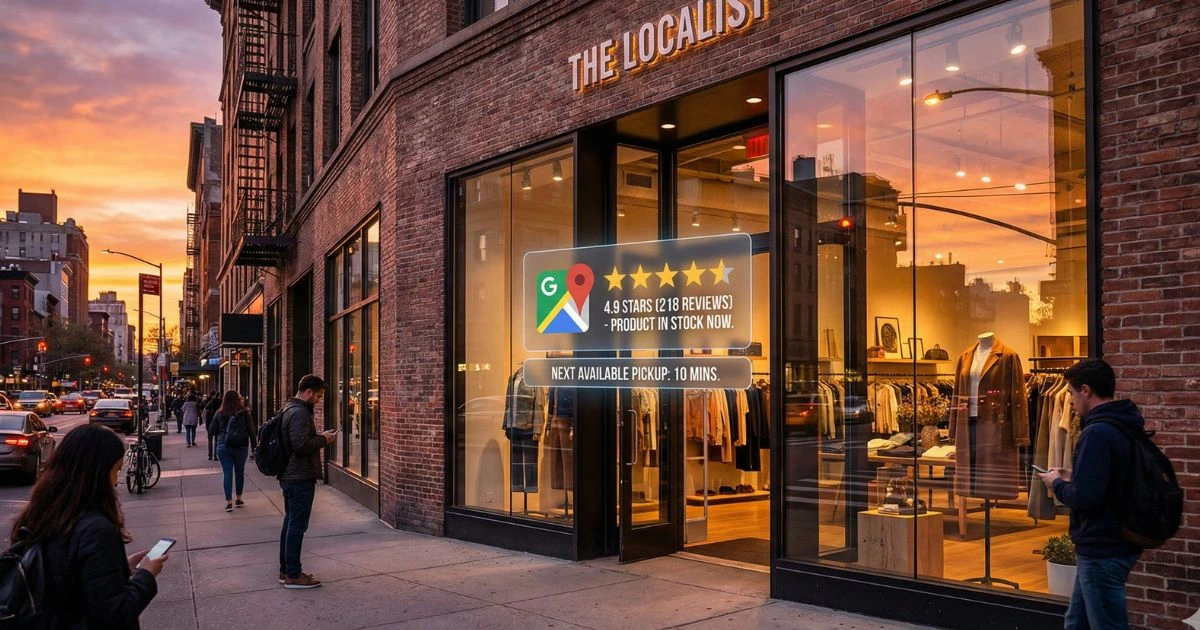
If you want to understand where the money is moving, look at the evolution of the Map Pack. It is no longer just a directory of addresses and phone numbers. It has become a fully realized storefront. In the context of E-commerce 2026, your Google Business Profile is arguably more important than your homepage. It is the first, and often only, point of contact.
I’ve noticed a trend among the most successful boutique agencies and independent sellers lately. They aren’t just listing their hours, they are treating their Map presence like a high-end magazine. They use high-fidelity, geo-tagged imagery that shows the product in the context of the local neighborhood. They respond to reviews not with a generic “thanks for coming in,” but with specific mentions of the neighborhood landmarks or local events that the customer might have been attending.
This creates a “prominence” that triggers the algorithm’s trust. When a user searches for a product and sees a local listing with a 4.9-star rating, a wealth of recent photos, and a “Buy Online, Pick Up In-Store” button that actually works, the convenience of Amazon’s two-day shipping suddenly feels like a slow, impersonal alternative.
The technical side of this involves a deep dive into Google Maps SEO, ensuring that your product inventory is synced directly with your profile. The goal is to create a “zero-click” victory, where the customer gets everything they need—price, availability, and social proof—without ever leaving the search results page. It is a ruthless efficiency that favors the local player who is willing to do the manual work of maintaining a perfect digital storefront.
There is also the matter of “micro-moments.” A person standing on a corner, searching for a gift, is not looking for a brand. They are looking for a solution to a proximal problem. If your SEO strategy is focused on these high-intent, hyper-local queries, you are fishing in a much smaller, much wealthier pond. The competition isn’t Jeff Bezos, it’s the three other shops on your block. And that is a fight you can actually win.
We are seeing a return to “human-centric” commerce. People are tired of being treated like a line of data in a massive logistical machine. They want the story. They want to know that the person who packaged their order is the same person who answers the phone. This transparency is a massive ranking factor now. The “About Us” page is no longer a throwaway, it’s a manifesto. When you combine that narrative with a rock-solid local technical foundation, you create something that is very hard for an algorithm to ignore.
The future belongs to those who can make the digital feel tangible. It belongs to the businesses that understand that “near me” is a psychological state as much as it is a physical one. As we move deeper into this year, the gap between the local leader and the global laggard will only widen. Those who invest in their local authority now will find themselves owning the digital real estate of their city, a plot of land that no amount of global capital can buy out from under them.
I think about that woman in the coffee shop. She ended up finding a shop four blocks away. She paid a few dollars more than she would have on Amazon, but she walked out with the lamp in her hand and a smile on her face. The search engine saw that. It recorded her journey from the search bar to the physical storefront. And next time someone in that neighborhood looks for a lamp, that local shop will be the first thing they see. That is the new SEO. It isn’t a game of tricks anymore, it’s a game of being there when it matters.

