
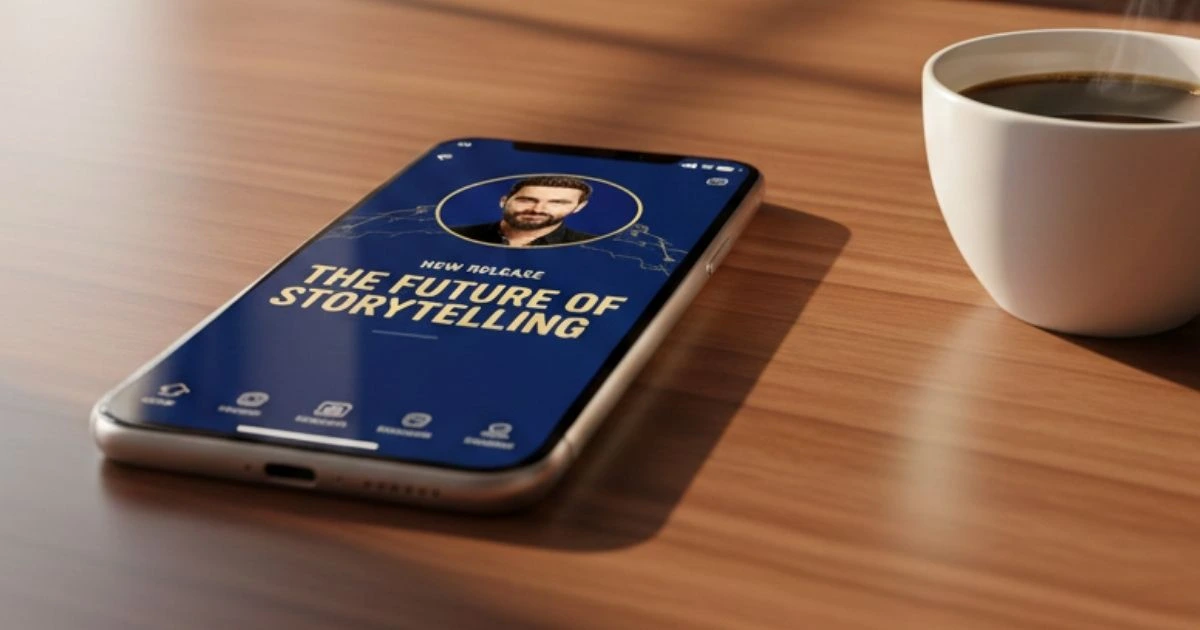
The digital landscape in 2026 feels a lot like a crowded city square where everyone is shouting but nobody is listening. For years, we were told that the dream was to get our work onto the big shelves, those massive digital marketplaces that promised us the world in exchange for a thirty percent cut and total control over our customer data. We played along, optimizing our metadata and praying to algorithms that changed their minds more often than the weather. But something shifted recently. The realization hit that being a tenant on someone else’s land is a precarious way to build a legacy. I remember sitting with a fellow writer last winter, watching our sales numbers fluctuate based on a backend update we didn’t understand, and the conversation kept circling back to the same point. We weren’t building businesses, we were building content for someone else’s platform. That is why Launch your own Platform: Why “Direct-to-App” is the 2026 author future has become more than just a catchy phrase in finance circles, it has become a survival strategy for anyone serious about their intellectual property.
Ownership is the only currency that actually appreciates when the market gets volatile. When you rely on a third-party retailer, you are essentially renting your audience. You don’t know their names, you don’t have their emails, and you certainly can’t reach out to them when you have something new and exciting to share without paying for the privilege through ads or boosted posts. Moving toward a direct-to-app model isn’t just about cutting out the middleman, though the math on that certainly looks better on a balance sheet. It is about creating a sanctuary where the relationship between the creator and the consumer is unmediated and pure.
Author Mobile Apps as the New Sovereign Wealth
There is a certain gravity to having your icon on a reader’s home screen. It occupies a physical, or at least digital, space that a bookmark in a browser simply cannot match. In the current economy, attention is the scarcest resource, and a dedicated app acts as a focused environment. Within those four digital walls, there are no distractions from competitors, no “customers also bought” sections leading readers away from your work, and no sudden policy changes that can de-platform you overnight. I have seen creators move their entire backlist into these private ecosystems and the results are often startling. They find that the people who follow them there aren’t just casual browsers, they are the superfans, the ones who want the “hardcover” experience in a digital format.
By utilizing Author Mobile Apps, writers are finally capturing the data that allows them to understand what actually makes their audience tick. You can see which chapters are being reread, where people are dropping off, and what kind of supplemental content—be it audio snippets or behind-the-scenes commentary—actually drives value. This isn’t just about selling a book anymore. It is about selling an experience that can be updated, iterated upon, and expanded in real-time. In 2026, the static eBook is starting to feel like a relic of the past, a flat file in an increasingly three-dimensional world. We are seeing a move toward living documents, where the app serves as a portal to a growing universe of content that the author controls entirely.
The financial implications of this shift are profound for those looking at publishing as a long-term asset class. When you own the platform, you own the margins. You are no longer subject to the arbitrary pricing tiers or the delayed royalty payments that have long been the standard in the industry. Instead, you have a direct line to the capital. This level of autonomy allows for creative experimentation that would be impossible on a major marketplace. You can launch subscriptions, offer tiered access, or even bundle your digital products with physical goods without having to jump through a dozen hoops. It turns a creative pursuit into a robust, scalable business that carries its own intrinsic value, independent of the whims of the tech giants.
Direct Publishing and the Architecture of Reader Engagement
The technical barriers that once kept authors from launching their own software have crumbled. We are in an era where the tools are accessible, but the strategy is what remains rare. Achieving true Reader Engagement through a dedicated platform requires a shift in mindset from being a “writer” to being a “founder.” It means thinking about the user journey from the moment they download the app to the moment they become a recurring subscriber. It is about creating “sticky” content that gives them a reason to open the app every single day, not just when a new book drops.
I’ve observed that the most successful direct-to-app transitions happen when the author stops treating their work as a commodity and starts treating it as a community. Within an app, Direct publishing becomes a conversation. You can host live Q&A sessions, release serialized chapters that generate weekly hype, or create forums where readers can interact with each other under your brand’s umbrella. This level of intimacy builds a moat around your business that no algorithm can breach. When a reader feels like they are part of an inner circle, their loyalty ceases to be price-dependent. They aren’t looking for the cheapest read, they are looking for the best connection.
This movement is also a response to the “AI-slop” currently clogging the main distribution channels. As the major marketplaces become flooded with low-quality, automated content, the discerning reader is retreating to trusted corners of the internet. They are looking for human voices and curated experiences. Having your own app is the ultimate signal of quality and intent. It says that you believe in your work enough to build a home for it. It tells the reader that this isn’t a “churn and burn” operation, but a dedicated brand. For the finance-minded author, this is about brand equity. A platform with ten thousand dedicated app users is worth infinitely more than a platform with a hundred thousand “followers” on a social network that could vanish tomorrow.
As we look toward the rest of 2026, the gap between those who own their distribution and those who rent it will only widen. The cost of customer acquisition is rising everywhere, and the only way to hedge against that is to increase the lifetime value of the customers you already have. A direct-to-app strategy does exactly that. It turns a one-time transaction into a long-term relationship. It allows for a level of vertical integration that was previously reserved for the biggest publishing houses in the world. Now, that power is in the hands of the individual, provided they have the foresight to claim it.
The question isn’t whether the technology exists to do this—it clearly does—but whether you are willing to step out of the comfort of the “big stores” to build something that actually belongs to you. It takes more work upfront, certainly. It requires a bit of an entrepreneurial spirit and a willingness to learn the mechanics of digital ownership. But the peace of mind that comes from knowing your business cannot be taken away by a line of code in a distant headquarters is worth every bit of the effort. We are moving toward a more decentralized, more human-centric version of the internet, and the authors who lead the way will be the ones who dared to build their own gates rather than just standing behind someone else’s.
It leaves one wondering, if you had the chance to own the very ground your business stands on today, why would you wait until tomorrow to start digging the foundation? The future of authorship isn’t just in the writing, it is in the delivery.
