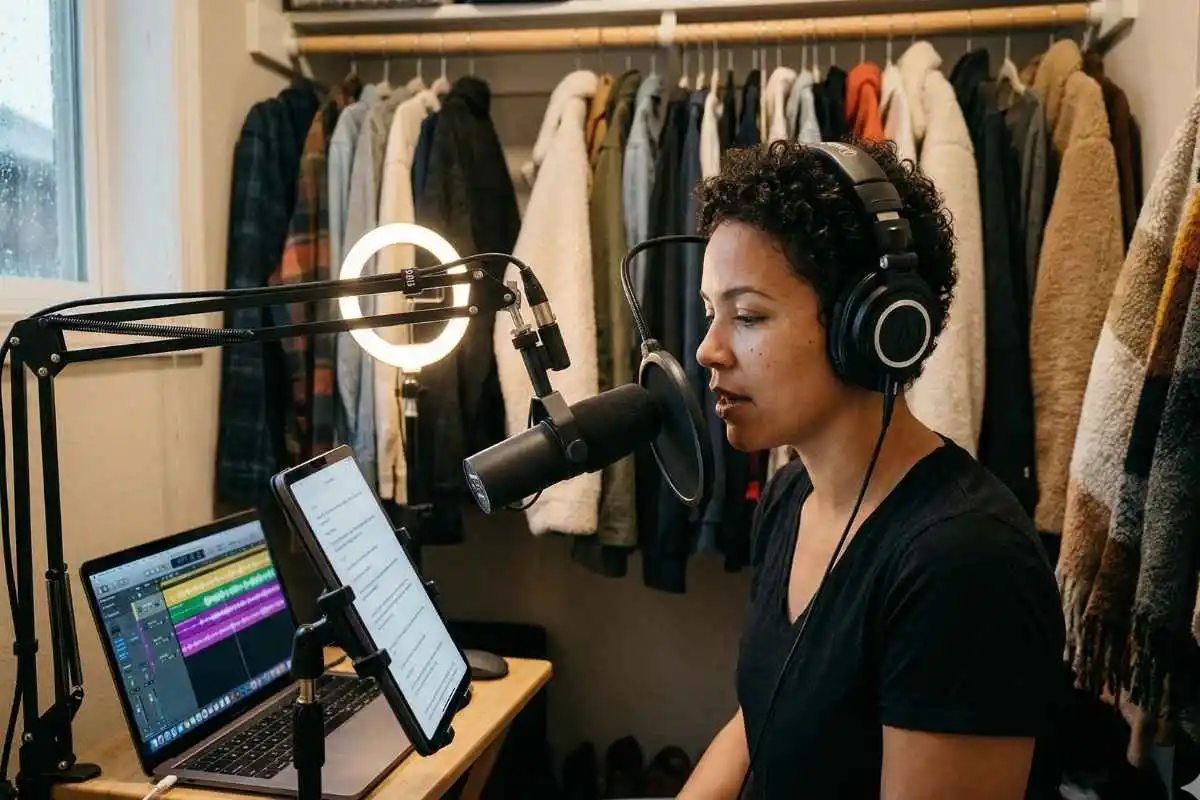
Have you ever listened to an engaging, professionally narrated story and thought to yourself, “I could absolutely do that”? For decades, the audiobook industry was an exclusive club. If you wanted to transform your written words into an immersive auditory experience, you were forced to navigate a labyrinth of expensive studio rentals, highly paid audio engineers, and complex distribution contracts. It was a daunting, cost-prohibitive reality that kept countless independent authors and passionate storytellers from sharing their voices with the world. However, the world of digital media has evolved at a breakneck pace. As we navigate the technological landscape of 2026, the traditional barriers to entry have crumbled entirely. You no longer need a massive budget or a professional soundstage to create a masterpiece. With a little bit of ingenuity, some strategic purchases, and a willingness to learn, you can produce a captivating, broadcast-quality audiobook right from the comfort of your own home.
The Democratization of Audio Production
Not too long ago, the very idea of producing your own audiobook felt like a pipe dream reserved exclusively for bestselling authors backed by massive publishing houses. You would have to rent out a professional soundstage, hire a dedicated audio engineer, and spend thousands of dollars just to get a clean recording of your voice. Fast forward to 2026, and the landscape of digital media has completely transformed, democratizing the entire process for independent creators. The barriers to entry have practically vanished, replaced by an ecosystem of affordable consumer electronics and intuitive software. Today, anyone with a quiet room and a willingness to learn can produce audio files that rival those recorded in expensive facilities. The audiobook industry is booming, and you no longer need a golden ticket to participate; you just need the right strategy and a bit of patience.
Building Your Budget-Friendly Home Studio
When building your budget-friendly home studio, the most critical piece of hardware you will invest in is, unsurprisingly, your microphone. However, the biggest misconception among beginners is the belief that you must purchase a high-end condenser microphone costing upwards of a thousand dollars to sound professional. In reality, modern technology has advanced so significantly that a high-quality USB or dynamic XLR microphone in the one hundred dollar range is more than sufficient for clear narration. These microphones are specifically engineered to capture the rich natural timbre of the human voice while rejecting background hums. Pairing your chosen microphone with a simple pop filter—a crucial accessory that eliminates harsh bursts of air caused by hard consonants—will instantly elevate your recordings. By focusing your budget on reliable, mid-tier gear rather than luxury brands, you ensure your initial capital is spent wisely.
The Magic of Acoustic Treatment on a Budget
Even the most expensive microphone in the world will sound absolutely terrible if you attempt to record in an echo-filled, reverberant environment. This brings us to the magic of acoustic treatment, a vital step that novice producers frequently overlook at their own peril. You do not need to line your walls with expensive, professional-grade acoustic foam panels to achieve a clean, dry sound. In fact, some of the most popular and commercially successful indie audiobooks have been recorded entirely inside standard walk-in closets. Clothes, especially heavy winter coats and thick sweaters, act as phenomenal natural sound absorbers, deadening the space and preventing your voice from bouncing off hard walls. If a closet is not an option, constructing a highly effective “blanket fort” using heavy moving blankets draped over chairs can deliver a broadcast-quality recording environment right in your bedroom.
Recording Software and Tech Enhancements
Once you have successfully captured your raw audio, the next phase of the journey takes place entirely within your computer using a digital audio workstation, commonly referred to as a DAW. While there are numerous expensive, industry-standard software packages available, the open-source community provides incredibly powerful, entirely free alternatives that are more than capable of handling audiobook production. Programs like Audacity remain a staple, but by 2026, we also have access to incredibly sophisticated, AI-driven noise reduction tools that can salvage flawed recordings with the click of a button. These modern software tools allow you to visually edit your audio, slicing out heavy breaths, awkward pauses, and stomach rumbles with surgical precision. Furthermore, learning the basics of equalization and compression within these free programs empowers you to polish your narration, ensuring your voice maintains a consistent, inviting volume.
Mastering, Distribution, and Protection
The final hurdle in your audiobook production journey involves mastering your audio to meet the strict technical requirements demanded by major retail platforms like Audible, Apple Books, and Spotify. These platforms require your files to hit specific overall volume levels, maintain strict peak limits to prevent distortion, and possess a consistently low noise floor. While this technical jargon can feel incredibly intimidating at first glance, the process is largely mathematical and highly repeatable once you understand the basic formula. Many free tutorials and software presets are available online specifically designed to help your audio pass these rigorous automated quality checks. Once your files are approved and live on the market, you will officially become a published audio creator. It is highly recommended to register your finished audio project with the U.S. Copyright Office to legally protect your intellectual property.
By the Numbers: Studio vs. Home Setup
To truly understand the financial shift that has occurred in the audio production landscape, it is helpful to visualize the numbers. In the past, self-publishing an audiobook required significant capital, often deterring talented authors from pursuing the medium. Today, the financial risk is remarkably low. Below is a detailed breakdown comparing the traditional costs of a commercial recording studio with the streamlined expenses of a modern, home-based setup in 2026. This stark contrast highlights just how accessible the industry has become.
| Expense Category | Traditional Studio Setup | 2026 Home Studio Setup | Estimated Savings |
| Microphone & Gear | $1,500 – $3,000+ | $100 – $250 | ~$2,000 |
| Acoustic Treatment | $800 – $2,500+ | $0 – $50 (Blankets) | ~$1,500 |
| Recording Software | $300 – $800 | $0 (Open-source) | ~$500 |
| Engineer/Editor | $1,500 – $4,000 | $0 (Self-edited) | ~$2,500 |
| Total Estimated | $4,100 – $10,300+ | $100 – $300 | ~$6,500+ |
Frequently Asked Questions
Do I really need a completely soundproof room to record? Absolutely not. There is a distinct difference between soundproofing (keeping outside noise from entering a room) and acoustic treatment (controlling how sound bounces around inside a room). For audiobooks, acoustic treatment is your primary goal. A quiet closet filled with hanging clothes is often enough to achieve a professional sound without spending money on heavy construction.
How long does it realistically take to narrate and edit a standard book? The industry rule of thumb is that it takes roughly three to four hours of work to produce one single hour of finished audio. If your completed audiobook is projected to be eight hours long, you should reasonably expect to spend between twenty-four and thirty-two hours recording, editing, and mastering the final files.
Can I just use AI voice generators instead of reading it myself? While artificial intelligence voices have advanced remarkably by 2026, most major audiobook distributors still require human narration or strictly label AI-generated content. Furthermore, audiences generally prefer the authentic emotion and nuanced delivery that only a real human voice can provide to a compelling narrative.
A Brief Look Back: The Curiosity of Early Audiobooks
Did you know that the very first audiobooks were originally known as “Talking Books” and were developed in the early 1930s? They were created primarily as an accessibility tool to help visually impaired World War I veterans enjoy literature. These early recordings were pressed onto heavy, fragile vinyl records that could only hold about fifteen minutes of audio per side. Imagine having to carefully flip a heavy vinyl disc dozens of times just to get through a single novel! We have certainly come a long way since those delicate, crackling records.
Summary Producing an audiobook in 2026 is no longer a financial impossibility. By leveraging affordable gear, utilizing free software, and maximizing natural acoustic spaces like your closet, you can share your story with the world without breaking the bank. The power to create is entirely in your hands.