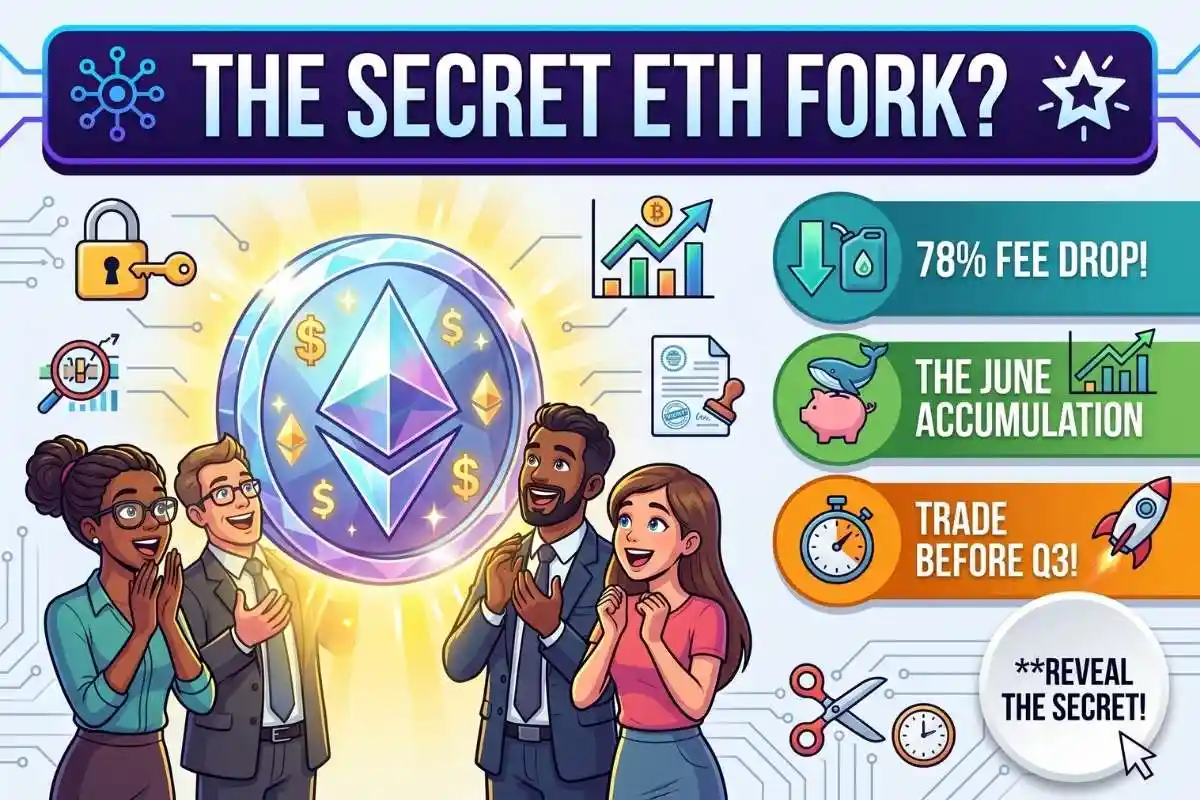
If you have been watching the cryptocurrency charts lately, you might assume Ethereum is quietly consolidating in the summer heat, trapped between macroeconomic anxiety and institutional indifference. Yet, beneath this tranquil surface, core developers and institutional asset managers are positioning for the biggest protocol architectural shift since the historic proof-of-stake integration documented on the Ethereum Wikipedia repository. Slated for late Q3, the upcoming Glamsterdam network upgrade is emerging as the defining digital asset catalyst of the year. For astute traders and long-term stakers, the window of maximum financial opportunity is closing fast. Grasping the underlying mechanics of this monumental hard fork before June concludes is the key to capturing its impending value creation.
The Architectural Core: Democratizing Block Production
For years, the Ethereum community has wrestled with an invisible bottleneck: the immense friction of block construction and the centralizing shadow of Maximal Extractable Value (MEV). When the network executes its highly anticipated Glamsterdam hard fork—a clever portmanteau uniting the Amsterdam execution-layer upgrade and the Gloas consensus-layer upgrade—it will introduce Enshrined Proposer-Builder Separation (ePBS) via Ethereum Improvement Proposal 7732. Historically, validators relied on a fragile network of third-party external relays to assemble profitable transaction blocks, creating an uncomfortable dependency that threatened the network’s core ethos. By weaving this separation directly into the foundational consensus protocol, Glamsterdam eliminates off-chain relay trust assumptions, establishes secure builder payments, and curtails predatory front-running. For retail investors and decentralized finance participants alike, this reorganization represents a profound maturation of the preeminent settlement layer, permanently shifting power back to decentralized node operators while preparing the state engine for massive data throughput.
Paving the Superhighway: Block-Level Access Lists
While enshrining proposer-builder separation secures the foundation, the second pillar of Glamsterdam fundamentally alters network velocity. Through the implementation of Block-Level Access Lists (BALs) under EIP-7928, Ethereum is effectively equipping every newly forged block with an explicit digital manifest. Previously, transaction validation operated much like opening mystery boxes; individual nodes had no way of knowing which specific account balances or smart contract storage slots a transaction would modify until computational verification was underway. By mandating that blocks pre-declare their exact state access blueprints in the header, the execution engine can instantly map out non-conflicting transactions and process them simultaneously. This evolutionary leap into trustless parallel execution clears the structural roadway toward an eye-watering 200 million gas limit. Rather than choking under the weight of high-frequency decentralized trading, the Layer-1 base chain will finally possess the organic muscle to handle massive transaction density without sacrificing its cherished decentralization or pricing out independent home node operators.
The Pre-Fork Accumulation Play: Why June is the Decisive Window
To understand why smart money is aggressively positioning before June concludes, one must look past headline volatility and examine undeniable structural shifts occurring on the ledger. Historical precedent dictates that major Ethereum network upgrades trigger significant pre-fork price appreciation as institutional asset managers quietly accumulate spot exposure weeks ahead of mainnet activation. On-chain analytics reveal that nearly half a million Ether tokens were abruptly withdrawn from centralized exchanges during early June—a classic liquidity contraction signal pointing to massive over-the-counter accumulation. Furthermore, with approximately thirty percent of the entire circulating supply permanently locked inside staking contracts, the market’s floating supply has never been more constrained. When combined with regulatory clarity provided by the Commodity Futures Trading Commission (CFTC) reaffirming the asset’s digital commodity classification, this supply shock creates an asymmetrical upward trajectory. Those who wait until August to establish positions will inevitably find themselves buying the top of an institutional markup.
Navigating Post-Upgrade Volatility: The ‘Sell-The-News’ Reality
However, navigating a major protocol milestone requires equal parts aggressive positioning and defensive risk management, as market dynamics surrounding hard forks are notoriously unforgiving to latecomers. Data harvested from previous network transformations—most notably The Merge and the Shapella upgrade—demonstrates a consistent sell-the-news phenomenon where the native token experiences a swift ten to fifteen percent correction in the immediate aftermath of mainnet deployment. Sophisticated trading desks that accumulated inventory throughout June reliably use euphoric media coverage on launch day as an exit liquidity event. Additionally, traders must remain keenly aware of underlying delay risks; because the technical interplay between enshrined block-building and parallel access lists is unprecedented at global scale, core developers could easily opt for a cautious postponement into late autumn if cross-client parity shows instability during testnet rehearsals. Recognizing these dual hazards allows market participants to craft a bulletproof strategy: build exposure during the quiet June accumulation lull, and aggressively harvest profits into the speculative August run-up.
Technical Breakdown: The Glamsterdam Improvement Package
To fully appreciate why this upcoming upgrade serves as such a powerful market catalyst, we can examine the specific protocol modifications scheduled for deployment. The table below outlines the core proposals and their practical implications for network infrastructure and end-user economics:
| Proposal | Primary Function | Core Network Impact | Investor & User Takeaway |
| EIP-7732 (ePBS) | Enshrines Proposer-Builder Separation on-chain | Eliminates third-party middleware relays | Up to 70% reduction in predatory MEV extraction |
| EIP-7928 (BALs) | Mandates Block-Level Access Lists | Unlocks safe, high-throughput parallel execution | Prepares network for massive 200M gas limits |
| EIP-8037 (CPSB) | Implements Cost Per State Byte pricing | Limits state growth to a safe 120 GiB per year | Ensures standard consumer hardware can run nodes |
| EIP-7904 | Comprehensive Layer-1 gas repricing | Rebalances base execution fee structures | Projected ~78% fee drop for native L1 transfers |
Key takeaway: Glamsterdam represents a philosophical pivot for Ethereum. Rather than solely relying on Layer-2 rollups to absorb global demand, the base chain itself is undergoing a radical efficiency overhaul to reclaim transaction dominance and drive direct economic value back to native token holders.
Frequently Asked Questions (FAQ)
What exactly is the Glamsterdam upgrade?
Glamsterdam is Ethereum’s most ambitious structural hard fork since the monumental transition to proof-of-stake consensus. Targeted for mainnet deployment in late Q3, it represents a synchronized modernization of both the execution layer (Amsterdam) and the consensus layer (Gloas). The upgrade addresses three distinct operational hurdles: eliminating reliance on centralized block-building middleware, enabling parallel transaction execution to dramatically expand network capacity, and repricing data storage to keep hardware requirements accessible for independent home node operators.
Will I need to upgrade, migrate, or convert my ETH tokens?
No action is required for everyday token holders. If you hold native Ether in a personal self-custody wallet, on a centralized cryptocurrency exchange, or inside a decentralized finance lending protocol, your balance will transition seamlessly through the hard fork. The underlying protocol upgrades happen entirely on the back end among network validators. Anyone contacting you on social media or via email instructing you to “upgrade,” “bridge,” or “migrate” your tokens to accommodate Glamsterdam is attempting a phishing scam.
Why are sophisticated traders focusing so heavily on the month of June?
Market history proves that cryptocurrency catalysts are priced in weeks before the actual event occurs. By the time mainnet activation arrives in August or September, mainstream retail investors will be scrambling to buy, creating the exact exit liquidity required by institutional funds. June represents the ultimate accumulation sweet spot: exchange reserves are draining rapidly, staking lockups are absorbing loose supply, and media hype remains relatively subdued. Establishing a position before the monthly candle closes ensures you are riding the institutional wave rather than trapped beneath it.
Beyond the Chart: The Starry Origins of Glamsterdam
For those curious about the whimsical nomenclature of Ethereum hard forks, the title “Glamsterdam” is rooted in a fascinating dual tradition maintained by the core developer community.
When Ethereum splits its developmental milestones across its two primary operational layers, each half adheres to a strict naming convention. Upgrades to the execution layer—where smart contracts reside and user transactions are calculated—are sequentially named after cities that have hosted major global Devconnect conferences, honoring the vibrant urban hub of Amsterdam. Conversely, upgrades to the consensus layer—which manages validator agreements and network security—are systematically named after brilliant celestial bodies and stars, drawing from the glowing star Gloas.
When these two monumental software packages converge into a unified network overhaul, the names are fused into a singular portmanteau. Thus, Glamsterdam is born: a poetic marriage of earthly engineering collaboration and cosmic ambition. As June draws to a close, this starry catalyst offers a rare confluence of profound fundamental utility and explosive market timing. The countdown to Glamsterdam has officially begun, and the optimum time to position your portfolio is right now.