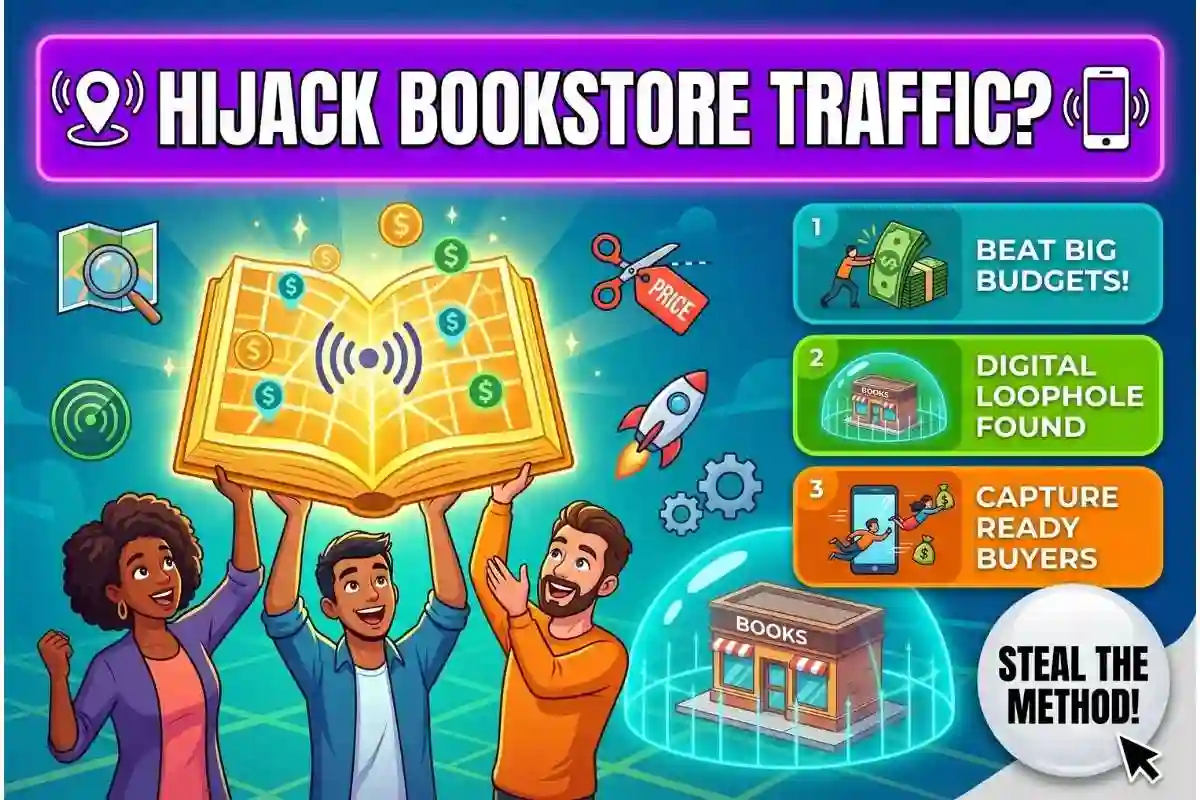
Imagine walking into your favorite neighborhood bookstore on a rainy Tuesday afternoon. The familiar smell of paper and ink greets you, and as you sip your coffee while browsing the latest arrivals, you pull out your smartphone to check a quick text message. Suddenly, a perfectly tailored advertisement pops up on your screen for a gripping new mystery thriller that sounds exactly like the books you normally read. You haven’t searched for this title, and the author isn’t a famous celebrity with a multimillion-dollar marketing budget. So, how on earth did they find you at that exact moment? Welcome to the clever, slightly futuristic, and highly effective world of geofenced bookstore advertising. In 2026, independent authors have discovered a brilliant digital loophole to capture your attention precisely when you are most eager to buy a book. By drawing invisible digital borders around brick-and-mortar bookstores, these creative writers are essentially hijacking local foot traffic for pennies on the dollar, proving once and for all that you no longer need a massive traditional publishing house to reach the perfect reading audience.
The Invisible Net Around Your Local Bookstore
At its core, geofencing is a location-based digital marketing tool that utilizes GPS, RFID, Wi-Fi, or cellular data to trigger a pre-programmed action when a mobile device enters or exits a specific virtual boundary. Think of it as an invisible net cast over a highly targeted geographic area, such as a popular local bookstore or a sprawling retail chain. When a potential reader walks into this invisible zone with their smartphone in their pocket, their device is silently interacting with the physical environment. Background apps that share location data with advertising exchanges temporarily tag the user as a “person currently inside a bookstore.” Later that evening, when that same person is lounging on their couch, scrolling through social media or reading a digital magazine, they are served highly targeted advertisements for a specific author’s book. While the foundational technology has been around for years, you can learn more about its technical roots by exploring Wikipedia’s overview of location-based services. What makes 2026 truly unique is that the software required to set up these perimeters has become incredibly cheap, automated, and user-friendly, allowing everyday, self-published writers to compete for “digital shelf space” even if their physical books aren’t actually stocked inside the brick-and-mortar store.
David vs. Goliath in the Publishing World
The traditional publishing industry has historically been a game of powerful gatekeepers, where massive corporate marketing budgets dictate which books become global bestsellers. Securing a full-page advertisement in a major literary magazine, or paying for prime physical placement on a bookstore’s front display table, can cost thousands—if not tens of thousands—of dollars. For an independent author publishing a debut novel from their living room, these exorbitant costs are entirely prohibitive. However, geofencing levels the playing field in a truly spectacular way, creating a classic David versus Goliath scenario. Instead of paying for broad, untargeted awareness campaigns where most people seeing the ad don’t even read books, a savvy author can now spend as little as five to ten dollars a day to target only the people physically walking into bookstores. The independent author knows that anyone voluntarily browsing the mystery section of a bookstore is a highly qualified lead. By serving an ad directly to that specific person’s phone, the author bypasses the bookstore’s physical inventory entirely, leading the reader straight to a digital download or an online retail page at a fraction of the traditional cost.
The Mechanics of a Digital Ambush
The actual mechanics of this digital ambush are both fascinating and incredibly straightforward for the advertiser. An author simply logs into a self-serve digital advertising platform and searches for the physical street addresses of high-traffic bookstores in major metropolitan areas. They drop a digital pin on each location and set a tight radius of just a few hundred feet to ensure they only capture actual shoppers. Then, they design a compelling visual advertisement—perhaps featuring a stunning book cover paired with a catchy tagline—and set their modest daily budget. The automated system does all the heavy lifting from there. Because mobile phones are constantly pinging nearby cell towers and Wi-Fi networks to establish their location, the advertising network easily identifies when a device crosses the virtual threshold. The true beauty of this guerrilla marketing strategy lies in its hyper-relevance. A person standing in a bookstore is already in a “reading mindset.” They are actively looking for their next great story to consume. When an ad for a well-reviewed, inexpensive indie book pops up on their screen shortly after their visit, the friction to make a purchase is incredibly low, resulting in conversion rates that traditional digital marketers can only dream of.
Ethical Boundaries and Consumer Privacy
Of course, the ability to track a consumer’s physical location and serve them advertisements based on their real-world movements raises significant ethical questions. Many readers find the experience slightly unnerving, often wondering if their phones are secretly listening to their conversations or watching their every move. The reality is that this tracking relies entirely on the anonymized location data that users unknowingly consent to share when they install various seemingly harmless apps on their smartphones. As this marketing practice has exploded in popularity, so has the intense scrutiny from regulatory bodies aiming to protect consumer privacy. Agencies in the United States, Europe, and beyond have been actively updating their strict guidelines to ensure digital marketers do not abuse location tracking technologies. You can explore the government’s ongoing efforts to protect consumer data on the Federal Trade Commission’s official privacy and security portal. While independent authors using geofencing are generally not collecting personal names, emails, or direct contact information, the overarching debate over the “creepy factor” of hyper-local targeting continues to heavily shape the future of digital marketing, corporate transparency, and modern consumer rights.
The Future of Hyper-Local Storytelling
Looking ahead, the applications for geofencing in the literary world are rapidly expanding far beyond simply targeting traditional bookstores. Innovative authors are beginning to experiment with deeply immersive, location-specific storytelling that seamlessly blends the real world with the realm of fiction. Imagine writing a romantic comedy set in a specific, real-life coffee shop in Seattle, and then actively geofencing that exact coffee shop so actual patrons receive advertisements for the book while waiting in line for their morning lattes. Or consider a historical fiction author targeting tourists visiting a famous national monument, offering them a digital novel that brings the historic site’s past to life right on their screens. This fascinating evolution represents a fundamental shift from merely advertising a commercial product to actually enhancing the reader’s physical environment with relevant, engaging art. As we move deeper into the publishing landscape of 2026, the authors who succeed will not just be those who write the best books, but those who creatively intersect their fictional narratives with the actual physical paths their readers walk every single day.
Data Table: Traditional Book Marketing vs. Geofenced Advertising
To understand why so many authors are making the switch, it helps to look at the numbers. The table below outlines the stark differences between traditional book marketing methods and the modern geofenced approach.
| Marketing Strategy | Average Upfront Cost | Targeting Precision | Setup Time | Best Suited For |
| Physical Bookstore Display | $2,000 – $10,000+ | Low (Reaches all store visitors regardless of genre preference) | Weeks to Months | Traditional Publishers with large budgets |
| Broad Social Media Ads | $500 – $1,500/month | Medium (Based on digital interests and past search history) | 1 – 3 Days | Established Authors building brand awareness |
| Print Magazine Features | $1,000 – $5,000 | Low (Reaches general subscriber base) | Months | High-profile celebrity authors |
| Geofenced Bookstore Ads | $50 – $150/campaign | High (Targets verified book buyers physically in bookstores) | 1 – 2 Hours | Independent and Self-Published Authors |
Frequently Asked Questions (FAQ)
1. Is geofenced advertising legal and safe for consumers? Yes, geofencing is entirely legal. It operates by utilizing anonymized data collected from mobile applications that users have already granted location permissions to. Marketers do not receive your personal name, phone number, or home address; they only receive an anonymous device ID that allows them to serve an ad to your phone.
2. Can anyone set up a geofenced ad campaign, or do you need to be a tech expert? You do not need to be a tech expert. In 2026, there are dozens of self-serve advertising platforms designed specifically for small business owners and independent creators. If you can use a basic mapping application to drop a pin on a location and upload an image of your book cover, you have the technical skills required to launch a geofenced campaign.
3. Do local physical bookstores lose money when authors use this tactic? Not necessarily. While the author is attempting to sell a digital or physical copy online, the geofenced ad often acts as a supplementary purchase. Furthermore, many authors use geofencing to direct readers to request their specific book from the local indie bookstore’s order desk, which can actually drive sales directly back to the physical retail location.
4. Does geofencing work on people who have their phone’s GPS turned off? It is much less effective, but still possible. While GPS provides the most accurate location data, advertising networks can also use a combination of Wi-Fi network pings, Bluetooth beacons, and cellular tower triangulation to estimate a device’s location. However, users who strictly manage their privacy settings and disable location tracking across all apps are generally shielded from this type of advertising.
A Final Curiosity: The Origins of the Invisible Fence
While geofencing feels like a cutting-edge tool designed specifically for the digital marketing age, its origins are surprisingly rural. Long before authors were using virtual boundaries to sell gripping mystery novels to unsuspecting bookstore patrons, geofencing concepts were initially developed and utilized in the agriculture industry to keep track of livestock. GPS collars were placed on cattle to alert ranchers if an animal wandered outside a designated, invisible grazing zone. Today, that same fundamental technology has migrated from the open pastures to the bustling city streets, evolving from a tool used to track wandering cows into a sophisticated mechanism used to capture wandering readers. It is a brilliant reminder of how technology constantly adapts, finding new and innovative ways to connect the physical world with our digital lives.