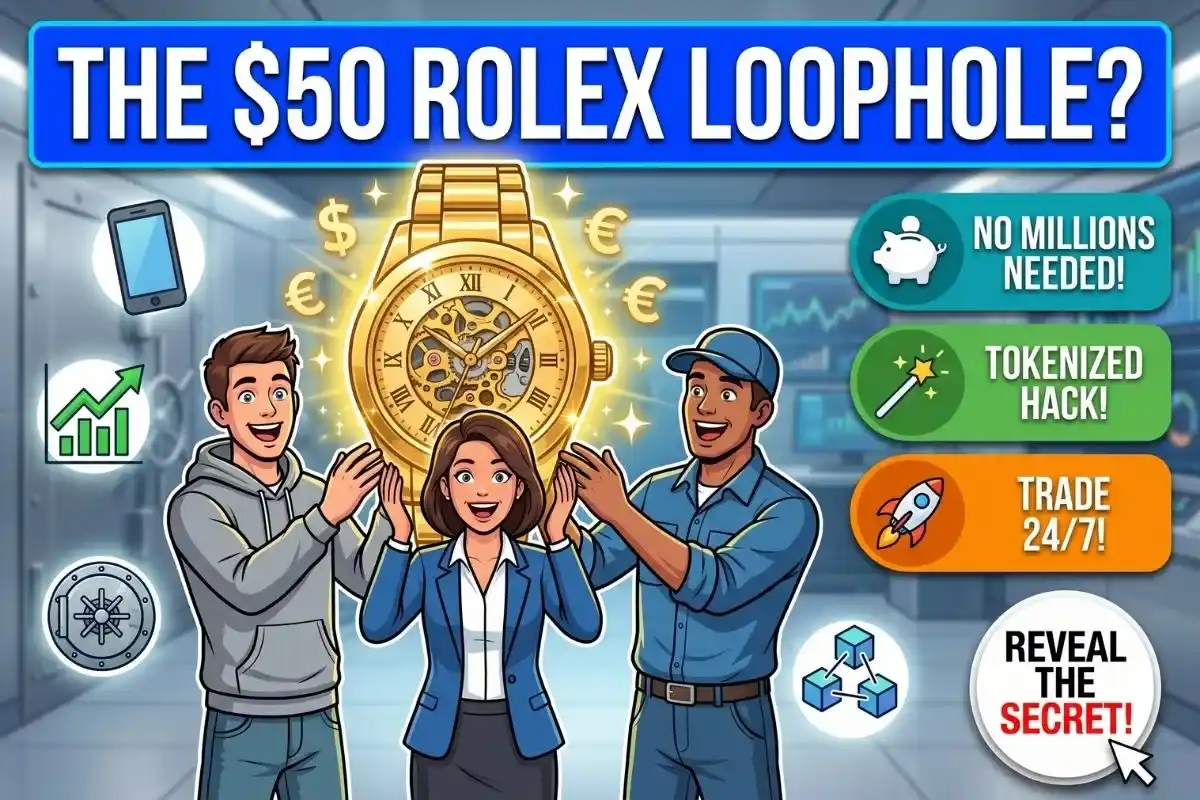
Imagine walking past a brightly lit boutique, your eyes catching the unmistakable gleam of a rare Rolex Daytona. For decades, owning such a masterpiece was a privilege reserved strictly for the ultra-wealthy, a closed club where the price of admission was often a small fortune. But as we navigate through the spring of 2026, the financial landscape has drastically shifted, tearing down these invisible velvet ropes. You no longer need to be a millionaire to have a stake in the world’s most coveted timepieces. A quiet but powerful revolution is currently unfolding on digital exchanges around the globe, fundamentally changing who gets to participate in high-end collecting. This is the fascinating world of tokenized watches, a modern financial innovation that is turning everyday enthusiasts into bona fide luxury investors.
To truly understand this growing trend, we first need to unpack exactly what tokenized watches are and how they function in the real world. At its absolute core, tokenization is the process of taking a physical asset—in this case, a high-value mechanical watch—and dividing its ownership into thousands of digital shares, much like how a company issues stock to the public. Each of these digital shares is represented by a unique token on a blockchain, ensuring complete transparency and security for the investor. Instead of dropping fifty thousand dollars on a single vintage Patek Philippe, you can now invest five hundred dollars to own a verified, legally binding fraction of that exact same watch. The physical timepiece itself is stored securely in a climate-controlled, insured vault, while you hold the digital proof of your fractional ownership in your personal digital wallet.
This dramatic shift is primarily being driven by a broader macroeconomic movement toward alternative assets, a category that has exploded in popularity over the last few years. Traditional investment vehicles like stocks and bonds have become increasingly unpredictable, prompting savvy investors to seek out tangible goods that historically hold or increase their value over time. Fine art, rare cars, and vintage wine have always been popular, but watches offer a unique blend of global liquidity, passionate collector communities, and historical price resilience. As we look at the broader trends defining luxury investing 2026, it is incredibly clear that investors are no longer satisfied with standard portfolios. They want investments that are insulated from sudden stock market crashes, and historically, the luxury watch market has demonstrated a remarkable ability to weather severe economic storms. For more context on how non-traditional investments are categorized, you can explore Wikipedia’s detailed entry on Alternative Investments, which highlights the growing appeal of these tangible asset classes.
You might be wondering why April, specifically, has become such a massive catalyst for the sudden influx of capital into fractional luxury assets. Historically, the spring season is synonymous with major global watch fairs, most notably the Watches and Wonders event held annually in Geneva, Switzerland. During these highly anticipated industry showcases, legendary brands unveil their newest creations, and consequently, discontinued models suddenly spike in value on the secondary market. Smart money anticipates this predictable seasonal volatility. By buying fractions of iconic, out-of-production watches right before or during these major announcements, investors position themselves to benefit from the immediate surge in collector demand. When a brand announces that a beloved model is being retired, the tokenized shares of that specific watch almost immediately reflect the heightened market panic and excitement, allowing fractional owners to capitalize on the cultural moment.
Of course, the entire premise of buying tokenized watches hinges completely on the unshakeable security of the underlying technology and the legal frameworks protecting the investors. When a luxury watch is selected for tokenization, it undergoes a rigorous, multi-step authentication process conducted by independent, world-renowned horological experts. Once verified, the watch is legally transferred to a specialized trust or corporate entity created solely to hold that specific asset. The blockchain technology then acts as an immutable, publicly verifiable ledger, recording every single transaction, trade, and change of hands with absolute cryptographic certainty. This completely eliminates the terrifying risk of purchasing counterfeit goods, which has long been the bane of the traditional secondary watch market. If you are curious about the underlying mechanisms of these digital ledgers, Wikipedia’s comprehensive overview of Blockchain technology provides excellent foundational knowledge on how these decentralized databases maintain such high levels of security.
Ultimately, what we are witnessing is the profound democratization of wealth generation, breaking down barriers that have existed for centuries. For generations, the middle class was effectively locked out of the most lucrative and stable alternative assets simply due to the incredibly high capital requirements needed to play the game. Tokenization completely destroys this barrier to entry, allowing someone with a modest disposable income to build a highly diversified portfolio of world-class luxury items. You could theoretically own a fraction of a Rolex Submariner, a piece of an Audemars Piguet Royal Oak, and a sliver of a Richard Mille, all for less than the cost of a standard weekend vacation. This unprecedented level of access is fundamentally rewriting the rulebook of luxury investing 2026, forcing traditional auction houses and legacy dealers to rapidly adapt to a world where the collective purchasing power of the crowd often rivals that of the individual billionaire.
Traditional vs. Tokenized Watch Investing
| Feature | Traditional Watch Investing | Tokenized Watch Investing |
| Barrier to Entry | Very High ($10,000+ minimum) | Very Low ($50 – $100 minimum) |
| Storage & Insurance | Owner’s responsibility (costly and risky) | Handled by the platform (stored in secure vaults) |
| Liquidity | Low (takes time to find a buyer and authenticate) | High (digital shares traded 24/7 on secondary markets) |
| Authentication | Buyer must verify independently to avoid fakes | Pre-authenticated by experts before tokenization |
| Diversification | Difficult (requires immense capital to buy multiple watches) | Easy (buy small fractions of many different models) |
Frequently Asked Questions
What happens if the physical watch gets stolen or damaged? Because the physical timepieces are legally bound to the digital tokens, the platforms that manage these assets take extraordinary precautions. The watches are stored in high-security, military-grade vaults that are climate-controlled to prevent any degradation. Furthermore, every single asset is fully insured for its maximum market value. In the highly unlikely event of a theft or natural disaster, the insurance policy pays out, and the fractional owners are reimbursed based on the number of digital shares they hold in their wallets.
Can I ever wear the watch I own a fraction of? In the vast majority of cases, the answer is no. The primary purpose of tokenized watches is strictly financial investment, not personal fashion. To preserve the mint condition and maximum value of the asset, the watch must remain securely locked in the vault. If thousands of fractional owners took turns wearing a vintage Rolex, the wear and tear would instantly destroy its investment value. You are buying the financial performance of the asset, not the physical utility of wearing it to a dinner party.
How do I actually sell my digital shares and cash out? Selling your shares is arguably the easiest part of the entire process, resembling the experience of selling a stock on a mobile brokerage app. Most platforms that issue these digital shares also host their own secondary trading markets. You simply list your shares at your desired price, and when another user purchases them, the funds are instantly deposited into your account. Because these markets operate globally on blockchain technology, you can trade your fractions 24 hours a day, 7 days a week, without waiting for an auction house to open.
The Curiosity of Time: A Final Thought
It is wonderfully ironic to think about how our relationship with timepieces has evolved over the centuries. In the 18th century, legendary watchmaker Abraham-Louis Breguet invented the “tourbillon” to counter the effects of gravity on pocket watches, striving for ultimate mechanical perfection for his royal clients. Fast forward to today, and we are using complex digital algorithms and decentralized networks to counter the effects of economic inflation, using those very same mechanical masterpieces as our financial shields.
Tokenized watches represent a fascinating bridge between the oldest traditions of meticulous human craftsmanship and the absolute cutting edge of modern financial technology. By turning a gear-driven mechanical object into a liquid digital asset, we have created a completely new way to appreciate horology. You no longer need to wear a crown to own a piece of history; you simply need a smartphone and a basic understanding of where the future of collecting is headed. As we progress deeper into the year, it is highly likely that this fusion of technology and tradition will only continue to accelerate, reshaping our portfolios one tick at a time.