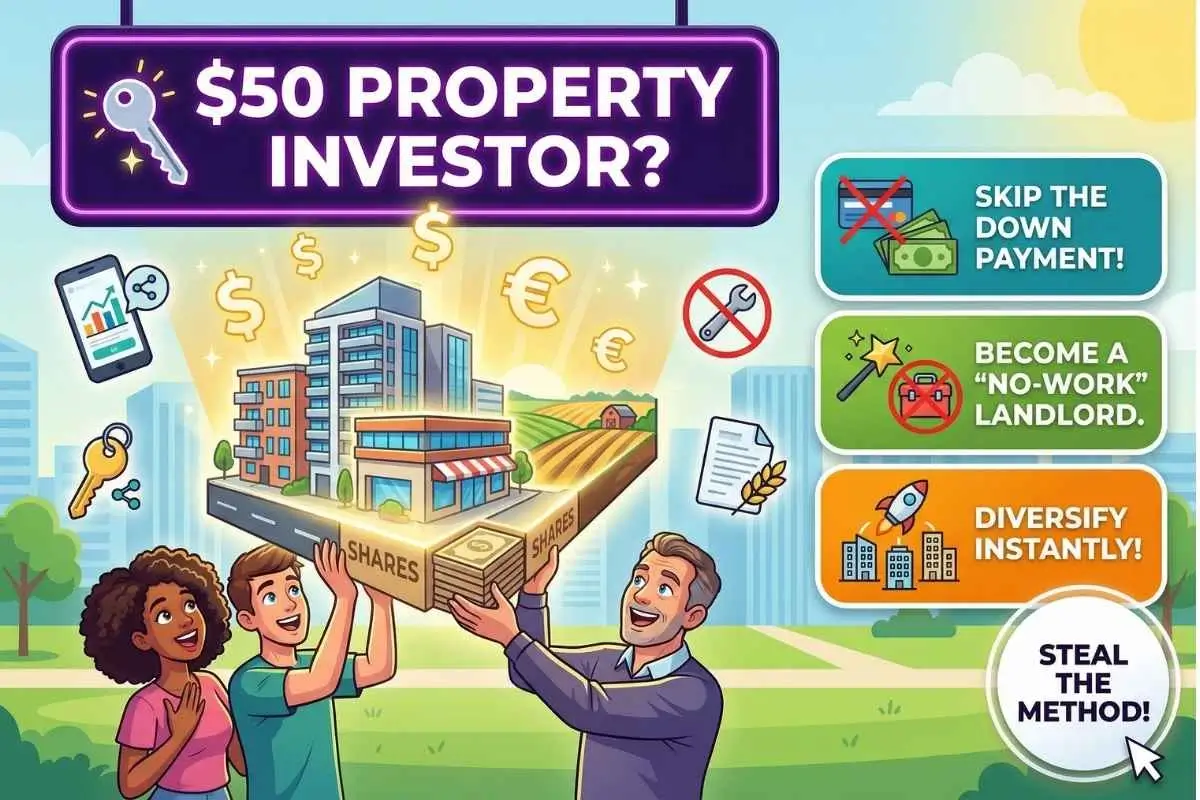
Have you ever driven past a stunning, newly renovated apartment complex or a charming vacation home and thought, “I wish I could own a piece of that”? For most of modern history, investing in real estate was a VIP club with an incredibly high cover charge. You needed pristine credit, a mountain of cash for a down payment, and the willingness to take on significant debt. Today, however, technology and changing financial regulations have cracked that door wide open. Welcome to the era of fractional real estate, where a crisp fifty-dollar bill can theoretically make you a landlord. But is buying a micro-slice of a property the brilliant wealth-building hack it claims to be, or is it just another digital trend designed to separate you from your money? Let’s pull back the curtain and look at the honest realities of buying property by the share.
The Hidden Mechanics of Digital Landlording
To truly understand fractional real estate, you have to look past the slick marketing of modern investment apps and examine the underlying mechanics of how these transactions actually work in the real world. When you invest fifty dollars into a fractional property platform, you are not receiving a tiny, physical deed to a hallway closet or a square foot of front lawn. Instead, the platform creates a specific legal entity, typically a Limited Liability Company (LLC), whose sole purpose is to purchase and hold that single specific asset. As an investor, you are actually buying shares in that LLC, which in turn entitles you to a proportional share of any rental income generated by the property, as well as a share of the eventual profits if the property appreciates and is ultimately sold. This concept isn’t entirely new; it borrows heavily from the established framework of a Real estate investment trust (REIT), an investment vehicle that has existed for decades. However, while traditional REITs pool your money into a massive, anonymous fund containing hundreds of properties chosen by corporate managers, modern fractional investing allows you to scroll through an app, view photos of a specific duplex in Texas or a vacation cabin in Tennessee, and deliberately choose exactly where your money goes. It bridges the gap between the blind trust of a mutual fund and the hands-on control of traditional homeownership.
The Undeniable Perks of Micro-Investing
The undeniable appeal of fractional real estate lies in its incredible power to democratize wealth building, transforming a traditionally illiquid and exclusionary asset class into something highly accessible to the average retail investor. In the past, achieving true diversification in real estate meant needing millions of dollars to buy multiple properties across different cities to hedge against local economic downturns. Today, an investor with just a few hundred dollars can strategically spread their capital across a commercial building in Miami, a single-family rental in Ohio, and a short-term vacation rental in the Rocky Mountains. This diversification significantly lowers your geographic and market risk. Furthermore, fractional ownership completely eliminates the “terrible tenants and leaky toilets” aspect of property management. You are earning passive income without the midnight phone calls, the stress of evictions, or the unexpected thousands of dollars required to replace a broken HVAC system. The platform handles all the acquisitions, renovations, tenant screening, and daily management, allowing you to participate in the historical stability and appreciation of real estate while exerting no more effort than it takes to check a stock portfolio on your smartphone.
The Traps and Realities of Crowdsourced Property
However, it is absolutely crucial to understand that this modern convenience comes at a tangible cost, and the hidden traps of fractional real estate can easily devour your anticipated returns if you aren’t paying close attention. The biggest hidden risk is illiquidity. Unlike trading public stocks, where you can sell your shares in seconds if you need emergency cash, fractional real estate shares are notoriously difficult to unload. If you suddenly need your initial investment back, you cannot force the platform to sell the entire house. You must rely on the platform’s “secondary market”—if they even have one operational—to find another user willing to buy your specific shares. In a down economy, those buyers might completely vanish, leaving your money trapped for years. Additionally, investors must be hyper-vigilant about the fee structures. These platforms are profit-seeking businesses, and they make their money by charging sourcing fees when they buy the house, asset management fees while they run it, and disposition fees when they finally sell it. By the time the property managers, the platform developers, and the tax man take their cuts, your actual dividend yield might be substantially lower than the advertised gross rental income. It is always highly recommended to consult resources provided by regulatory bodies like the U.S. Securities and Exchange Commission (SEC) to understand the inherent risks of loosely regulated crowdsourced securities before committing your capital.
A Psychological Shift in Wealth Building
When you carefully weigh the mechanics alongside the pros and cons, it becomes vividly clear that fractional real estate is driving a massive psychological shift in how younger generations approach personal finance and long-term planning. For younger demographics who have watched housing prices skyrocket far out of proportion to average wage growth, the traditional “American Dream” of owning a sprawling home with a white picket fence feels increasingly out of reach. Fractional investing offers a psychological lifeline, a realistic way to participate in the market and combat inflation without having to save for a decade just to afford a standard twenty percent down payment. It radically changes the narrative from “I can’t afford to invest in real estate” to “I can afford a small piece today.” This psychological victory is powerful because it encourages the vital habit of consistent, long-term investing. A young professional might substitute a weekly expensive coffee habit with buying a few shares of a rental property every month. Over time, through the magic of compounding dividends and property appreciation, those small, seemingly insignificant micro-investments can snowball into a surprisingly robust portfolio, provided the investor has the patience to let the investments mature over a five-to-ten-year horizon.
Comparing Your Real Estate Options
To help clarify where fractional investing fits into the broader financial landscape, here is a breakdown of how it compares to traditional property ownership and public REITs:
| Feature | Fractional Real Estate App | Traditional Real Estate | Public REITs |
| Entry Cost | Very Low ($10 – $100) | Very High (20% Down Payment) | Low (Price of one stock share) |
| Liquidity | Low (Tied to platform secondary markets) | Very Low (Takes months to sell a house) | High (Traded daily on the stock market) |
| Asset Control | You choose specific properties, but have no management say | You have total control over all decisions | You buy a blind fund managed by a corporation |
| Time & Effort | Completely Passive | Highly Active (Unless hiring property managers) | Completely Passive |
| Diversification | Easy to diversify with small amounts of capital | Difficult; requires massive capital | Instant diversification across a broad portfolio |
The Curiosity: Owning a Slice of the Farm
When most people think of fractional real estate, they picture modern apartments or sleek vacation homes. But the fractional model is rapidly expanding into fascinating, non-traditional territories. Did you know you can now buy fractional shares of agricultural farmland?
Because the global population is growing and arable land is shrinking, farmland is historically one of the most stable, inflation-resistant asset classes in the world. Previously restricted to massive corporate agriculture conglomerates or multi-generational farmers, new platforms now allow you to buy $100 shares of a soybean farm in Iowa or an almond orchard in California. You earn dividends from the annual crop yields and the long-term appreciation of the dirt itself. It’s a compelling reminder that the “real” in real estate doesn’t just mean buildings—it means the earth itself.
Frequently Asked Questions (FAQ)
1. How do taxes work with fractional real estate? Because you are typically buying shares in an LLC, you are treated as a partner in a business. During tax season, the platform will usually issue you a Schedule K-1 form instead of a standard 1099. A K-1 reports your share of the property’s income, deductions, and depreciation. It can make filing your taxes slightly more complex, so consulting a tax professional is recommended.
2. What happens if the fractional investing platform goes bankrupt? This is a vital question. Legitimate platforms structure their investments so that the LLCs owning the properties are legally separate from the platform’s corporate entity (often called being “bankruptcy remote”). If the app developer goes out of business, the property itself isn’t liquidated to pay the app’s debts. A new manager would theoretically be appointed to oversee the LLC and the property.
3. Do I have any say in when the property is sold? Generally, no. When you buy into a fractional property, you agree to the sponsor’s business plan. The management team decides when to renovate, who to rent to, and ultimately when to sell the property based on market conditions. You are trading control for convenience.
4. Are the dividends guaranteed? Absolutely not. Just like owning a physical rental property, if the tenant stops paying rent, the roof caves in, or the local market crashes, the property may not generate a profit. If there are no profits, there are no dividends distributed to the shareholders.