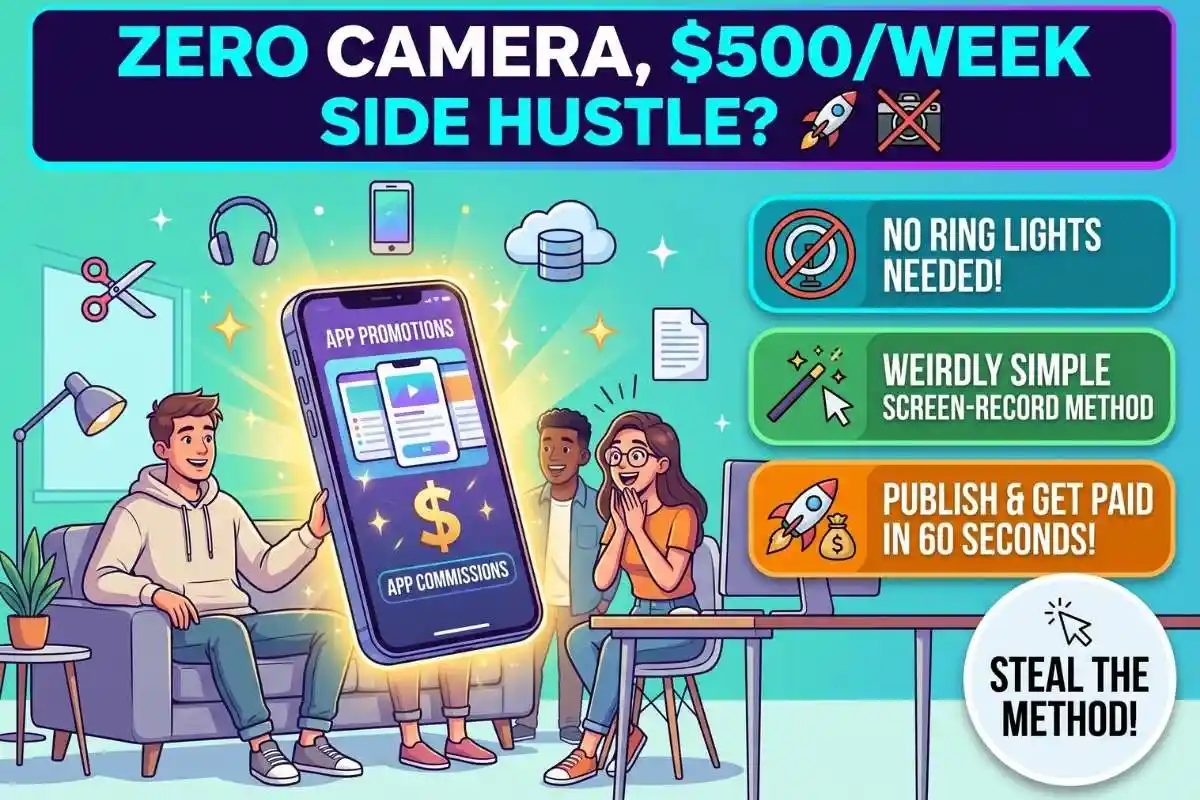
Picture this: It is a quiet Tuesday evening, and instead of setting up ring lights, applying camera-ready makeup, or memorizing complex dance choreography, a twenty-four-year-old college student is lounging on their couch quietly recording their smartphone screen. They open a clever budgeting utility, tap through three satisfying visual features, and overlay a simple synthetic voice explaining how the tool saved them forty dollars on groceries. Sixty seconds later, the clip is published to an anonymous account with zero personal branding. By Friday afternoon, that single clip has racked up two hundred thousand views, driving hundreds of scrollers to a download link in the bio—and depositing five hundred dollars in commissions directly into the creator’s bank account. Welcome to the era of faceless software promotion.
The Shift From Influencer To Screen Recorder
For years, conventional internet wisdom dictated that building a profitable social media presence required becoming a public personality. You needed unrelenting charisma, thick skin for comment sections, and an expensive production studio. However, discovery algorithms powering platforms like TikTok have fundamentally rewired the attention economy. Today, the algorithm prioritizes viewer retention and visual curiosity over celebrity recognition. This shift has birthed the faceless app promoter: a digital marketer who acts purely as a curator of utility. By focusing entirely on showcasing intriguing mobile applications—ranging from AI wallpaper generators and specialized sleep trackers to hidden productivity widgets—these creators bypass camera anxiety entirely. They let the software’s user interface do the heavy lifting, proving that solving a specific digital annoyance is far more lucrative than personal fame.
The Attention Economics Behind The Payouts
To understand why simple screen recordings generate hundreds of dollars weekly, you have to look at customer acquisition costs in the booming software industry. Mobile app developers and software-as-a-service startups face brutal competition in traditional advertisement auctions. Instead of burning tens of thousands of dollars on banner advertisements that users instinctively ignore, these companies turn to performance-based affiliate marketing and cost-per-install networks. When a faceless creator demonstrates an app’s core value in an authentic video format, viewers do not feel like they are watching a commercial; they feel like they discovered a digital life hack. Software brands gladly pay creators anywhere from two to eight dollars for every verified download, or offer recurring revenue shares up to thirty percent, creating an exceptionally profitable loop.
The Three-Step Production Anatomy
Executing a high-converting faceless promotion relies on a repeatable creative formula rather than artistic genius. First comes the hook, which must visually arrest the viewer within the opening two seconds—typically achieved by zooming in on a satisfying mobile interface animation or displaying a bold text overlay like, “The free app Apple secretly wishes you didn’t know about.” Second is the demonstration phase, where the creator rapidly navigates the app to solve a tangible problem, cutting out boring loading screens or redundant clicks to maintain rapid pacing. Finally, the video concludes with an effortless call to action directing viewers to a landing page. Because this process requires no physical setup or lighting adjustments, practitioners routinely batch-produce ten or fifteen micro-promotions in a single afternoon session.
Comparing Top App Categories For Promoters
While almost any software can be marketed online, certain application archetypes consistently yield higher conversion rates and superior creator payouts. Selecting the right vertical is critical because viewer intent varies wildly across different corners of the internet. For instance, highly visual utilities generate immediate curiosity, whereas financial tools require more nuanced framing. Experienced promoters treat category selection like an investment portfolio, balancing high-volume, low-friction mobile downloads against higher-paying software subscriptions. The comparison breakdown below illustrates how established faceless promoters evaluate distinct software categories before committing their scriptwriting and editing energy.
| App Category | Primary Hook Angle | Typical Payout Model | Difficulty To Convert |
| Productivity & Utilities | “Save 10 hours a week with this widget” | $2.00 – $5.00 CPI | Low (Broad appeal) |
| Personal Finance | “How I track hidden subscription drains” | $10.00 – $25.00 CPA | Medium (Requires trust) |
| AI & Photo Editing | “Turn blurry photos into studio headshots” | 20% – 30% Rev-Share | Low (Highly visual) |
| Health & Fitness | “The lazy way to track daily water intake” | $3.00 – $7.00 CPI | Medium (Saturated niche) |
Navigating Compliance And Algorithmic Longevity
As lucrative as faceless app promotion has become, sustaining a five-hundred-dollar weekly baseline requires strict adherence to platform rules and consumer transparency laws. Regulatory bodies like the Federal Trade Commission (FTC) mandate that creators clearly disclose any financial incentives or affiliate relationships when endorsing a commercial product. Savvy promoters seamlessly integrate clean ad tags directly into their video captions and utilize native platform disclosure toggles. Furthermore, long-term success demands protecting your account from algorithmic suppression. Algorithms quickly penalize accounts that post repetitive, low-effort slideshows or misleading clickbait. By continuously refreshing visual footage, utilizing human-sounding voiceovers rather than robotic monotone generators, and promoting genuinely functional applications, creators build sustainable digital assets that survive inevitable algorithmic updates.
Frequently Asked Questions
Do I need thousands of followers to start making money with app promotions?
No, your starting follower count is largely irrelevant for this specific side hustle model. Because modern short-form video platforms distribute content based on individual video engagement metrics rather than existing subscriber counts, a brand-new account with zero followers can easily reach hundreds of thousands of viewers on its very first upload. As long as your link-in-bio hub is properly configured before posting and your visual hook successfully retains viewers through the opening seconds, software downloads and commission tracking occur completely independently of your established account authority.
Where do creators actually find these mobile apps to promote?
Most independent promoters source verifiable offers through specialized digital affiliate networks such as Impact, PartnerStack, or dedicated mobile performance marketplaces that directly connect software startups with content creators. Additionally, many indie software developers embed transparent referral programs right inside their application settings menus. Resourceful creators also scout trending software hashtags to identify emerging utility tools that currently lack widespread marketing campaigns, frequently pitching founders via email to negotiate exclusive cost-per-install tracking links or higher recurring commission tiers. This proactive outreach yields great margins.
Isn’t the faceless promotion niche becoming too saturated?
While low-effort, purely automated spam content is certainly flooding social feeds, thoughtful software curation remains an exceptionally underserved market. Thousands of innovative mobile applications and digital tools launch across global app stores every single month, creating a perpetually renewing supply of fresh products desperate for user attention. Creators who invest effort into structuring engaging problem-solving narratives, capturing crisp high-definition screen footage, and maintaining authentic pacing consistently outperform robotic competitors and secure reliable viewer trust. The demand for genuine digital recommendations continues growing steadily across all demographics.
How much time does it take to maintain a $500/week workflow?
Once your initial digital infrastructure—such as link-in-bio landing pages and video editing templates—is fully established, maintaining a five-hundred-dollar weekly baseline requires roughly five to seven hours of focused effort per week. Top-performing operators rely heavily on structured batch-production routines. They typically dedicate two hours on a Saturday afternoon to scouting software utilities and writing conversational script hooks, followed by three or four hours on Sunday recording screen captures and assembling edits. This streamlined system provides enough scheduled uploads to sustain consistent daily web traffic.
The Final Takeaway: Attention Is The New Real Estate
Ultimately, the meteoric rise of faceless TikTok app promotion proves that digital entrepreneurship is becoming more democratic than ever before. You no longer need pedigree, startup capital, or extroverted star power to claim your slice of the multi-billion-dollar mobile software market. By understanding the fundamental desires of everyday smartphone users—the urge to save time, organize digital clutter, or unlock creative superpowers—anyone armed with a screen recorder can transform idle scrolling time into a highly lucrative revenue stream. The weirdest part of this entire phenomenon is not how much money these quiet accounts are generating; it is simply how long most people will continue scrolling past them without realizing they could be the ones recording the screen.