
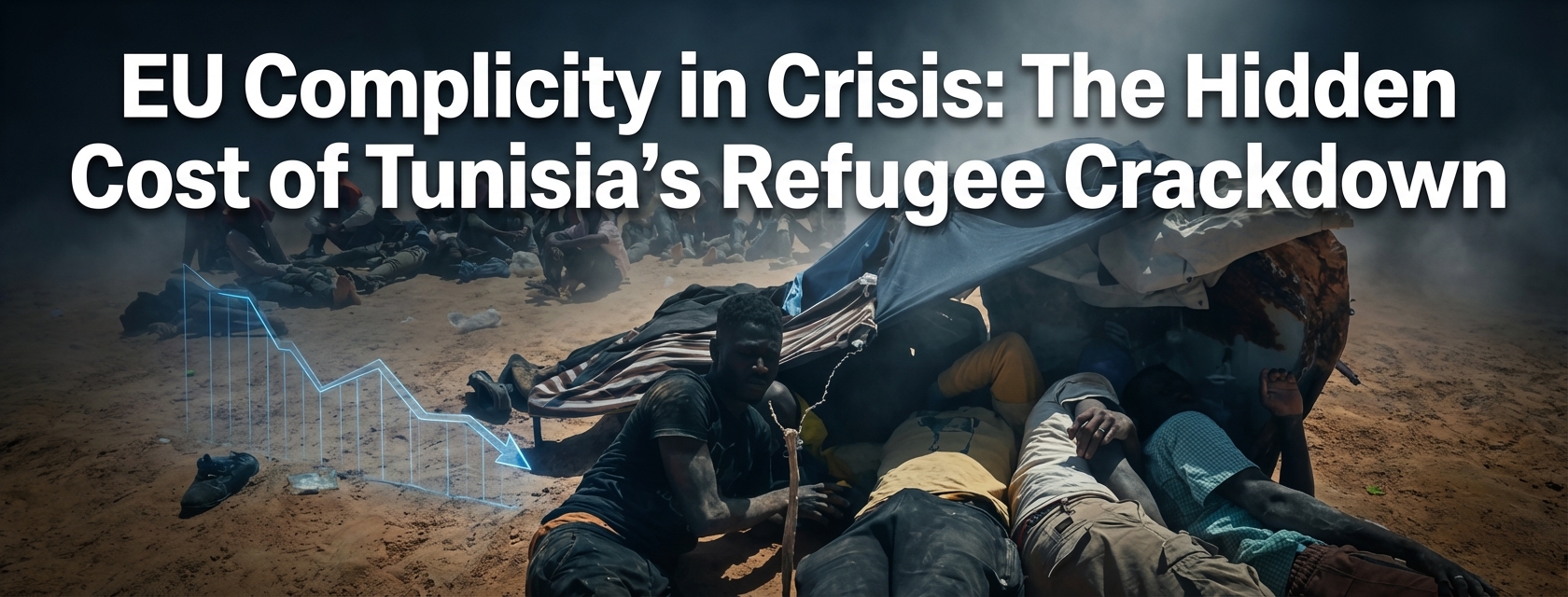
The Dangerous Shift in Tunisian Migration Policy Exposed
The financial and geopolitical maneuvering surrounding migration control in North Africa has reached a critical juncture, one where humanitarian catastrophe is being willfully ignored in favor of border security metrics. A startling new report from Amnesty International lifts the veil on the systemic dismantling of protections for refugees and migrants within Tunisia over the last three years. This is not merely a local governance failure; it represents a profound ethical and legal crisis, one in which the European Union risks becoming deeply complicit through continued financial and institutional cooperation.
The core of the issue stems from a dangerous escalation in racist policing and widespread human rights abuses directed particularly at Black refugees and migrants. Authorities, fueled by explicit, high-level racist rhetoric, have escalated tactics to include targeted arrests, reckless interceptions at sea involving violence, and mass collective expulsions to unstable neighboring nations like Algeria and Libya. The situation has deteriorated so severely that the solitary avenue for seeking asylum in the country, the UN Refugee Agency’s role in processing claims, was abruptly ended in June 2024\. This systemic rollback directly contravenes established international norms, yet EU cooperation continues unabated, creating a damning scenario where external funding props up internal oppression.
The implications for global governance are vast. When multinational blocs prioritize perceived immediate gains—namely, reduced irregular arrivals—over verifiable human rights benchmarks, the entire architecture of international law weakens. This economic calculus, prioritizing containment over protection, is an editorial flashpoint because global markets, investment stability, and soft power projection rely fundamentally on predictable adherence to human rights standards. When those standards are jettisoned for expediency, the volatility trickles down to every sector.
The EU’s Risky Bet: Containment Over Human Rights Safeguards
The relationship between the European Union and Tunisia regarding migration is structured around an agreement that observers, including the European Ombudsman, have flagged as dangerously deficient. The Memorandum of Understanding signed in July 2023 conspicuously lacks transparent pre-assessment, crucially missing independent monitoring mechanisms and, perhaps most damningly, any robust, explicit suspensive clause that would mandate a halt to cooperation upon documented violations. The EU’s strategy appears overwhelmingly focused on stemming flows toward its own shores, accepting the cost borne by vulnerable populations trapped inside Tunisian territory.
Evidence meticulously gathered by Amnesty International paints a picture of an asylum system designed to punish rather than protect. Arbitrary detentions are commonplace, with testimonies revealing systematic racial profiling following inflammatory official statements made as early as February 2023\. Furthermore, the crackdown extends beyond migrants; civil society organizations providing essential aid have faced severe repression. At least eight NGO workers and former local officials have been arbitrarily detained since May 2024, effectively creating a humanitarian vacuum where protection mechanisms once existed. The chilling effect on aid delivery alone constitutes a major systemic failure.
The economic support channeled through these agreements—funding for the Tunisian coastguard’s search-and-rescue capacity and border management equipment—places the contributing nations directly in the line of legal and ethical scrutiny. When coastguard actions involve life-threatening maneuvers, batons, and the denial of individualized protection assessments, the use of EU-provided resources becomes inherently problematic. The reported reduction in sea arrivals is presented by some European officials as a success narrative, but this metric is built upon a foundation of documented torture, sexual violence, and collective expulsions, a business model that prioritizes optics over people.
Historical Echoes: Lessons From Failed Migration Pacts
This scenario bears chilling resemblance to previous geopolitical pacts where European security interests clashed violently with human rights obligations. The infamous cooperation framework with Libya serves as the most immediate and tragic historical parallel. In that arrangement, substantial EU support flowed to Libyan forces, who then subjected migrants and refugees to what a UN fact-finding mission characterized as crimes against humanity, including systemic torture and cruel detention conditions. Despite the horrific outcomes, the incentive structure—reducing headline numbers of arrivals—encouraged the continuation, adaptation, and obfuscation of the arrangement.
Moreover, parallels can be drawn to past diplomatic compromises concerning authoritarian regimes where immediate stabilization was valued above long-term democratic or human rights progression. When powerful international partners signal that certain transactional goals supersede bedrock principles, it grants internal hardliners the political cover necessary to intensify repression. The dismantling of the UNHCR’s role echoes historical moments when states have sought to assert complete sovereign control over status determination, usually to limit entry rather than ensure protection.
We must examine the precedent set by similar agreements across the Mediterranean rim. Often, these deals are hastily structured, driven by urgent political cycles rather than measured legal due diligence. The resulting fragility means that as soon as the political alignment shifts internally within the partner nation, the humanitarian fallout becomes exponentially worse. Tunisia’s current trajectory suggests policymakers are repeating the foundational error: assuming stable governance and reliable commitment to international law in the pursuit of immediate border control victories.
The Mechanisms of Abuse: Collective Expulsions and Desert Dumping
The most extreme manifestation of Tunisia’s policy shift involves mass collective expulsions, a clear violation of the principle of non-refoulement which forbids returning individuals to territories where their lives or freedom would be threatened. Amnesty International documented at least 70 such expulsions involving over 11,500 people between mid-2023 and mid-2025\. These actions are not orderly removals; they frequently involve security forces dumping desperate individuals, including families, pregnant women, and children, in remote desert boundaries near Algeria or Libya.
The aftermath of these desert abandonments is horrifying. Victims are often left without food, water, or their means of communication, having had identification and money confiscated. Along the Libyan border, these acts directly facilitated handover to militias operating abusive detention centers. Near the Algerian border, those forced back often face perilous weeks-long treks. Testimonies include accounts of Tunisian officers instructing groups to either “swim or run to Libya,” followed by confiscation of smashed phones, evidence of state-sanctioned callousness.
Compounding the trauma, direct physical abuse by security forces during interceptions or detention has been documented, including beatings with clubs, iron pipes, and even the deployment of dogs. More sickeningly, researchers documented at least 14 incidents of rape and sexual violence committed by security forces during these operations or abusive strip-searches. For a nation involved in high-level diplomatic frameworks, such documented brutality represents an almost unimaginable operational breakdown and cultural endorsement of violence against the vulnerable, a reality that should immediately trigger suspension clauses in any international agreement.
The Psychology of Complicity and Market Perception
From a viral financial journalism perspective, the psychology underpinning the EU’s decision-making is key. The immediate gratification of reporting lower irregular migration figures offers tangible, albeit temporary, political capital for leaders facing domestic pressure. This short-term political accounting systematically undervalues the long-term risk associated with reputational damage and potential litigation resulting from complicity in gross human rights violations. No matter the temporary stability gained, the scandal surrounding exploitation eventually bubbles up, impacting international investor confidence and cross-border trade stability.
Furthermore, the very targeting of civil society actors in Tunisia—the imprisonment of those who document and assist—signals a severe deterioration of the rule of law that transcends migration politics. This repression against NGOs providing critical support suggests a broader authoritarian drift, a factor that sophisticated international investors monitor closely as it increases sovereign risk across multiple domains, including contract enforcement and regulatory unpredictability. The ability of organizations to operate freely is a fundamental metric of a stable business environment.
The silence from the EU regarding these abuses is perceived globally not as neutrality, but as tacit approval. This sends a powerful signal to any nation currently entangled in migration control partnerships: human rights language is disposable when security objectives are in play. This erosion of global norms encourages other actors to test boundaries, creating a ripple effect of instability that financial markets inherently dislike. This editorial perspective emphasizes that the short-term ‘win’ on sea arrivals is masking a critical systemic loss of international legal standing.
Future Trajectories: Three Scenarios for Tunisia’s Cooperation Framework
Looking ahead, the trajectory of the EU-Tunisia relationship on migration control suggests three primary, yet starkly different, pathways. The first and most disastrous scenario involves Continuation Without Consequence. Under this model, the documented evidence is acknowledged publicly by Brussels but fails to trigger any meaningful suspension of funding or technical assistance. The current containment policy remains the priority, leading to further consolidation of repressive tactics within Tunisia and virtually guaranteeing that severe abuses will continue and even escalate as authorities feel emboldened.
The second, arguably more hopeful scenario, is the Immediate Rights-Based Pivot. This pathway requires the EU to heed the urgent call to suspend all assistance aimed purely at containment and immediately shift directives to enforcing clear, enforceable human rights benchmarks. This would involve external monitoring mechanisms being embedded and given power to initiate automatic funding halts upon verified violations, forcing Tunisian authorities to reverse collective expulsions and restore asylum pathways, including releasing detained NGO staff. This would acknowledge that \*\*Al Ahly FC\*\*—or any partner—cannot operate outside the bounds of guaranteed human rights oversight.
The third possibility involves a Geopolitical Realignment and Crisis Escalation. If the Tunisian government continues its rollback without restraint, and the EU remains paralyzed by internal division or short-term political anxiety, the situation may degrade into a human rights catastrophe so severe that it forces an external intervention or a massive, uncontrolled movement of people destabilizing the entire region. This crisis would inevitably lead to the collapse of the current cooperation mechanism under public and international outcry, resulting in a far messier and more expensive cleanup operation than proactive engagement would have required.
The urgency demanded by reports detailing rape, torture, and calculated abandonment underscores that this is not merely a political negotiation; it is an immediate safety crisis requiring decisive ethical action. The continued flow of funding without verifiable and forceful safeguards effectively makes the European bloc a financial partner in the oppression witnessed gripping Tunisia. The world, and the financial sector that tracks every fracture in global governance, is watching to see if compliance is ultimately weighted against recorded human dignity.
FAQ
What specific report fuels the claims regarding the dismantling of refugee protections in Tunisia?
The claims are based on a startling new report from Amnesty International which details the systemic dismantling of protections for refugees and migrants over the last three years. This documentation exposes widespread human rights abuses and racist policing tactics employed by authorities.
What is the core ethical crisis concerning the European Union’s role in Tunisia’s migration policy?
The core crisis is the EU’s potential complicity fostered by continuing financial and institutional cooperation despite documented systemic human rights violations. The EU risks propping up internal oppression by prioritizing border security metrics over verifiable human rights benchmarks.
When did the solitary avenue for seeking asylum through the UN Refugee Agency officially end in Tunisia?
The role of the UN Refugee Agency (UNHCR) in processing asylum claims within Tunisia was abruptly ended in June 2024. This systemic rollback directly contravenes established international norms for asylum seekers.
How does the EU-Tunisia Memorandum of Understanding (MoU) signed in July 2023 fail regarding independent oversight?
The MoU conspicuously lacks transparent pre-assessment and crucially misses independent monitoring mechanisms to ensure compliance. Alarmingly, observers note it also lacks a robust, explicit suspensive clause to halt cooperation upon documented violations.
What specific actions have Tunisian authorities taken against Black refugees and migrants fueled by high-level racist rhetoric?
Tactics have escalated to include targeted arrests, reckless interceptions at sea involving violence, and mass collective expulsions to unstable nations like Algeria and Libya. Testimonies also reveal systematic racial profiling following official statements made as early as February 2023.
What is the legal principle that mass collective expulsions violate, and how many people have been affected?
Mass collective expulsions violate the principle of non-refoulement, which forbids returning individuals to territories where their freedom is threatened. Amnesty International documented at least 70 such expulsions involving over 11,500 people between mid-2023 and mid-2025.
What are the documented consequences for individuals abandoned in remote desert boundaries near Algeria or Libya?
Victims are frequently left without food, water, or communication means after having identification and money confiscated. In the Libyan border areas, these abandonments have directly facilitated handover to militias operating abusive detention centers.
Beyond migrants, which other groups have faced severe repression in Tunisia related to the crackdown?
Civil society organizations that provide essential aid and documentation have faced severe repression. At least eight NGO workers and former local officials have been arbitrarily detained since May 2024, creating a humanitarian vacuum.
What sickening abuses, documented by researchers, have been committed by security forces during interceptions or abusive strip-searches?
Researchers documented instances of physical abuse including beatings with clubs, iron pipes, and the deployment of dogs during operations. More severely, at least 14 incidents of documented rape and sexual violence committed by security forces were recorded.
What immediate legal and ethical scrutiny do EU-provided resources face when used by the Tunisian coastguard?
EU funding for the coastguard’s capacity is problematic when their actions involve life-threatening maneuvers, batons, and the denial of individualized protection assessments. The use of this equipment is directly tied to documented torture and collective expulsions.
What historical parallel does the EU-Tunisia arrangement bear chilling resemblance to regarding migration control?
The arrangement strongly resembles the infamous cooperation framework with Libya, where substantial EU support enabled Libyan forces to subject migrants to conditions characterized as crimes against humanity. Despite horrific outcomes, the incentive structure of reducing headline arrivals encouraged the continuation of that pact.
How does the repression against documenting NGOs signal a broader risk to international investors?
The targeting of civil society signals a severe deterioration of the rule of law and a broader authoritarian drift within the country. Sophisticated international investors monitor this closely as it increases sovereign risk across domains like contract enforcement and regulatory predictability.
From a financial journalism perspective, what is the short-term political justification for the EU’s current containment strategy?
The immediate gratification comes from reporting lower irregular migration figures, which provides tangible political capital for European leaders facing domestic electoral pressures. This short-term accounting systematically undervalues long-term reputational and legal risks.
What does the EU’s silence on documented abuses signal globally regarding its human rights commitments?
The silence is perceived globally not as neutrality but as tacit approval of the current operational reality in Tunisia. This sends a powerful signal to other partner nations that human rights language is disposable when security objectives are prioritized.
What precedent is set when powerful partners signal that transactional goals supersede bedrock international principles?
Signaling that transactional goals override bedrock principles grants internal hardliners the political cover necessary to intensify repression against vulnerable populations. This erosion encourages other actors to test the boundaries of international law.
Which official entity’s role dismantling echoes historical attempts by states to gain full sovereign control over status determination?
The dismantling of the UNHCR’s role echoes historical moments when states sought to assert complete sovereign control over asylum status determination. Such assertions are usually implemented with the intent of limiting entry rather than ensuring fundamental protection.
What is Scenario One for the future trajectory of the EU-Tunisia cooperation framework?
Scenario One is ‘Continuation Without Consequence,’ where documented evidence fails to trigger suspension of funding, allowing repressive tactics to consolidate. This virtually guarantees that severe abuses will continue and likely escalate.
What defines the ‘Immediate Rights-Based Pivot’ scenario (Scenario Two) for future EU action?
This scenario demands the EU immediately suspend all containment-focused assistance and shift directives to enforce clear, enforceable human rights benchmarks. It requires external monitoring with automatic funding halt power upon verified violations.
What is the potential outcome of Scenario Three: Geopolitical Realignment and Crisis Escalation?
If the EU remains paralyzed and the Tunisian rollback continues unrestrained, the situation could degrade into a human rights catastrophe forcing external intervention. This would result in a massive, uncontrolled movement of people destabilizing the entire region.
Why are agreements like the one with Tunisia often considered fragile regarding long-term stability?
These deals are often hastily structured, driven by urgent domestic political cycles rather than measured legal due diligence. This fragility means that the humanitarian fallout worsens exponentially when internal political alignments shift in the partner nation.
What is the ultimate risk that financial markets monitor concerning instability in governance partnerships like this one?
Financial markets track the systemic loss of international legal standing resulting from complicity in gross human rights violations. This erosion of global norms creates volatility and damages cross-border trade stability because governance becomes unpredictable.
