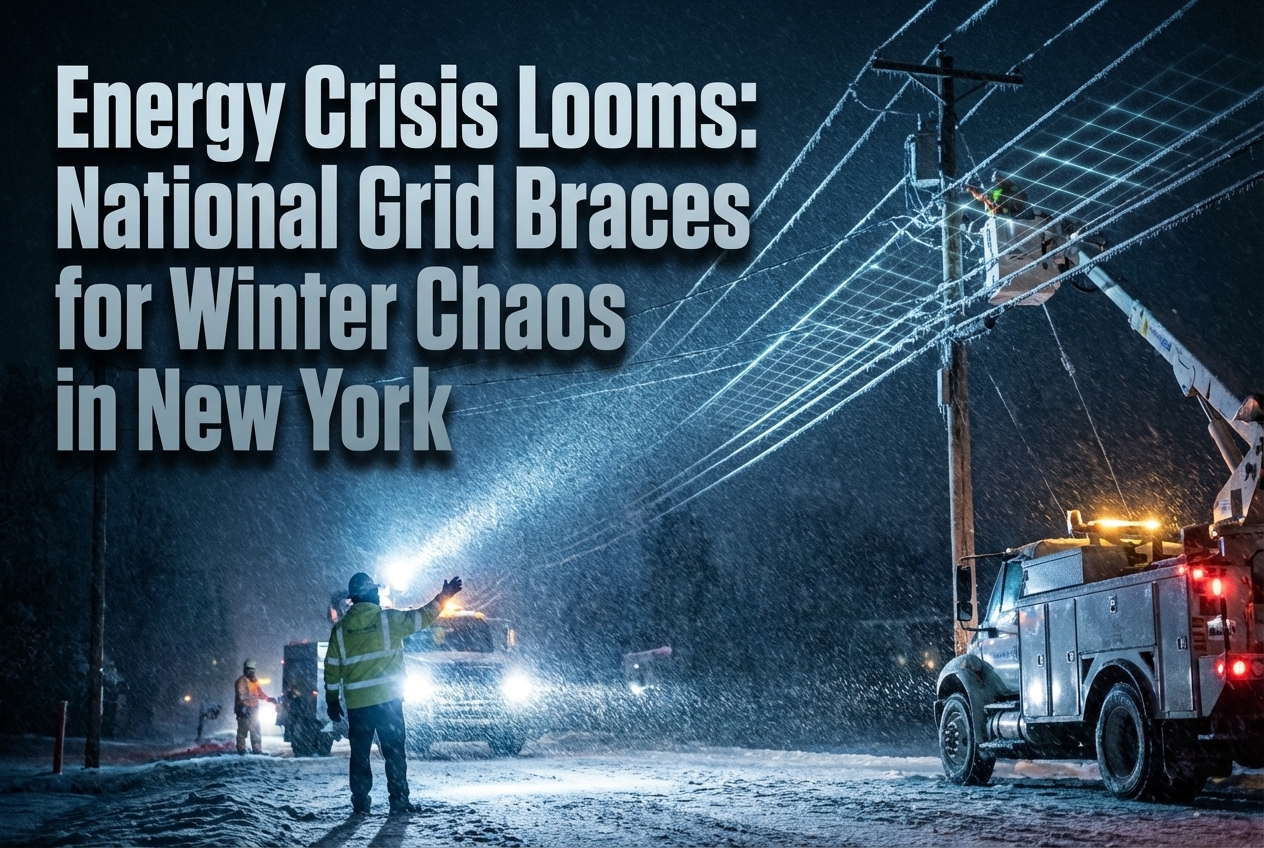
The annual dance between utility providers and Mother Nature is beginning in earnest, and this year the stakes feel dangerously high. National Grid, a critical artery for power distribution across vast swathes of the northeastern United States, is not just preparing for a winter storm; they are actively deploying emergency protocols in anticipation of widespread disruption across Upstate New York. This isn’t just about flicked switches and long phone queues; this is a tangible threat to local economies and personal safety as freezing temperatures approach.
The utility company’s announcement that they have increased staffing levels and formally activated their emergency response plan serves as a stark, albeit understated, warning shot across the bow of the region. When a major infrastructure player like National Grid confirms they are mobilizing resources for a potentially catastrophic event, prudent citizens and investors take notice. The reliance on stable electricity—for heating, medical devices, communication, and essential services—means that any significant power outage event during a winter tempest can cascade rapidly from an inconvenience into a genuine humanitarian situation.
What makes this particular preparation noteworthy is the current fragility of the energy landscape. Global supply chains remain strained, and localized grid vulnerabilities, often exacerbated by aging infrastructure, are under constant scrutiny. National Grid’s mandatory staffing jump signals a belief within the organization that this storm carries a significant probability of exceeding standard operational tolerances. We are moving beyond simple snow removal; we are talking about system resilience under extreme thermal and environmental duress. For residents, the subtle guidance to remain cautious around downed power lines is an understatement of the real danger, hinting at the destructive potential these storms carry when they collide with vulnerable distribution networks.
The Anatomy of Utility Emergency Activation
Activating an emergency response plan is not a reflexive action; it is a measured escalation based on meteorological modeling and historical vulnerability mapping. For National Grid, this means pre-positioning specialized crews, prioritizing fuel stocks for ancillary equipment, and establishing command centers capable of operating independently for extended periods. The sheer logistics involved in covering the sprawling territory of Upstate New York require a military-grade foresight often underestimated by the general public.
The increased staffing isn’t just about having more hands to clear debris. It involves highly specialized roles: vegetation management experts ready to tackle trees weakened by ice accumulation, substation engineers briefed on bypassing damaged segments of the transmission network, and communication specialists tasked with managing the inevitable flood of outage reports. When storms batter the system, redundancy protocols kick in, which is exactly what the increased staffing is designed to support, ensuring that restoration efforts are immediate and coordinated, something often lacking in past mass outage events.
Furthermore, the utility’s very public reminder technique—urging customers to use text alerts or online portals to report issues while warning them about live electricity—is a sophisticated piece of crisis communication. It serves two purposes: first, it efficiently channels the expected surge of support calls away from overwhelmed phone lines, and second, it subtly manages public expectation regarding restoration timelines. They are essentially telling subscribers, “We see you, we are coming, but don’t approach the wires.” This nuanced messaging highlights the seriousness of the environmental threats they foresee.
The activation of this high-alert status suggests that forecasting models are pointing toward conditions severe enough to threaten main transmission lines or cause significant localized infrastructure failure due to ice loading or wind shear. This level of preparation by a utility signals to regional governments that they must also be ready to engage their own emergency management resources, creating a unified front against widespread system failure.
Historical Echoes: Lessons From Previous Winter Blackouts
To fully grasp the significance of National Grid’s current posture, one must look back at how previous severe weather events tested the region’s infrastructure. Consider historical precedents, such as the crippling ice storms of years past, where restoration efforts dragged into days, not hours. Those events revealed critical deficiencies in tree trimming schedules and the age profile of wooden distribution poles, weaknesses that utility regulators have spent years attempting to mitigate.
The memory of prolonged outages, particularly those impacting older populations relying on electric heat or specialized medical equipment, drives executive-level decision-making. A major power outage is not just a technical failure; it becomes a public safety and political liability. The cost of inadequate preparation—measured in spoiled food, preventable hospitalizations, and economic stagnation—far outweighs the immediate expense of pre-storm mobilization. Every utility executive reviewing the meteorological data is simultaneously playing out the worst-case scenario scenarios derived from these past failures.
We must also analyze the psychological impact on the consumer base. After years of relatively stable service, any major weather event that plunges thousands into darkness tests public patience severely. The expectations built up during periods of low incidence are high. When a utility signals an impending major event, that preparation itself can either preempt panic or, if the storm is worse than anticipated, emphasize a perception of insufficient foresight.
The integration of technology has been one area of necessary evolution since the great storms of decades ago. While physical infrastructure remains vulnerable, modern systems allow for faster, more granular assessments of damage using drone technology and smart grid sensors. National Grid’s deployment must integrate these new tools to shorten damage assessment time, which historically was one of the largest bottlenecks in restoration efforts. The effectiveness of the current mobilization will be judged against the speed of recovery seen in those prior, darker chapters of regional history.
The Economic Ripple Effect Beyond Residential Bills
While consumer focus naturally centers on staying warm, the economic ramifications of a serious regional disruption are complex and pervasive. A sustained power outage disrupts commerce at every level. Small businesses that rely on point-of-sale systems, refrigeration, or continuous connectivity face immediate revenue loss that can threaten solvency. For the broader economy, manufacturing facilities that require continuous power to prevent equipment cooldown or material spoilage see immediate write-offs.
The supply chain vulnerability extends surprisingly deeply. Grocery stores, reliant on temperature-controlled storage, must dump thousands of dollars in inventory. Fuel stations cannot pump gasoline without grid power, creating bottlenecks for emergency vehicles and necessary repair operations. This creates an artificial contraction in local economic activity, which, if prolonged for 48 to 72 hours, creates significant headwinds for regional GDP indicators.
Moreover, there is the strain on municipal and state financing. Cities and counties often have to activate emergency shelters, deploying resources that were budgeted for other services. The cost of deploying emergency services, police overtime, and coordinating state-level aid rapidly drains contingency funds. This economic shockwave flows far beyond the immediate repair bill presented by the utility company to regulators for cost recovery later in the year.
Insurance markets are also keenly watching these forecasts. Property insurers are adjusting reserves based on the probability of damage claims ranging from burst pipes due to heating loss to vehicle damage from downed lines or trees. The heightened state of readiness by National Grid is an attempt to minimize the monetary severity of the likely insured losses, demonstrating that utility readiness is a key component of regional financial risk management.
Scenarios: What Happens Next in the New York Winter Forecast
The immediate future hinges entirely on the storm’s trajectory and intensity, presenting three distinct pathways for the coming days. The first scenario is Optimistic Deployment: National Grid’s preparation proves perfectly adequate. The storm hits, causing isolated outages limited to localized tree fall, and crews restore power within 12 to 24 hours maximum. The high staffing levels minimize crew downtime, and the region experiences minor interruptions, validating the company’s proactive approach.
The second, and perhaps most probable, scenario is Prolonged Disruption. The storm intensity aligns perfectly with the upper end of the forecast models, bringing heavy, wet snow or rapid freezing rain that overwhelms sections of the older infrastructure. This results in widespread but manageable outages lasting 48 hours or more in the most impacted zones. Restoration becomes a methodical grind, testing the public’s patience and forcing local municipalities into emergency footing, but the situation remains under control without invoking state-level disaster declarations.
The third, and most concerning, scenario is Systemic Overload. This occurs if the storm brings unexpected combination factors, such as historic ice accumulation or sustained winds exceeding modeled parameters, leading to critical failure points on main transmission infrastructure, not just local distribution wires. If major substations are compromised or primary lines take significant hits, we enter a multi-day crisis spanning 72 hours or longer. This scenario necessitates full mutual assistance calls beyond state borders, severe restrictions on non-essential energy use, and a genuine risk of safety issues due to sustained lack of heat.
National Grid’s current visible mobilization is geared toward preventing the third scenario from materializing. Their success will not be measured by zero outages, as that is physically improbable in a major winter event, but by ensuring that the restoration timeline remains firmly rooted in the first or second scenario, keeping the lights and heat on for the majority of New Yorkers despite the approaching meteorological fury.
FAQ
What specifically prompted National Grid to formally activate its emergency response plan for the upcoming winter?
The activation was triggered by meteorological modeling and historical vulnerability mapping pointing toward conditions severe enough to potentially overwhelm standard operational tolerances. This proactive step signals the utility anticipates a significant threat to system resilience during the expected storm event.
What are the primary risks associated with widespread power outages during freezing temperatures in Upstate New York?
The risks go beyond inconvenience, escalating rapidly into humanitarian situations due to the reliance on electricity for heating, powering medical devices, and maintaining essential communication services. Freezing temperatures amplify the danger posed by loss of heat significantly.
How does increased staffing specifically aid National Grid’s storm response beyond simple debris clearing?
The increased staffing includes highly specialized roles such as substation engineers briefed on bypassing damaged segments of the transmission network and vegetation management experts ready for ice-laden trees. These specialized teams are crucial for implementing redundancy protocols rapidly and coordinating complex repairs.
What is the utility’s goal in urging customers to use text alerts and online portals for reporting outages?
This strategy serves to efficiently channel the expected surge of support calls away from overwhelmed phone lines, ensuring essential communication channels remain open. It is a sophisticated method of managing public expectation regarding restoration timelines during high-volume reporting periods.
What specific infrastructure vulnerabilities are mentioned as increasing the current threat level for the grid?
The text highlights the constant scrutiny on localized grid vulnerabilities, often exacerbated by aging infrastructure, which may struggle under extreme thermal and environmental duress like ice loading.
What are the key logistical preparations National Grid undertakes when initiating a high-alert emergency response?
Preparations involve pre-positioning specialized crews strategically across their sprawling territory, prioritizing fuel stocks for ancillary equipment, and establishing command centers designed to operate autonomously for extended periods.
How do historical power outages influence National Grid’s current executive decision-making for storm readiness?
Past crippling ice storms that involved multi-day restoration efforts, especially those impacting vulnerable populations relying on electric heat, directly drive the current conservative level of preparation. Executives analyze past failures regarding tree trimming and pole age to mitigate known weaknesses.
In the economic ripple effect, how are small businesses immediately affected by a sustained power outage?
Small businesses face immediate revenue loss as point-of-sale systems, refrigeration, and critical connectivity are disabled, potentially threatening their short-term solvency. This localized disruption contracts economic activity rapidly.
What role do modern technologies like drone technology play in National Grid’s current mobilization strategy?
Modern tools are integrated to shorten one of the largest historical bottlenecks in restoration: damage assessment time. Drones and smart grid sensors allow for faster, more granular evaluations of infrastructure damage across large areas.
What is the
Systemic Overload is the most concerning scenario, triggered if the storm brings unexpected factors like historic ice accumulation or sustained winds exceeding modeled parameters. This could compromise major substations or primary transmission lines, leading to a multi-day crisis.
How does National Grid attempt to ensure restoration efforts are coordinated during a mass outage?
Coordination is supported by the increased staffing levels which bolster redundancy protocols across the system. This is designed to ensure that when sections of the grid fail, immediate and coordinated efforts can be enacted to bypass or repair affected segments.
Beyond the utility’s repair bill, what financial strain does a major outage place on regional governments?
Municipalities and counties must deploy budgeted contingency funds to activate emergency shelters and cover increased costs for emergency services, police overtime, and state aid coordination. This drains resources intended for other ongoing services.
What is the difference between *Optimistic Deployment* and *Prolonged Disruption* scenarios for the upcoming storm?
Optimistic Deployment suggests preparation is perfect, leading to isolated outages resolved within 12-24 hours, validating the proactive approach. Prolonged Disruption involves the storm matching the upper end of forecasts, resulting in widespread outages lasting 48 hours or more in the worst-hit zones.
Why are insurance markets keenly watching National Grid’s preparedness levels?
Insurers are adjusting reserves based on the probability of significant damage claims resulting from the storm, such as burst pipes or vehicle damage from fallen lines. Utility readiness is viewed as a key factor in minimizing the overall monetary severity of insured losses.
What does the mandatory staffing jump signify internally within the National Grid organization?
It signals the organization’s belief that the incoming weather event carries a significant probability of exceeding standard operational tolerances for their infrastructure. It indicates they are preparing for system resilience under extreme duress, not just routine weather management.
How does the public perception of restoration timelines factor into the utility’s crisis communication?
By managing expectations through non-phone reporting methods, the utility subtly acknowledges the anticipated surge delays while urging caution regarding downed wires. This nuanced messaging aims to preempt panic by showing awareness of the seriousness of the environmental threat.
In the event of a systemic overload, what level of external assistance might New York require?
If major infrastructure fails across multiple sectors, this scenario would necessitate full mutual assistance calls extending beyond state borders to bring in external repair and specialty crews. It would also likely involve severe restrictions on non-essential energy use.
How does the complexity of restoring power in Upstate New York specifically require military-grade foresight in logistics?
The sprawling and diverse territory of Upstate New York requires anticipating resource needs far in advance, including fuel, personnel staging, and routing for specialized equipment over potentially damaged roadways. This large-scale coordination needs strategic foresight.
What critical component of the supply chain faces spoilage risk besides grocery store refrigeration during a prolonged outage?
Manufacturing facilities face risks as operations requiring continuous power may have to cease, leading to material spoilage or equipment cooldown issues that result in immediate write-offs.
What is the primary measure by which National Grid’s success in this mobilization will ultimately be judged?
Success will not be measured by achieving zero outages, which is physically improbable during a major winter event. Instead, it will be judged by ensuring the sustained restoration timeline firmly remains within the first or second, more manageable, scenarios.
What warning does the utility issue regarding downed power lines, and what does this imply about the storm’s potential impact?
The guidance explicitly serves as an understatement of the real danger, warning citizens to remain cautious around downed power lines due to the destructive potential these wires carry when infrastructure components fail. This hints at anticipated damage to the vulnerable distribution network.