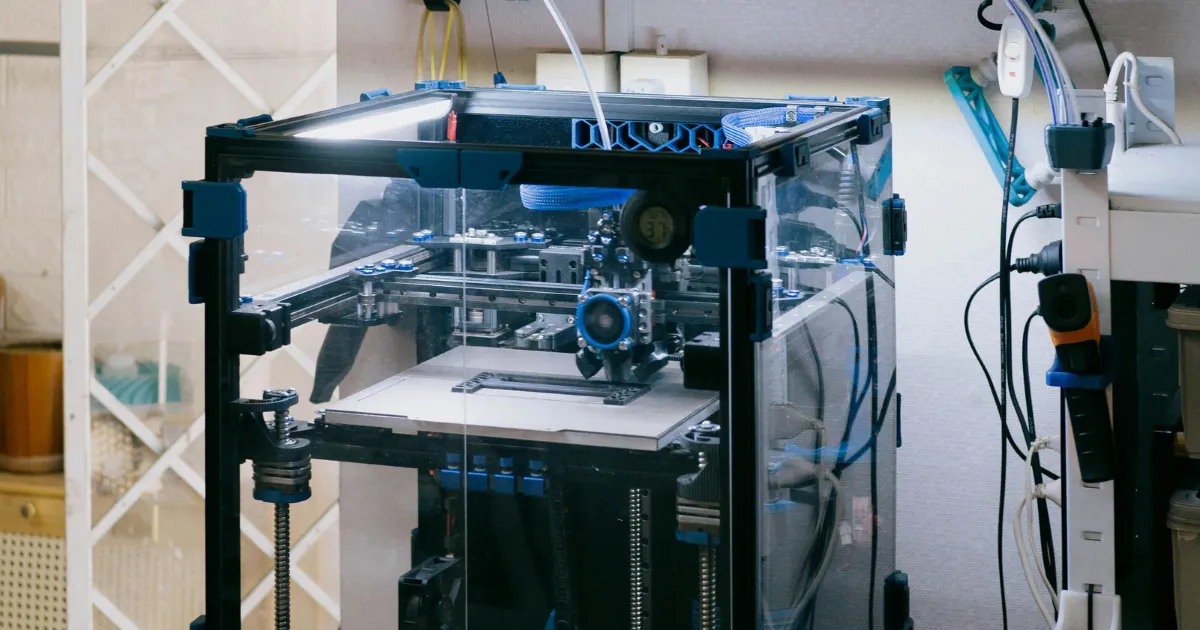
I was sitting in a small, windowless office in a suburban industrial park last Tuesday, watching a mechanical arm dance with more precision than a Swiss watchmaker. There was no smoke, no deafening roar of a thousand-ton press, and certainly no smell of burnt heavy fuel oil. Instead, there was just the rhythmic hum of high-performance polymers being laid down, layer by infinitesimal layer. The person next to me, a CFO of a mid-sized consumer hardware brand that was nearly bankrupt eighteen months ago, leaned in and whispered that they don’t own a single warehouse anymore. They don’t even own a factory in the traditional sense. They own a network of digital blueprints and a handful of contracts with localized hubs.
The old world of manufacturing was a game of “how many units can we cram into a shipping container to make the math work.” It was a world where you bet your entire fiscal year on a forecast made in a boardroom six months before the product even touched a shelf. But as we navigate the complexities of this year, that model feels like a relic from a different century. The shift toward Distributed Manufacturing isn’t just a tech trend for the engineers to obsess over, it is a fundamental restructuring of how capital is deployed and how risk is mitigated in an increasingly fractured global economy.
Turning the Ghost of Inventory into On-demand Manufacturing Reality
For years, the financial drain of “dead stock” was considered an unavoidable cost of doing business. You overproduced because the per-unit cost at ten thousand units was better than at one thousand, and then you prayed that the market wouldn’t shift before you sold through. By the time 2026 rolled around, the cost of holding that inventory—insurance, storage, and the sheer opportunity cost of locked-up capital—became unsustainable for anyone trying to maintain a lean balance sheet. This is where the beauty of on-demand manufacturing finally stopped being a pitch deck buzzword and started being the floor upon which new brands are built.
When you move to a distributed model, your inventory becomes digital. It lives on a secure server, not on a pallet in a dusty warehouse in New Jersey. I have seen companies reduce their carrying costs by forty percent in a single fiscal cycle simply by refusing to manufacture anything until a customer has already clicked the buy button. It changes the conversation from “how do we get rid of this excess?” to “how quickly can we trigger a print at the hub nearest to the buyer?” This isn’t just about saving on rent for a warehouse, it is about the agility to pivot. If a specific product design fails, you haven’t lost a million dollars in physical plastic, you’ve just lost the time it took to render the file.
The math for the modern investor is becoming quite clear. The “just-in-case” model is being replaced by a “just-enough” philosophy. We are seeing a massive influx of capital into niche brands that utilize these hubs because their burn rate is significantly lower. They don’t need the massive Series A rounds to fund a first production run in Shenzhen. They need a solid design, a robust digital marketing strategy, and the right partners in the additive manufacturing space. It is a democratization of production that we haven’t seen since the dawn of the industrial revolution, and it is happening right under the noses of the legacy giants who are still waiting for their ships to clear the canal.
The Financial Resilience of a Decentralized 3D Printing Business Model
If 2024 and 2025 taught us anything, it was that the global supply chain is a fragile, temperamental beast. A single geopolitical hiccup or a sudden tariff hike can turn a profitable product line into a liability overnight. I spoke with a venture capitalist recently who told me he no longer looks at a company’s manufacturing partners as a secondary detail; he looks at them as the primary indicator of long-term survival. He’s looking for the 3D printing business backbone.
By spreading production across twenty different hubs instead of one massive plant, a brand effectively insulates itself against localized disasters. If a hub in Northern Europe goes down due to a power grid failure or a labor strike, the files are simply rerouted to a hub in the Mediterranean or the American Midwest. The product remains the same, the quality is standardized by the software, and the customer never knows there was a crisis. This level of resilience is worth more than any insurance policy you can buy.
Furthermore, the environmental, social, and governance (ESG) implications are finally making sense for the bottom line. Shipping a finished product halfway around the globe is an ecological and financial nightmare. Printing that same product ten miles from the consumer’s front door eliminates the need for air freight and drastically reduces the carbon footprint. In a market where carbon taxes are becoming a line item in every quarterly report, the efficiency of a supply chain 2026 strategy is no longer optional. It is the only way to keep margins from being eaten alive by regulatory fees and rising fuel costs.
I often wonder if we will look back at the era of massive, centralized factories with the same curiosity we reserve for steam engines. There is something inherently clumsy about building everything in one place and then spending billions of dollars trying to move it to where the people are. The future feels much more granular. It feels like a web of intelligent, high-tech workshops that can switch from printing medical components in the morning to aerospace parts in the afternoon, all driven by the same underlying logic of efficiency and proximity.
The most successful operators I know aren’t necessarily the ones with the most advanced machines. They are the ones who understand the flow of data. They realize that in a world of distributed hubs, the “factory” is actually the software that manages the network. This realization is shifting the value of companies from their physical assets to their intellectual property and their ability to execute at the edges of the network. We are moving away from the “bigger is better” mindset and toward a “faster and closer” reality.
There is a quiet confidence in the people who are making this switch. They don’t seem as stressed about the daily headlines or the fluctuating price of shipping containers. They have built a system that is fundamentally decoupled from the traditional bottlenecks of global trade. It isn’t a perfect system yet—there are still hurdles with material costs and the speed of high-volume runs—but the trajectory is undeniable. The brands that are thriving right now are the ones that realized the old way was a gamble they could no longer afford to take.
As I left that small industrial park, I realized that the silence was the most profound part of the experience. The future of making things doesn’t have to be loud, dirty, or thousands of miles away. It can be right around the corner, waiting for a file to download and a laser to fire. It makes me wonder what other parts of our lives we’ve been over-complicating just because “that’s how it’s always been done.” If we can decentralize the very act of creation, what’s next for the way we trade, invest, and build value?