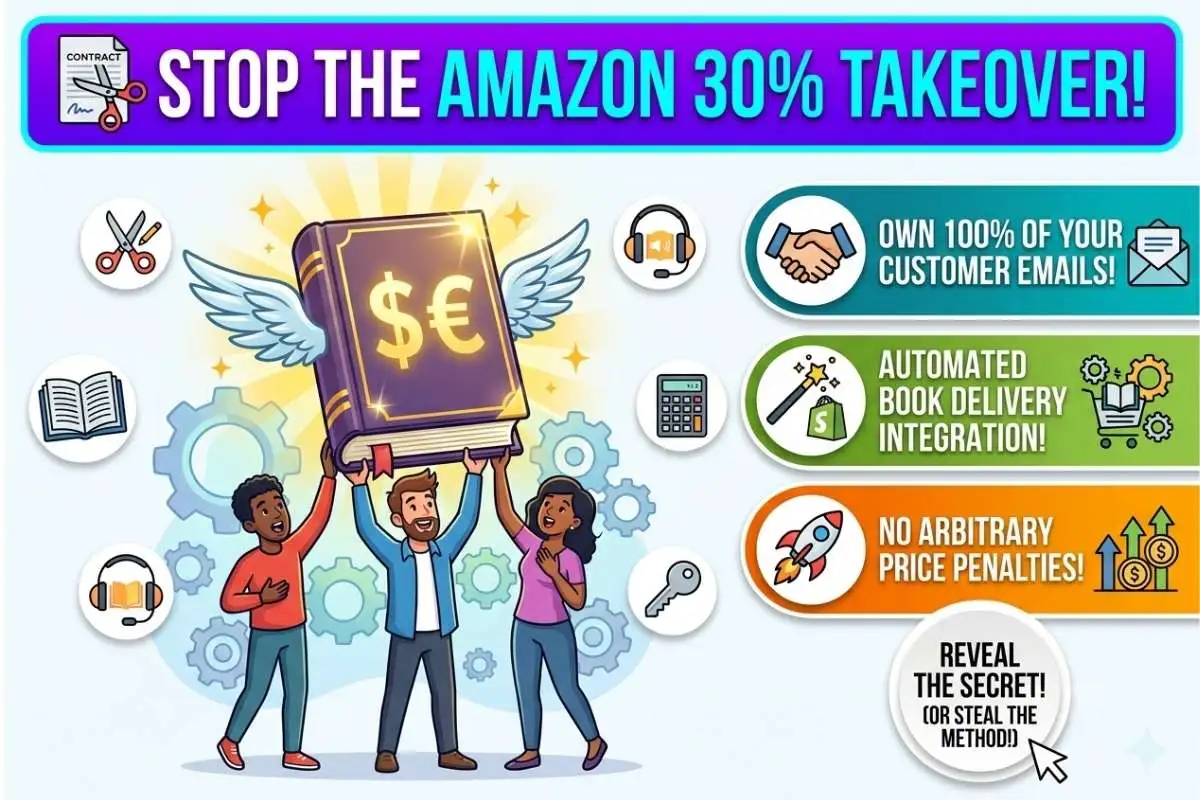
Imagine a dedicated novelist sweating over a four-hundred-page manuscript for two exhausting years. They upload the finished book to Amazon, the undisputed titan of the modern bookselling world. A passionate reader purchases the ten-dollar digital edition, but when the writer checks their dashboard, they discover a deposit of just seven dollars—or even worse, a meager three dollars and fifty cents if the retail price fell outside the platform’s strict promotional boundaries. For well over a decade, independent authors accepted this platform split as the unavoidable tax of doing business. However, a quiet technological rebellion has steadily gathered momentum behind the scenes. Savvy creators are reclaiming their digital files, setting up private online storefronts, and successfully keeping almost every penny of their hard-earned revenue.
The Anatomy of the Platform Squeeze
To truly comprehend why creative writers are willingly taking on the logistical challenges of managing their own web stores, one must examine the rigid mathematics governing mainstream digital publishing. When an independent author distributes an ebook through Kindle Direct Publishing, the system offers them two distinct royalty brackets: thirty-five percent or seventy percent. To qualify for the higher tier, the book must be priced strictly between two dollars and ninety-nine cents and nine dollars and ninety-nine cents. If a historian writes a massive ten-volume masterwork and attempts to sell the complete digital omnibus for nineteen dollars and ninety-nine cents, the platform instantly punishes them by dropping their royalty down to thirty-five percent. This arbitrary pricing ceiling forces creators to hand over sixty-five percent of their earnings just for the privilege of listing a bundle.
Beyond the direct financial haircut taken on every individual sale, authors face a far more insidious long-term operational hazard: the complete and total blackout of consumer contact data. When a literary enthusiast purchases a paperback novel or a digital download from a major centralized marketplace, the buyer’s customer profile belongs exclusively to the retailer. The person who actually wrote the book receives zero access to the purchaser’s email address, geographic location, or reading preferences. If that customer devours a thrilling mystery novel in a single weekend and eagerly desires to buy the protagonist’s next adventure, the writer possesses no mechanism to notify them directly. Instead, the author is forced to purchase expensive pay-per-click advertisements on that very same platform, essentially paying the corporate distributor a second time just to reach the exact fans who already purchased their previous work.
The Mechanics of the Direct Funnel
The vital technological bridge that transformed this idealistic concept into a viable commercial reality is the automated integration of modern e-commerce engines with specialized file delivery software. In the early days of the internet, attempting to sell a digital publication directly to a reader inevitably sparked a massive customer service nightmare; average consumers struggled to load raw digital files onto their specific handheld reading devices. Today, an author simply constructs a polished digital shop utilizing mainstream infrastructure designed for Direct-to-consumer retail operations, most notably Shopify. They then install a dedicated background application, such as BookFunnel, which serves as an automated digital distribution clerk. The exact second a customer completes their transaction, this software generates a secure download link and provides the buyer with tailored, step-by-step instructions for sending the book straight to their preferred Kindle, Kobo, or Apple device.
When an author routes their product catalog through this independent sales funnel, the unit economics undergo an immediate and breathtaking transformation. On a standard entry-level e-commerce subscription, the basic transaction fee hovers around roughly two point nine percent plus thirty cents per processed order, alongside a negligible monthly web hosting charge. If an independent writer sells a ten-dollar digital bundle directly through their personal domain, they retain approximately nine dollars and forty-one cents of that transaction. When accumulated across tens of thousands of individual customer purchases, this expanded profit margin frequently represents the definitive difference between a part-time creative hobby and a highly lucrative, fully sustainable professional enterprise. Furthermore, authors are liberated from arbitrary pricing algorithms; they can successfully market forty-dollar digital box sets or thirty-dollar comprehensive audiobooks without triggering any artificial platform royalty downgrades.
The Secret Weapon of the Order Bump
Perhaps the most financially potent tool available to the direct-selling author is an e-commerce strategy that traditional retail platforms actively prevent outside vendors from deploying: the automated checkout order bump. When a consumer browses a standard online megastore, the product page is deliberately cluttered with competing advertisements and sponsored carousels designed to lure the shopper toward another publisher’s book. Conversely, an author’s private web store operates as a serene, distraction-free environment dedicated entirely to their unique catalog. When a reader places the first book of a series into their virtual shopping cart, the digital store instantly presents a low-friction offer to add the corresponding narrated audiobook for an extra seven dollars, or an exclusive digital prequel novella for just three dollars. This straightforward psychological trigger routinely doubles the total amount of capital a visiting reader spends during a single session.
Side-by-Side Unit Economics
To fully appreciate the profound financial advantage of this direct-sales model, it is helpful to examine a clear, side-by-side comparison of an author’s net profit across both distribution methodologies. When analyzing the exact same digital asset—whether a standard solo ebook or a high-ticket multi-book package—the stark contrast in take-home revenue illustrates exactly why so many prominent independent writers are actively migrating their fan bases. Traditional retail algorithms heavily penalize premium pricing tiers, whereas an independent storefront allows the creator to capture the true market value of their written works while simultaneously securing the invaluable digital contact data of their readership.
| Distribution Channel & Product | Retail Price | Platform Deduction | Author Net Earnings | Customer Data Captured |
| Traditional Platform (Solo Ebook) | $10.00 | $3.00 (30%) | $7.00 | Zero Access |
| Shopify Direct Store (Solo Ebook) | $10.00 | $0.59 (~5.9%) | $9.41 | Full Ownership |
| Traditional Platform (Box Set) | $25.00 | $16.25 (65%) | $8.75 | Zero Access |
| Shopify Direct Store (Box Set) | $25.00 | $1.03 (~4.1%) | $23.97 | Full Ownership |
Frequently Asked Questions
Will traditional online bookstores eventually ban authors who open direct stores?
Major digital retailers enforce strict exclusivity rules only if an author voluntarily enrolls their digital books into specialized promotional programs like Kindle Unlimited. Under those specific lending contracts, creators explicitly agree not to distribute those electronic files anywhere else online. However, if an author publishes under standard, non-exclusive terms, commercial storefronts possess zero legal authority to restrict them from operating an independent shop. Most modern authors utilize a calculated hybrid approach; they leave their introductory serial novels on mainstream platforms to catch organic search algorithms, while housing their lucrative box sets, special editions, and discounted audio bundles entirely inside their private web stores.
Isn’t it difficult to drive web traffic to an unknown independent store?
Attracting initial consumer traffic is undeniably the most formidable challenge associated with launching a direct-to-reader storefront. Unlike mainstream digital marketplaces that feature automated recommendation engines and millions of daily active browsers, a private website relies entirely on the creator’s proactive marketing capabilities. Authors overcome this hurdle by utilizing their shops as the dedicated checkout point for their existing newsletter subscribers. Rather than begging strangers to visit an unfamiliar domain, writers offer irresistible digital incentives—such as a discounted bundle or an exclusive epilogue—to entice their loyal readers into making their very first direct purchase, permanently breaking the digital shopping barrier.
The Curiosity: Brandon Sanderson’s Record-Breaking Signal
If you question whether everyday consumers will abandon centralized marketplaces to support a creator directly, look no further than fantasy author Brandon Sanderson. In 2022, Sanderson launched an independent campaign to finance four secret manuscripts, bypassing corporate retail platforms entirely. He asked his global readership to fund the project straight to his personal company. The endeavor accumulated an astonishing forty-one million dollars, shattering every historical crowdfunding record. This monumental triumph proved that when a writer cultivates authentic relationships with their audience, modern readers will gladly follow them to any private digital checkout counter on the internet.