


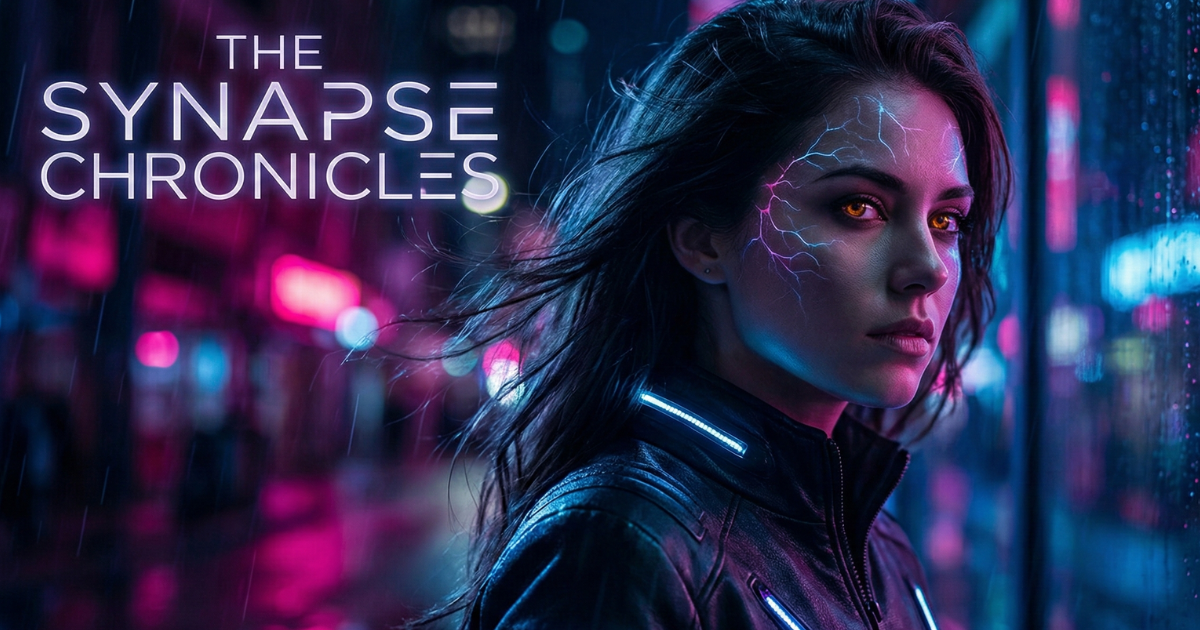
I sat in a dimly lit corner of a Soho coffee shop last week, watching a young woman scroll through her phone with the kind of ferocity usually reserved for doom-scrolling. But she wasn’t looking at the news. She was staring at a series of hyper-realistic portraits of a man who didn’t exist. He had silver-streaked hair, a scar running through his left eyebrow, and eyes that looked like they had seen the birth of a star. This was Caelum, the protagonist of a sci-fi epic that hadn’t even hit the shelves yet. The author had been drip-feeding these “neural characters” on social media for a month, and the comments were a battlefield of theories and emotional investment. People weren’t just waiting for a book, they were waiting for a person they had already come to know through neural character art.
The shift in how we market stories in 2026 is visceral. The old guard still talks about back cover blurbs and street teams, but the new vanguard is building digital souls. We are no longer just selling a plot, we are selling an encounter. When you use book marketing AI to bridge the gap between the abstract prose and the visual brain, you aren’t just decorating a campaign. You are manifesting the ghosts that live in your manuscript. I remember the days when an author’s biggest worry was finding a cover artist who didn’t put a stock photo of a generic blonde on every romance novel. Now, the worry is whether your character looks “real” enough to hold a gaze in a crowded feed. It is an era of hauntingly specific intimacy.
The Architecture of Digital Souls through Neural Character Art
There is a certain magic in the prompt, a quiet alchemy where a string of words becomes a gaze that follows you. I have seen writers struggle with the ethics of it, the feeling that they are cheating the imagination. But then they see their protagonist standing in the rain, exactly as they envisioned them on page forty-two, and the hesitation melts into a strange, productive obsession. This isn’t about replacing the reader’s mind, it is about giving it a foundation. By creating a character bible that feeds directly into these generative engines, you ensure that the hero looks the same in a promotional “interview” as he does on the limited edition dust jacket.
Consistency has always been the enemy of the indie creator. In the past, you might get one good illustration, then spend three months trying to find someone who could replicate the nose and the lighting for a second scene. Now, we use latent consistency models to lock in the geometry of a face. You define the bone structure, the specific way light hits the iris, and the texture of the fabric on a recurring jacket. This allows for visual storytelling that spans across platforms. You can have your character “take over” an Instagram account, posting photos from their world that feel like they were shot on an iPhone 17. The grain, the slight blur of a candid shot, the imperfection of a reflection in a window, these are the details that build trust with a modern audience. They want the mess. They want the sense that this person exists in a space they can almost touch.
I often think about the financial implications for the small agency or the solo author. The cost of a full-scale cinematic trailer used to be the price of a mid-sized sedan. Today, the investment is in the data. It is about how well you can train a LoRA or a specialized model on your specific aesthetic. If your book has a “dark academia” vibe, your AI assets should feel heavy with the smell of old paper and damp stone. If it is a high-octane thriller, the visuals need to be sharp, cold, and frantic. We are seeing a rise in “character-first” marketing where the book itself is almost a secondary product to the brand of the character. It is a pivot toward a more holistic form of intellectual property management, where the assets are as valuable as the words.
Revolutionizing the Reader Journey with Book Marketing AI and Visual Storytelling
We have moved past the era of the static banner ad. In 2026, the reader journey is a multi-sensory descent into a world. I’ve watched publishers use agentic systems to generate personalized book trailers for individual readers based on their past preferences. If a reader loves romance, the AI highlights the tension between the leads. If they love action, it pulls the high-stakes sequences into the foreground. All of this is anchored by the same book marketing AI that maintains the visual integrity of the world. It is a level of customization that feels almost intrusive, yet the engagement metrics suggest that readers are starving for this kind of tailored immersion.
The real power of visual storytelling in this context is its ability to bypass the logical “should I buy this?” brain and go straight to the emotional “I need to know what happens to them” brain. I recall a campaign for a psychological thriller where the “neural character” of the antagonist would occasionally send “leaked” voice notes and blurred photos to a discord community. The lines between the fiction and the reality of the marketing campaign became so thin that people were discussing the villain’s motives as if he were a real-life public figure. This is the ultimate goal of the modern asset stack. It isn’t just about showing, it is about involving.
Of course, there is a risk of over-saturation. When everyone has a “neural character,” the ones that stand out are the ones with the most soul. This brings us back to the writer. The AI is a mirror, not an engine. If the prompt lacks depth, the character will look like a mannequin. If the story is hollow, no amount of high-fidelity rendering will save it. The most successful authors I work with are the ones who treat their AI tools like a volatile, brilliant intern. They guide, they correct, and they occasionally throw out a whole day’s work because the “vibe” isn’t right. They understand that these assets are the bridge, but the book is the destination.
The landscape is changing so fast that even the term “marketing” feels too small for what we are doing. We are world-building in public. We are inviting the audience into the forge while the iron is still hot. Whether it is through a series of “candid” shots of a fantasy city or a deep-dive video into the fashion of a futuristic Tokyo, the goal remains the same: to make the fictional feel inevitable. We are no longer shouting into the void, hoping someone hears us. We are building a lighthouse and waiting for the readers to find their way home.
The future of the book isn’t just on the page. it is in the air around us, in the screens we carry, and in the digital ghosts we choose to believe in. As we refine these tools, the distance between a dream and a shared reality becomes shorter every day. It makes me wonder what we will be building by 2030. Perhaps by then, the characters will be the ones writing the marketing copy themselves, and we will just be here to watch the magic happen.

