


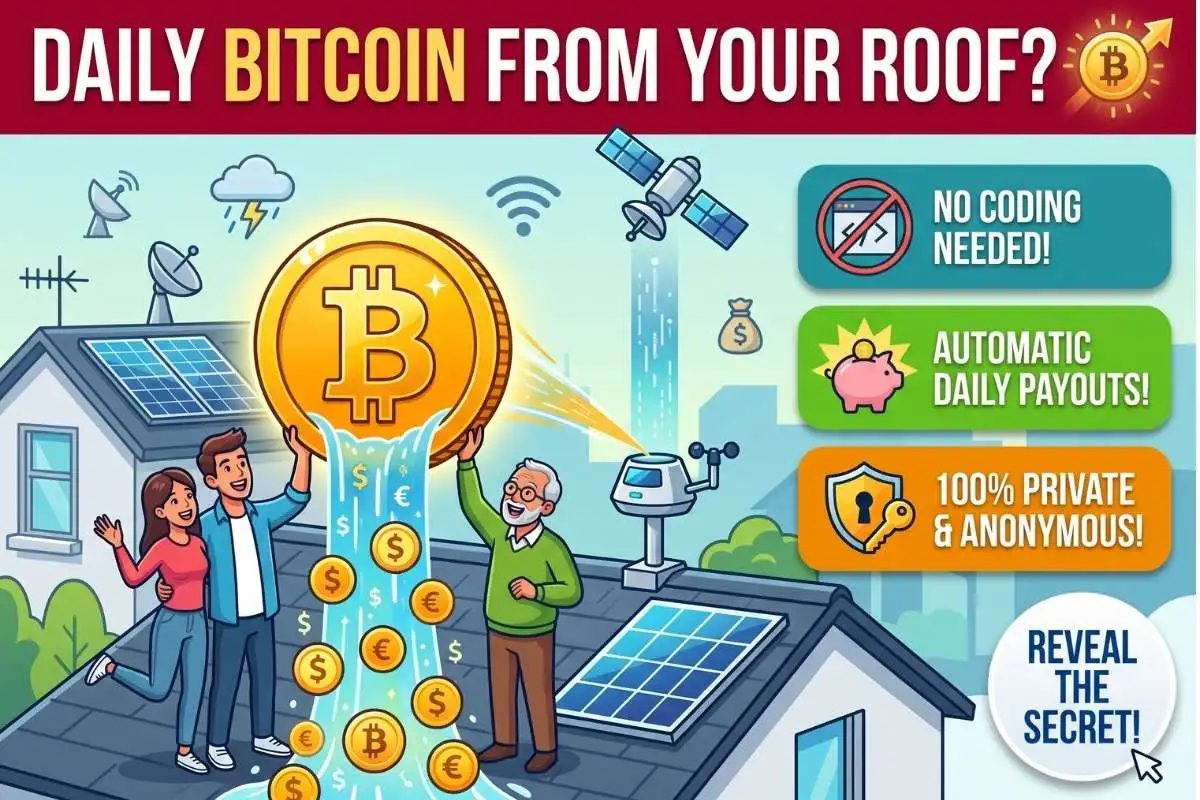
Imagine looking up at your roof and realizing that the empty space above your home could be quietly generating digital currency while you sleep, work, or spend time with your family. For decades, the vital weather data that informs our daily lives—from the morning forecast that dictates our wardrobe to the severe storm warnings that keep us safe—has been exclusively gathered, controlled, and monetized by massive government agencies and multi-billion-dollar private meteorological corporations. Today, however, a revolutionary shift is quietly taking place in neighborhoods around the globe. Thanks to the emergence of Decentralized Physical Infrastructure Networks, commonly known as DePIN, everyday homeowners are reclaiming the power of data collection. By simply installing a small, unobtrusive weather sensor on your roof, you can become an active participant in a global, crowdsourced meteorological network. In exchange for securely and continuously sharing this valuable hyper-local climate data, these networks automatically reward you with daily cryptocurrency. This turns an ordinary rooftop into a modern digital asset, democratizing the weather industry and putting profits directly into the hands of the people.
The Revolution of Decentralized Infrastructure
The concept of Decentralized Physical Infrastructure Networks might sound like complex science fiction, but it is actually a beautifully simple and highly practical application of modern technology. Traditionally, building a global network of environmental sensors required a single central company to purchase the land, buy the equipment, hire the installation crews, and maintain the infrastructure across thousands of miles. This top-down approach is incredibly expensive and extremely slow to scale. DePIN flips this outdated model completely upside down by crowdsourcing the physical hardware. Instead of a corporation deploying thousands of weather stations, the network relies on thousands of individual people voluntarily buying and installing small, standardized sensors on their own properties. Because these individuals are bearing the initial cost of the hardware and providing the physical location, the network compensates them for their ongoing contribution using digital currency. This decentralized approach allows the network to grow at an astonishingly rapid pace, reaching remote or highly granular locations that traditional corporations would never find profitable to cover. As a participant, you are essentially leasing out a tiny fraction of your roof space, creating a seamless stream of passive income without performing any daily labor.
Why Your Hyper-Local Weather Data is Valuable
You might naturally wonder why anyone would be willing to pay you in Bitcoin simply for reporting that it is raining or sunny in your specific neighborhood. The answer lies in the immense and often understated economic value of hyper-local weather data. Traditional weather forecasting relies on massive radar systems and a relatively sparse network of official meteorological stations, which are often located at airports or major government facilities. While these traditional systems are excellent at predicting broad regional weather patterns, they frequently struggle to capture the minute, street-level microclimates that affect specific agricultural yields, logistics routing, or local event planning. Industries ranging from commercial aviation and global supply chain logistics to local agriculture and renewable energy management depend heavily on precise, real-time environmental data to optimize their operations and prevent costly disruptions. By contributing your exact local temperature, barometric pressure, humidity, and rainfall statistics, you are helping to build an incredibly detailed, high-resolution map of the global climate. This crowdsourced data is then aggregated and sold to these massive industries, and the profits are distributed back to the sensor operators. For a deeper understanding of how critical accurate environmental data is to national infrastructure, explore the extensive resources provided by the National Oceanic and Atmospheric Administration (NOAA), which highlights the profound economic impact of precise weather forecasting.
Simple Setup: Transforming Your Roof into an Asset
Transitioning from a curious homeowner to an active DePIN participant is remarkably straightforward, requiring no specialized technical expertise or background in meteorology. The process begins with purchasing a certified, network-compatible weather sensor from a trusted DePIN project provider. These devices are intentionally designed for the average consumer, typically arriving in a sleek, plug-and-play package that looks quite similar to a standard smart home device. Installation usually involves securely mounting the lightweight sensor to an unobstructed area of your roof, balcony, or a high fence post, ensuring it has a clear line of sight to the sky for accurate environmental readings. Once physically mounted, the sensor connects seamlessly to your home’s standard Wi-Fi network, allowing it to continuously transmit its gathered data to the decentralized network’s servers. Most modern DePIN sensors are built to be incredibly energy-efficient, often drawing less power than a standard LED lightbulb, or even utilizing small, built-in solar panels to operate entirely off the grid. After the initial physical setup, the user simply links the device to a secure digital wallet via a smartphone application. From that moment forward, the sensor runs autonomously in the background, requiring little to no maintenance while quietly generating a steady stream of passive digital income for the household.
The Financial Mechanics of Daily Crypto Rewards
The mechanics of earning daily Bitcoin through a DePIN roof sensor represent a fascinating intersection of environmental science and decentralized finance. Once your sensor is online and successfully transmitting accurate weather data to the network, the system’s underlying software automatically verifies the quality and consistency of your contributions. This verification process ensures that the data is legitimate and prevents bad actors from spoofing weather reports. Every time your data successfully passes this automated quality control check, a smart contract executes a micro-transaction, depositing a predetermined amount of cryptocurrency directly into your designated digital wallet. Depending on the specific network you choose to join, these rewards might be distributed in the project’s native digital token, which can then be effortlessly swapped for more widely recognized assets, or they may be paid out directly in fractions of Bitcoin. Because these networks operate continuously, 24 hours a day and 7 days a week, your earnings accumulate passively, building up a digital balance while you sleep. The beauty of this system is its financial transparency and complete lack of traditional banking intermediaries. To fully grasp the underlying technology that makes these trustless, automated financial rewards possible, it is highly recommended to read about the fundamental principles of Cryptocurrency on Wikipedia, which explains how decentralized ledgers securely manage assets.
Prioritizing Safety, Security, and Total Anonymity
Whenever the topic of data sharing and smart home devices is raised, valid concerns regarding personal safety, digital security, and data privacy inevitably follow. Fortunately, reputable DePIN weather networks are fundamentally engineered with a strong emphasis on user protection and total anonymity. Unlike intrusive smart speakers or indoor security cameras that might inadvertently capture private conversations or personal routines, a roof-mounted weather sensor is entirely outward-facing and completely blind to human activity. Its sole function is to measure objective, external environmental variables such as barometric pressure, ambient temperature, and wind direction. Furthermore, the data transmitted by these sensors is heavily encrypted and strictly stripped of any personally identifiable information before it ever leaves your home network. The decentralized network does not know your name, your exact street address, or your personal browsing history; it only identifies your sensor by a randomized, cryptographic string of characters and a generalized geographic cell location. This ensures that the highly valuable meteorological data can be aggregated and utilized by commercial industries without ever compromising the privacy or the physical security of the individual homeowner who provided it. Participating in a weather DePIN is widely considered one of the safest ways to enter the passive income space.
Comparing Weather Data Methods
| Feature | Traditional Weather Stations | DePIN Roof Sensors |
| Infrastructure Cost | Millions of dollars funded by governments or corporations | Low upfront cost borne by individual homeowners |
| Coverage Density | Sparse; typically located near airports and major facilities | Highly dense; located on everyday neighborhood rooftops |
| Data Beneficiary | Centralized corporations and large government agencies | The everyday user earning daily digital currency |
| Setup Complexity | Requires specialized engineering and commercial land | Simple plug-and-play installation via home Wi-Fi |
Frequently Asked Questions
How much passive income can I realistically generate each day? Earnings vary widely based on the specific network, your geographical location, and the current market value of the rewarded cryptocurrency. While it will not replace a full-time salary, users typically earn enough to cover their monthly internet bills or coffee habits, simply for letting a device sit on their roof and record data.
Do I need an advanced understanding of cryptocurrency to participate? Not at all. The entire user experience is designed for the general public. Once the device is linked to the network’s smartphone application, the backend software handles the complex blockchain transactions automatically. You simply watch your digital wallet balance grow over time without needing to code or trade.
What happens to my earnings if my home internet goes down? If your Wi-Fi drops or your neighborhood experiences a power outage, the sensor will temporarily stop transmitting data. During this offline period, you will not earn rewards. However, once the connection is restored, the device will automatically reboot and resume earning without any manual intervention required on your part.
Is the sensor equipment easily damaged by severe storms? These devices are explicitly built for the outdoors. They are manufactured with durable, weather-resistant materials designed to withstand heavy rain, strong winds, and intense UV exposure. Severe weather events often make your real-time data even more valuable to the network, so they are engineered to survive tough conditions.
A Final Curiosity: The Secret Microclimates Above Your Head
Did you know that the temperature on your street can be drastically different from a street just three blocks away? This fascinating phenomenon is known as a microclimate. Asphalt roads, dense clusters of tall trees, and the specific angle of nearby residential buildings all create highly localized weather pockets that traditional, far-away airport weather stations completely miss. By installing a DePIN sensor on your roof, you are not just earning daily Bitcoin; you are actively helping scientists and meteorologists discover and map these hidden microclimates in real-time. This granular data can eventually help urban city planners design cooler neighborhoods, assist local neighborhood farmers in protecting their community crops from sudden unexpected frosts, and even improve the overall efficiency of residential home heating systems. It turns out that the ultimate secret to understanding the rapidly changing global climate might just be quietly hiding right on top of your own roof.

