
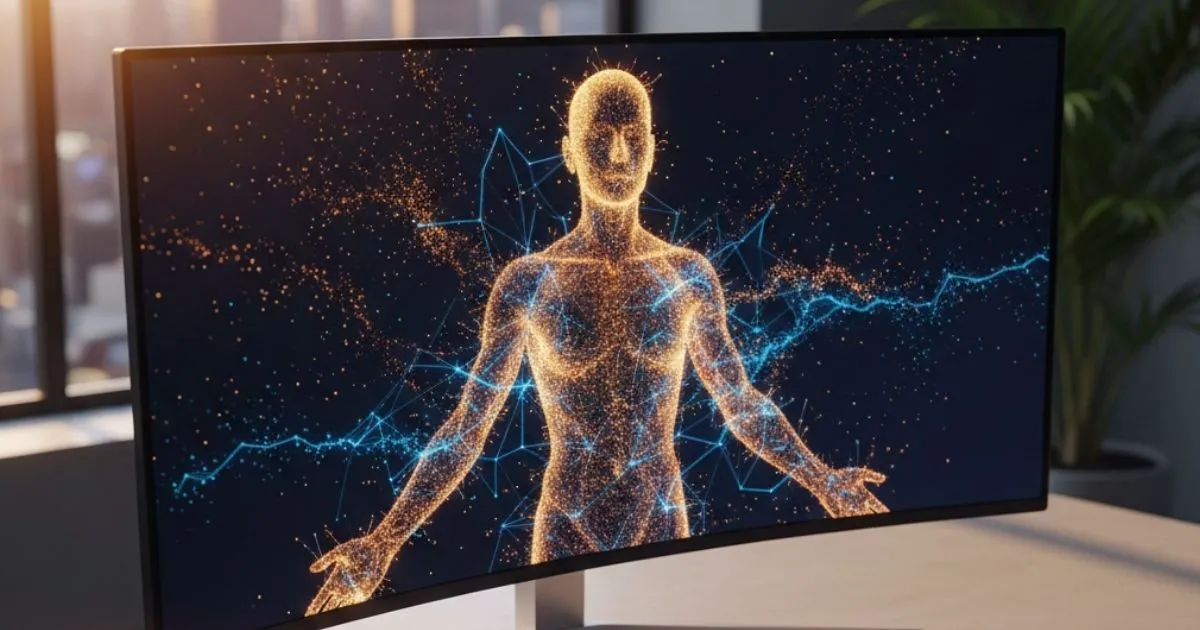
I remember sitting in a boardroom back in 2021 when the idea of a Customer Digital Twin was still considered a fever dream of the over-caffeinated Silicon Valley elite. Back then, we were obsessed with basic retargeting. If you looked at a pair of leather boots, those boots followed you around the internet like a polite but persistent ghost for three weeks. It was clumsy, it was obvious, and quite frankly, it was a little bit annoying. Fast forward to the early months of 2026, and the landscape has shifted so fundamentally that the leather boots don’t just follow you, they are manufactured and shipped to a local distribution hub before you even realize your current pair has a worn-out sole.
The era of reactive marketing is dead, buried under a mountain of synthetic data and real-time behavioral modeling. We have moved past the age of simple personas into the realm of high-fidelity simulations. These twins are not just rows in a database, they are living, breathing computational entities that mirror our every hesitation, every late-night impulse buy, and every subtle shift in our financial priorities. When we talk about predicting behavior with 99% accuracy, we aren’t talking about a lucky guess. We are talking about the mathematical inevitability of a person’s next move based on a virtual version of themselves that has already run the scenario ten thousand times in a cloud-based sandbox.
The Architecture of Predictive Analytics and the Death of the Guess
The sheer scale of data ingestion in 2026 is almost impossible to wrap your head around if you are still thinking in terms of traditional CRM systems. Brands aren’t just looking at what you bought, they are looking at the micro-hesitations in your cursor movements, the atmospheric pressure recorded by your smartwatch, and the sentiment of your last three voice memos. This is where predictive analytics transitions from a buzzword into a structural pillar of modern commerce.
I recently spoke with a lead developer at a major fintech firm who described their system as a perpetual motion machine of human intent. The twin stays awake when you sleep. It processes global economic shifts, local weather patterns, and your specific historical response to inflation spikes. If the twin sees a 0.5% increase in the price of your favorite artisanal coffee and knows you have a high price sensitivity but a deep emotional attachment to that specific brand, it might trigger a personalized loyalty offer three days before you would have naturally churned.
It is a strange feeling to realize that a digital shadow of yourself is essentially a better version of you at making decisions, or at least a more predictable one. For those of us on the business side, this level of precision changes the math of acquisition entirely. We no longer throw money at the wall to see what sticks. We invest in the simulation. The accuracy we are seeing now, often hovering near that 99% mark for high-frequency purchases, has turned marketing from a creative gamble into a hard science. It makes me wonder if there is any room left for the “magic” of an unexpected discovery, or if every “surprising” new brand we find was actually curated for us six months ago by an algorithm that knows our aesthetic preferences better than our spouses do.
Marketing AI and the Rise of Autonomous Decision Engines
The real shift in 2026 isn’t just that we can see the future, it is that the systems are now authorized to act on it. We have entered the age of the autonomous marketing engine. In the past, a human marketer had to look at a dashboard, interpret the data, and then design a campaign. Now, Marketing AI handles the entire lifecycle from hypothesis to execution. It is a closed loop. The AI identifies a segment of twins that are showing signs of “financial boredom,” a term I’ve heard used to describe users who have stagnant portfolio activity, and it generates bespoke, one-to-one video content to re-engage them.
This isn’t the generic “Dear [First_Name]” automation of the past. These are generative experiences that adapt in real-time. If you are a visual learner, your twin tells the AI to send you an infographic. If you are motivated by social proof, you get a testimonial from someone in your exact tax bracket and geographic location. The level of personalization is so deep that it borders on the uncanny. I’ve seen cases where the AI correctly predicted a user was planning to move houses based on a sudden interest in home insurance rates and local school district rankings, long before they ever listed their current property.
There is a certain cold beauty in how these systems optimize for human desire. They remove the friction of choice. But as an observer of this industry for over a decade, I can’t help but feel a slight pang of nostalgia for the chaos of the old web. Everything now is so curated, so perfectly aligned with our projected needs, that we are living in a mirror world of our own biases. From a profitability standpoint, it is a goldmine. The margins on these AI-driven campaigns are astronomical because the waste has been virtually eliminated. You aren’t paying for impressions that don’t convert. You are paying for the certainty of the outcome.
The ethical implications are, of course, the elephant in the room that everyone is trying to ignore while they count their revenue. When a brand knows you better than you know yourself, the line between “serving” and “manipulating” becomes incredibly thin. We tell ourselves that we are providing value by reducing decision fatigue, and in many ways, that is true. I love that I don’t have to search for the right products anymore. They find me. But I also recognize that my digital twin is a version of me that never has a bad day, never makes a truly irrational choice, and never decides to just throw it all away and move to a cabin in the woods.
As we move deeper into this year, the brands that win won’t just be the ones with the most data. They will be the ones that can humanize the twin. They will be the ones that understand that while the math might be 99% accurate, that final 1% is where the human soul actually lives. It is the 1% of the time where we do something completely unexpected, something that the simulation couldn’t possibly account for. That is the space where brand loyalty is actually built. Everything else is just very high-end accounting.
I often think about what my own digital twin is doing right now. Is it browsing for a new vintage watch? Is it worrying about the latest fluctuations in the European markets? It probably is. And somewhere, a server is humming, preparing an offer that I will likely accept by tomorrow afternoon. It is an efficient world, a profitable world, and a world where the future has already happened. We are all just catching up to the simulations we’ve already run. The question for those of us in the business of building and selling these assets isn’t whether the technology works. We know it works. The question is how we maintain the trust of the humans behind the twins when they finally realize how well we’ve come to know them.
